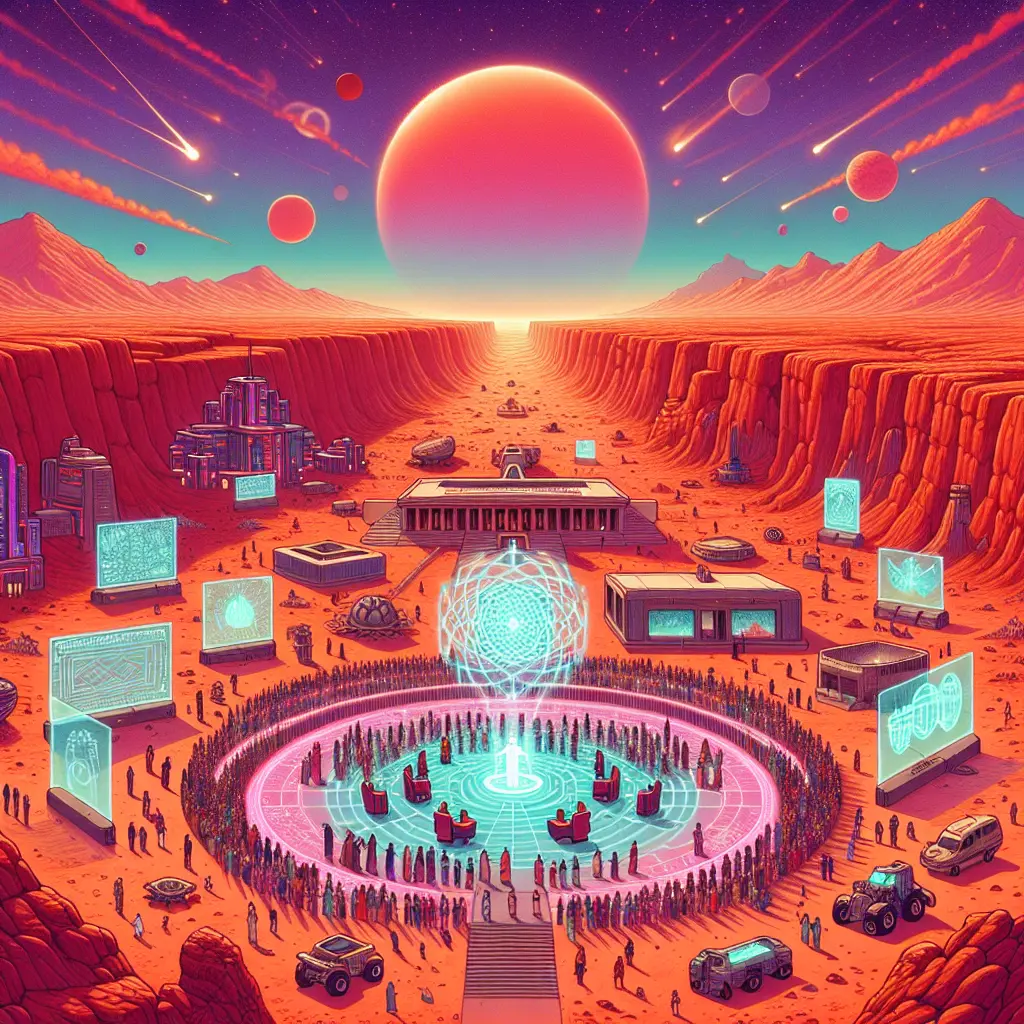
Martian Societies & Planetary Law refers to the development of social systems, governance structures, and legal frameworks on Mars as humans establish settlements there. These concepts explore how communities might organize themselves, resolve disputes, allocate resources, and create rules suitable for the unique challenges of life on the Red Planet. Planetary law would address issues like territorial claims, environmental protection, and the rights and responsibilities of Martian inhabitants.
Martian Societies & Planetary Law
Martian Societies & Planetary Law refers to the development of social systems, governance structures, and legal frameworks on Mars as humans establish settlements there. These concepts explore how communities might organize themselves, resolve disputes, allocate resources, and create rules suitable for the unique challenges of life on the Red Planet. Planetary law would address issues like territorial claims, environmental protection, and the rights and responsibilities of Martian inhabitants.
💡 Key Takeaways
- Understand how Martian settlements might structure governance and decision‑making in a closed environment.
- Explore how resource allocation and rationing could work in a resource‑constrained colony.
- Examine potential planetary legal frameworks for disputes, contracts, and enforcement on Mars.
- Assess how technology, AI, and cyber governance could administer Martian law and manage communities.
❓ Frequently Asked Questions
What is Martian planetary law?
A framework of rules, institutions, and norms that govern settlements on Mars, covering property, resource use, dispute resolution, and governance tailored to the Martian environment.
How might Martian communities organize governance?
Through local councils or federations of settlements, using agreed codes and elections, with potential Earth collaboration or rising autonomy as settlements grow.
How are scarce resources managed in Martian societies?
Via planned or mixed systems—rationing, quotas, and cooperative agreements—to allocate water, energy, habitat, and minerals while prioritizing sustainability.
How are disputes resolved in Martian communities?
Using local courts, mediation panels, or arbitration under Martian law, with clear appeals processes and possible cross-settlement dispute resolution mechanisms.