Massive MIMO (Multiple Input Multiple Output) is a wireless technology using large antenna arrays at base stations to serve multiple users simultaneously, boosting capacity and spectral efficiency. Hybrid beamforming combines analog and digital signal processing to steer beams toward users efficiently, reducing hardware complexity and power consumption. Together, they enable high data rates, improved coverage, and energy-efficient transmission in modern telecom systems, especially for 5G and beyond.
Massive MIMO and Hybrid Beamforming
Massive MIMO (Multiple Input Multiple Output) is a wireless technology using large antenna arrays at base stations to serve multiple users simultaneously, boosting capacity and spectral efficiency. Hybrid beamforming combines analog and digital signal processing to steer beams toward users efficiently, reducing hardware complexity and power consumption. Together, they enable high data rates, improved coverage, and energy-efficient transmission in modern telecom systems, especially for 5G and beyond.
💡 Key Takeaways
- Understand how Massive MIMO uses many antennas to boost data rates and spectral efficiency.
- Explain how hybrid beamforming combines analog phase shifters and digital processing to reduce hardware needs.
- Identify when hybrid beamforming is advantageous over fully digital architectures, especially at high frequencies or with many antennas.
- Grasp the role of channel state information in beam design and power allocation, including common challenges like pilot contamination and calibration.
❓ Frequently Asked Questions
What is Massive MIMO?
Massive MIMO uses a base station with many antennas to serve multiple users simultaneously in the same time-frequency resource, boosting capacity, reliability, and energy efficiency.
What is Hybrid Beamforming?
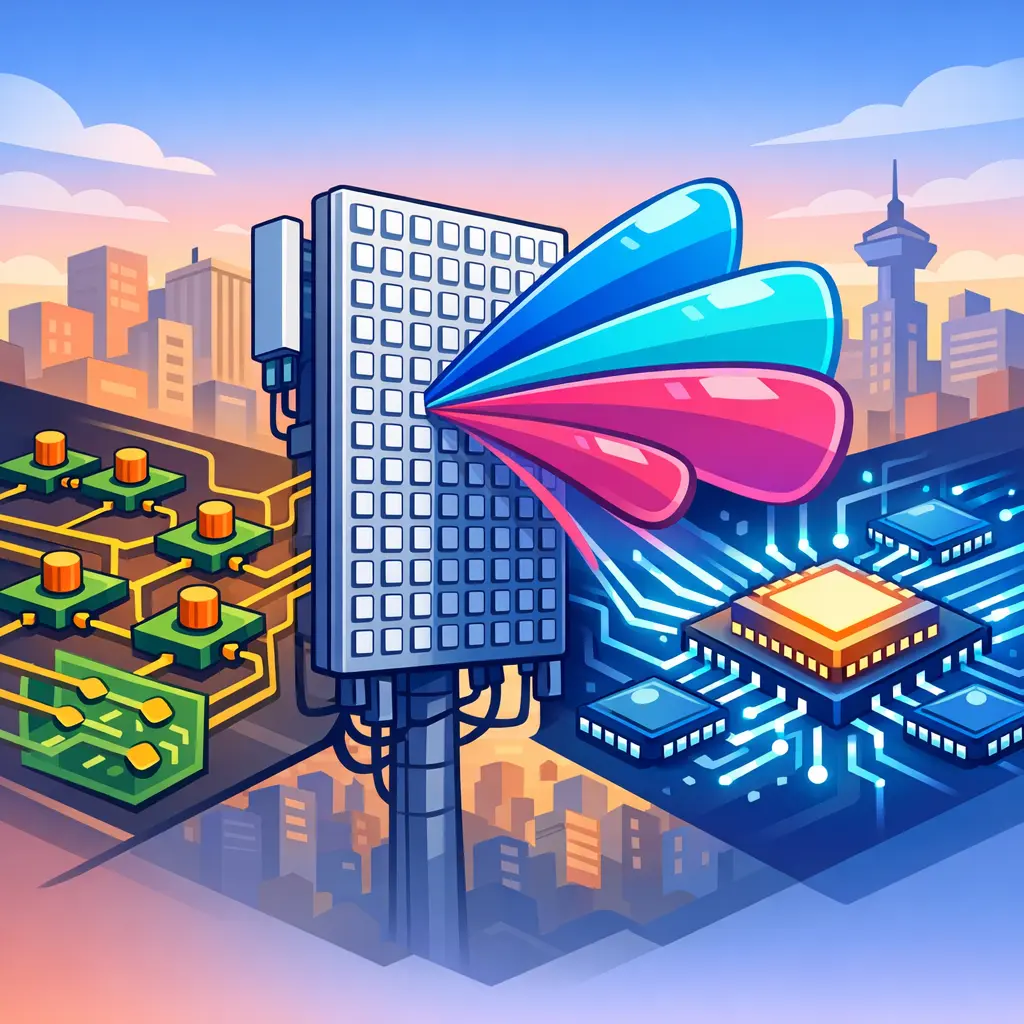
Hybrid beamforming combines analog beamforming (RF phase shifters) with digital baseband processing, using fewer RF chains than antennas to reduce cost and power while directing beams.
How does Hybrid Beamforming work in Massive MIMO?
It splits precoding into two stages: an analog stage with phase shifters forms beams across the antenna array, and a digital stage across a smaller set of RF chains processes multiple data streams to separate users.
What are the main advantages and trade-offs of Hybrid Beamforming?
Advantages: lower hardware cost and power, scalable to many antennas, strong beam gains. Trade-offs: less flexibility than full digital, more complex design and calibration, performance depends on channel conditions and the number of RF chains.