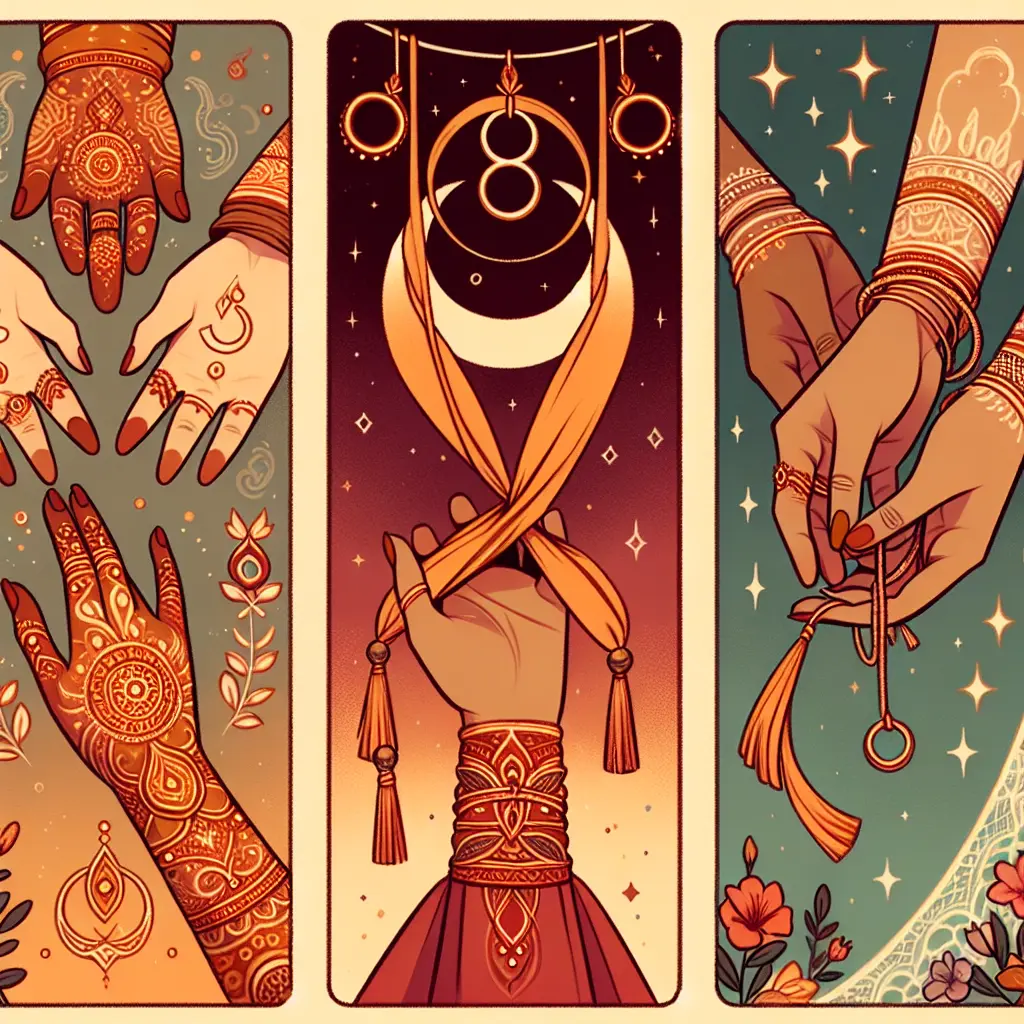
Matrimonial symbols, such as henna and handfasting, represent the diverse rituals and traditions used worldwide to signify marriage. Henna, often applied during South Asian weddings, symbolizes joy, beauty, and blessings for the bride. Handfasting, rooted in Celtic tradition, involves tying the couple’s hands together with a cord or ribbon, representing unity and commitment. Both practices highlight the cultural significance and deep meaning behind wedding ceremonies across different societies.
Matrimonial Symbols: From Henna to Handfasting
Matrimonial symbols, such as henna and handfasting, represent the diverse rituals and traditions used worldwide to signify marriage. Henna, often applied during South Asian weddings, symbolizes joy, beauty, and blessings for the bride. Handfasting, rooted in Celtic tradition, involves tying the couple’s hands together with a cord or ribbon, representing unity and commitment. Both practices highlight the cultural significance and deep meaning behind wedding ceremonies across different societies.
💡 Key Takeaways
- Identify key matrimonial symbols (e.g., henna and handfasting) and their core meanings like joy, blessings, and unity.
- Explain how henna is used in South Asian weddings and what the intricate designs signify.
- Explain how handfasting originated in Celtic traditions and what tying the knot represents.
- Compare how diverse cultures use symbols and rituals to mark marriage across ceremonies and celebrations.
- Explore how matrimonial symbols can be incorporated into modern baby showers and wedding party games.
❓ Frequently Asked Questions
What is henna and what does it symbolize in weddings?
Henna is a paste used to create temporary skin designs, traditionally applied to the bride. In weddings, mehndi symbolizes joy, beauty, blessings, and good luck for the couple.
What is handfasting and what does it symbolize?
Handfasting is a historic ritual in which the couple’s hands are tied together with cords or ribbons to symbolize unity and the binding of their marriage.
How are matrimonial symbols like henna and handfasting used in baby showers and wedding games?
They provide thematic ideas for activities and decor—henna art stations, knot-tying or symbolic-bond challenges, and storytelling about marriage traditions.
Do these symbols reflect specific cultures or are they used worldwide?
Henna is rooted in South Asia, the Middle East, and Africa; handfasting has Celtic origins; many cultures worldwide use symbols to signify marriage and celebrate unions.