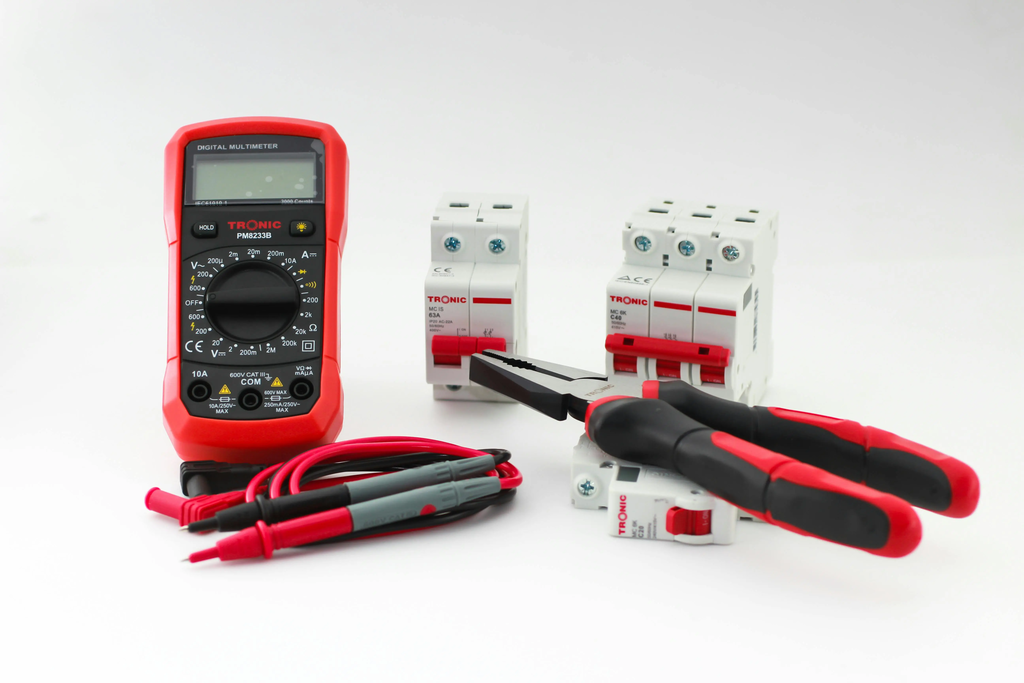
Measurement uncertainty refers to the doubt that exists about the result of any measurement, reflecting possible errors or variations. Calibration is the process of adjusting and verifying instruments to ensure their readings are accurate by comparing them to known standards. Traceability is the ability to relate individual measurement results to national or international standards through an unbroken chain of documented calibrations, ensuring reliability in basic electricity and circuit measurements.
Measurement Uncertainty, Calibration & Traceability
Measurement uncertainty refers to the doubt that exists about the result of any measurement, reflecting possible errors or variations. Calibration is the process of adjusting and verifying instruments to ensure their readings are accurate by comparing them to known standards. Traceability is the ability to relate individual measurement results to national or international standards through an unbroken chain of documented calibrations, ensuring reliability in basic electricity and circuit measurements.
💡 Key Takeaways
- Explain what measurement uncertainty is and why it matters for data interpretation
- Identify common sources of uncertainty in measurements and practical ways to reduce them
- Describe calibration: purpose, how it is performed, and when recalibration is needed
- Explain traceability: the concept of an unbroken measurement standard chain and its importance
❓ Frequently Asked Questions
What is measurement uncertainty?
A parameter that describes how much a measurement result may differ from the true value due to limitations of the measurement process, including random and systematic errors.
What is calibration and why is it important?
Calibration is the process of comparing an instrument to a known reference and adjusting it to align readings with the standard, ensuring accuracy and reducing bias.
What is traceability in measurements?
Traceability means that measurement results can be linked to national or international standards through an unbroken chain of calibrations, each with stated uncertainties, enabling comparability.
How is measurement uncertainty estimated and reported?
Uncertainty is estimated by combining Type A (statistical) and Type B (other) evaluations. The result is often reported as expanded uncertainty with a coverage factor (e.g., k=2 for ~95% confidence).