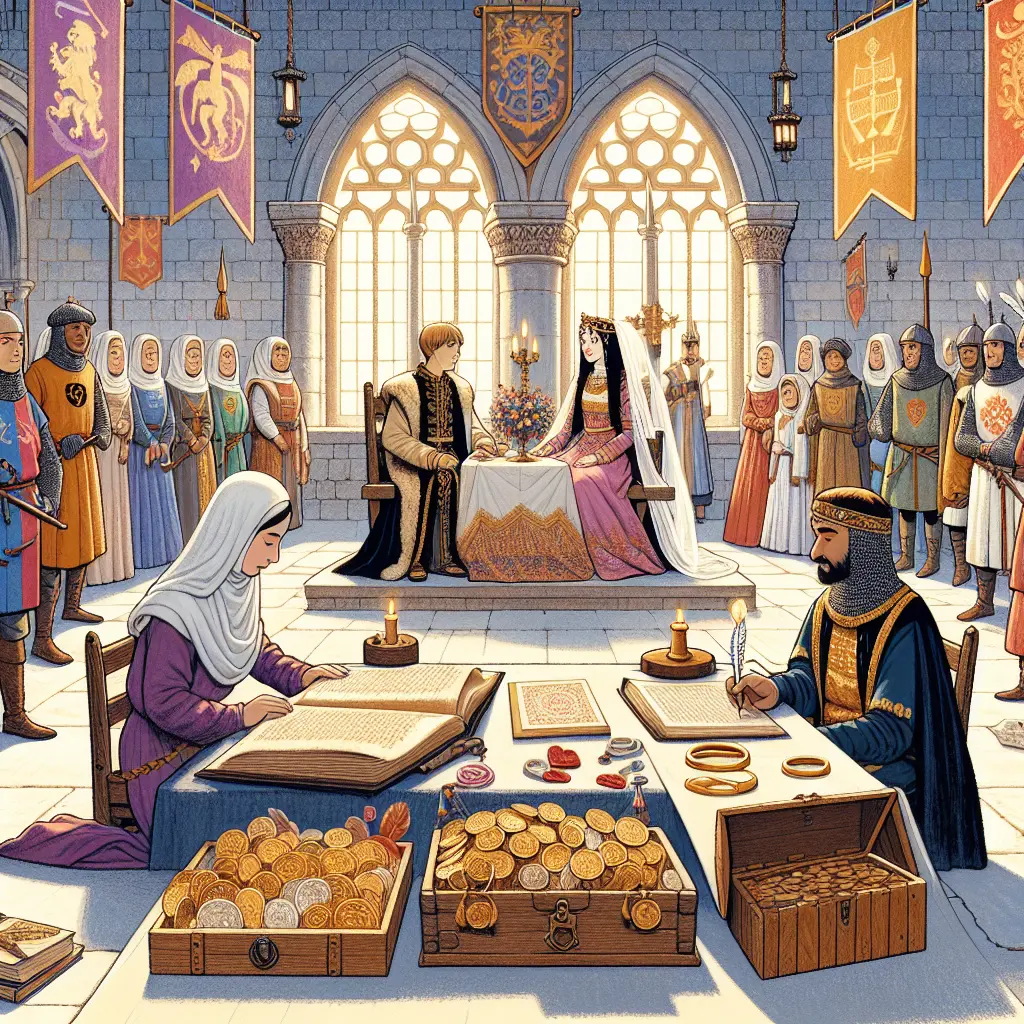
Medieval betrothal laws and customs governed the formal engagement process before marriage, often involving legal contracts between families. Betrothals were binding agreements, sometimes arranged for political or economic alliances, and required consent from both parties, though parental approval was crucial. Rituals included exchanging tokens or vows, with witnesses present to validate the promise. Breaking a betrothal could lead to social stigma or legal consequences, reflecting the era’s emphasis on honor and family reputation.
Medieval Betrothal Laws & Customs
Medieval betrothal laws and customs governed the formal engagement process before marriage, often involving legal contracts between families. Betrothals were binding agreements, sometimes arranged for political or economic alliances, and required consent from both parties, though parental approval was crucial. Rituals included exchanging tokens or vows, with witnesses present to validate the promise. Breaking a betrothal could lead to social stigma or legal consequences, reflecting the era’s emphasis on honor and family reputation.
💡 Key Takeaways
- What medieval betrothal contracts were and who they bound (families and future spouses).
- How betrothals could secure political or economic alliances, including dowries and property terms.
- The consent rules: both parties' agreement plus parental or noble approval.
- The typical betrothal process: contracts, public announcements, witnesses, and the move toward marriage.
❓ Frequently Asked Questions
What is a medieval betrothal?
A formal engagement before marriage in medieval times, usually arranged by families and often backed by a legal contract outlining duties, dowries, and future terms.
Why were betrothals arranged?
To secure political, economic, or social alliances, manage property and dowries, and elevate a family's status through strategic matches.
Who had to consent to a betrothal?
Consent was typically sought from both parties and their guardians; parental or feudal approval was often crucial, though the level of personal autonomy varied by region and era.
What is the difference between betrothal and marriage?
Betrothal is the binding engagement with terms and obligations, while marriage is the actual union, celebrated and consummated, after which the betrothal terms take full effect.
What could happen if a betrothal was broken?
Breaking a betrothal could incur penalties such as fines, forfeiture of a dowry, or social consequences, depending on local laws and the contract.