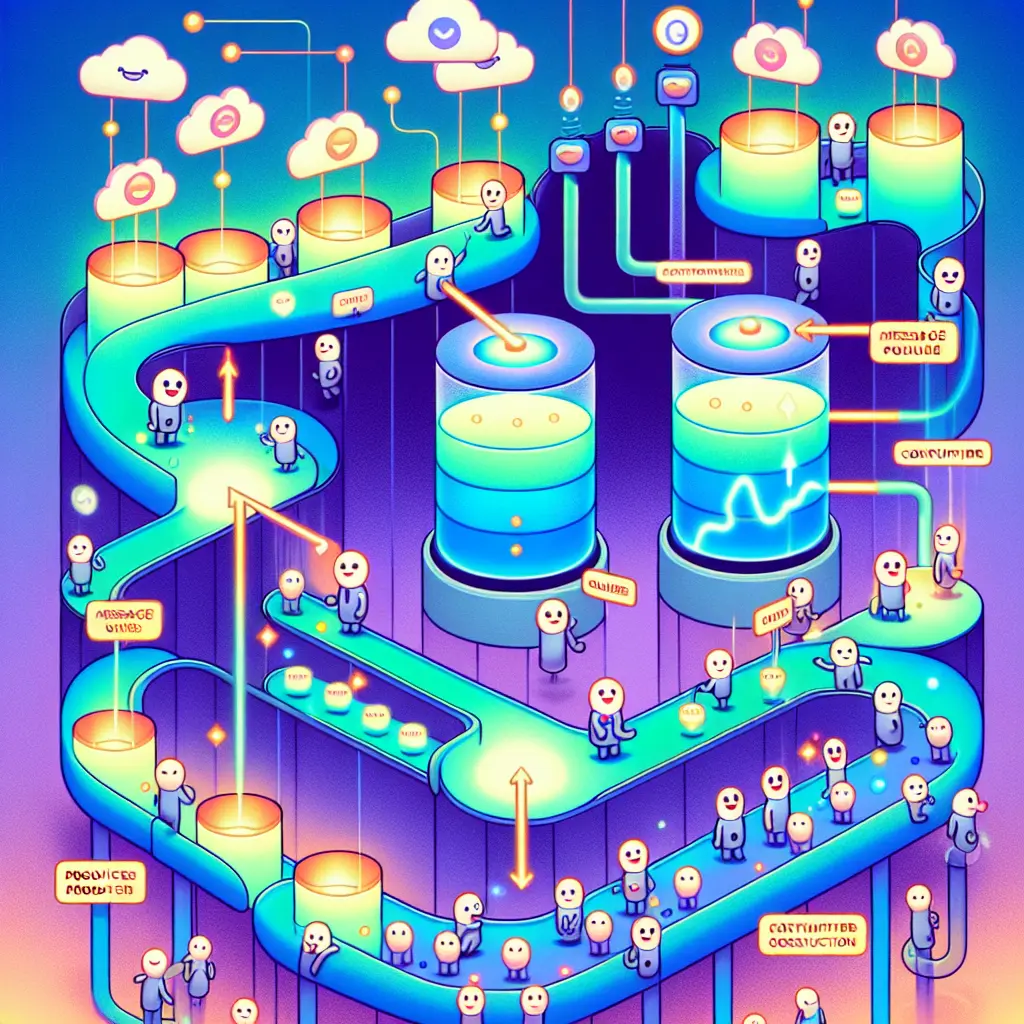
Message queues are systems that store and manage messages between producers and consumers, ensuring reliable and asynchronous communication. Backpressure occurs when consumers cannot process messages as quickly as they arrive, leading to a buildup in the queue. Proper handling of backpressure is crucial to prevent system overload, data loss, or crashes. Techniques like rate limiting, flow control, and scaling consumers help maintain system stability and performance in message-driven architectures.
Message Queues & Backpressure
Message queues are systems that store and manage messages between producers and consumers, ensuring reliable and asynchronous communication. Backpressure occurs when consumers cannot process messages as quickly as they arrive, leading to a buildup in the queue. Proper handling of backpressure is crucial to prevent system overload, data loss, or crashes. Techniques like rate limiting, flow control, and scaling consumers help maintain system stability and performance in message-driven architectures.
💡 Key Takeaways
- Understand how message queues enable decoupled, reliable asynchronous communication between producers and consumers.
- Define backpressure and recognize signs of a slow consumer causing queue buildup.
- Identify common backpressure strategies (rate limiting, buffering, signaling, and worker scaling) and when to use them.
- Explain how backpressure affects delivery guarantees and key metrics like latency, throughput, and queue depth.
❓ Frequently Asked Questions
What is a message queue?
A system that stores messages between producers and consumers to decouple them and enable reliable, asynchronous communication.
What is backpressure in a messaging system?
Backpressure occurs when consumers process messages more slowly than producers generate them, causing the queue to grow and potentially strain resources.
Why is backpressure important to manage?
Managing backpressure helps prevent unbounded queue growth, reduces latency, and keeps the data pipeline stable and reliable.
What are common ways to manage backpressure?
Rate limit producers, use pull-based consumption, auto-scale consumers, and batch or buffer messages with clear limits to balance throughput and capacity.