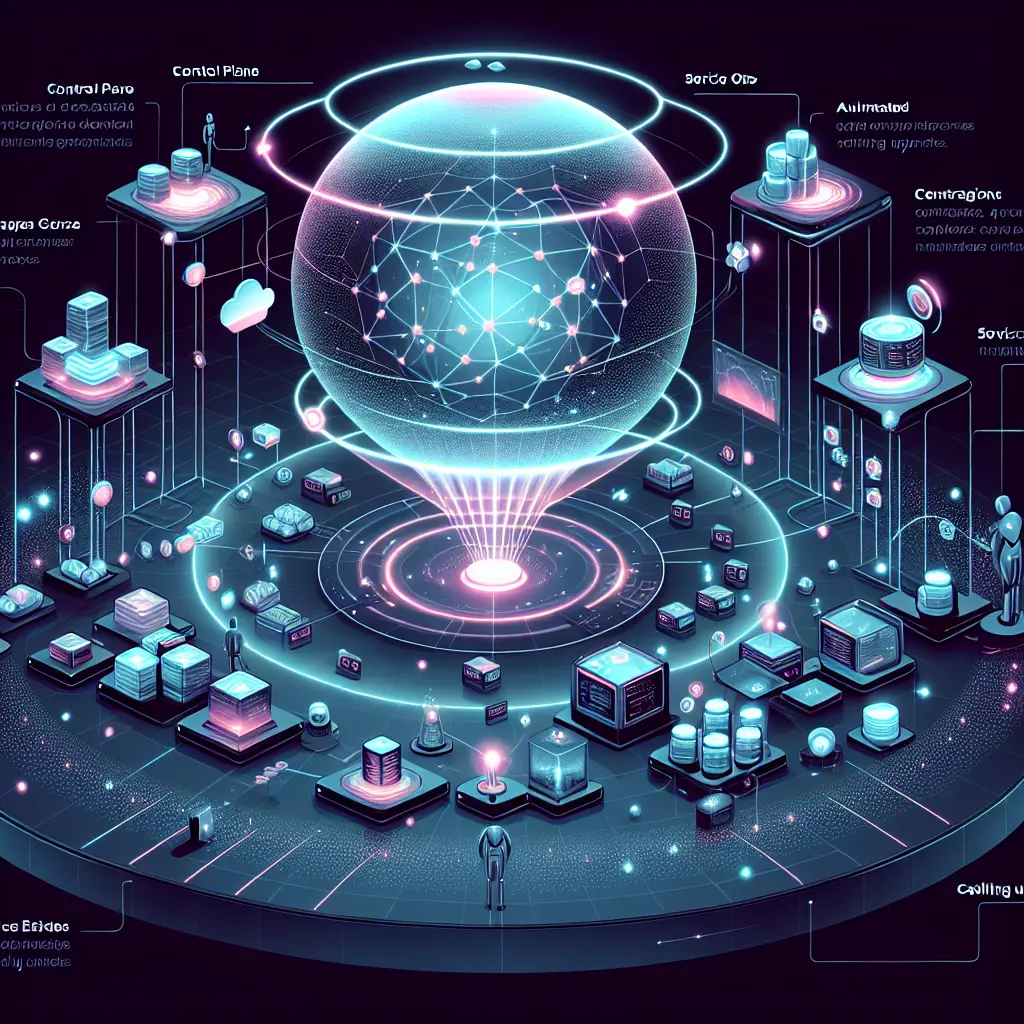
Microservices Architecture Concepts refer to a software design approach where an application is structured as a collection of small, independently deployable services. Each service focuses on a specific business capability, communicates through lightweight protocols, and is developed, deployed, and scaled independently. This architecture promotes flexibility, resilience, and scalability, enabling faster development cycles and easier maintenance compared to traditional monolithic architectures. It also supports technology diversity and continuous delivery practices.
Microservices Architecture Concepts
Microservices Architecture Concepts refer to a software design approach where an application is structured as a collection of small, independently deployable services. Each service focuses on a specific business capability, communicates through lightweight protocols, and is developed, deployed, and scaled independently. This architecture promotes flexibility, resilience, and scalability, enabling faster development cycles and easier maintenance compared to traditional monolithic architectures. It also supports technology diversity and continuous delivery practices.

💡 Key Takeaways
- Microservices break an application into small, independently deployable services aligned to specific business capabilities.
- Services communicate through lightweight protocols (HTTP/REST and gRPC) to stay loosely coupled.
- Benefits include easier scalability, better fault isolation, and faster deployment, with challenges like data consistency and distributed transactions.
- Learn common architectural patterns and components such as API gateways, service discovery, containers, and CI/CD for microservices.
❓ Frequently Asked Questions
What is microservices architecture?
An architectural style where an application is built as a collection of small, independently deployable services, each implementing a specific business capability.
How do microservices communicate with each other?
They use lightweight protocols such as HTTP/REST or messaging systems to interact, enabling loose coupling and easier integration.
What are the main benefits of microservices?
Improved modularity, easier independent deployment and scaling, fault isolation, and the ability for teams to choose different tech stacks per service.
What are common challenges when adopting microservices?
Increased complexity in deployment, testing, and monitoring; distributed data management; network latency; and the need for robust service governance.