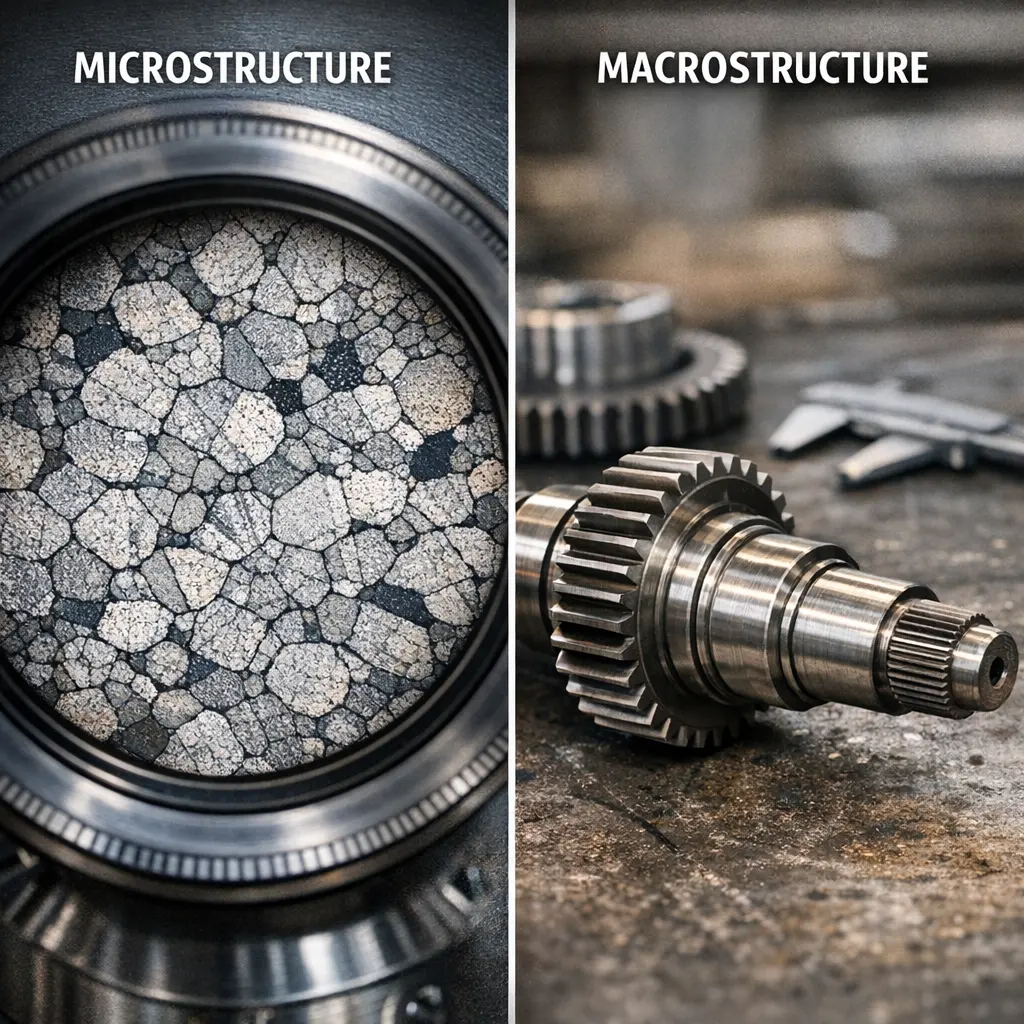
Microstructure refers to the small-scale structure of materials, observable under a microscope, including grains, phases, and defects that influence material properties. Macrostructure, on the other hand, describes the larger-scale features visible to the naked eye, such as overall shape, porosity, or layering. While microstructure determines mechanical, electrical, and thermal behaviors, macrostructure affects bulk properties and performance in applications. Both levels are crucial in materials science for understanding and improving material performance.
Microstructure versus Macrostructure+50
Microstructure refers to the small-scale structure of materials, observable under a microscope, including grains, phases, and defects that influence material properties. Macrostructure, on the other hand, describes the larger-scale features visible to the naked eye, such as overall shape, porosity, or layering. While microstructure determines mechanical, electrical, and thermal behaviors, macrostructure affects bulk properties and performance in applications. Both levels are crucial in materials science for understanding and improving material performance.
💡 Key Takeaways
- Define microstructure and macrostructure and explain how they differ in scale and focus.
- Explain how microstructure features (grains, phases, defects) influence material properties, while macrostructure (shape, size, connectivity) governs overall performance.
- Identify common techniques to study microstructure (SEM/TEM, EBSD, XRD) and macrostructure (3D imaging, tomography, mechanical testing) and what each reveals.
- Apply the microstructure–macrostructure concept across domains, understanding how detailed features and overall organization interact to affect design and function.
❓ Frequently Asked Questions
What is macrostructure?
Macrostructure refers to large-scale, visible features of a system. In materials science, it means the overall arrangement and regions you can see without magnification (e.g., layers, large grains, or patterns).
What is microstructure?
Microstructure is the tiny, internal structure seen under magnification, including grains, phases, boundaries, and defects that determine how a material behaves.
How are microstructure and macrostructure related?
Macrostructure emerges from the underlying microstructure. Changes at the micro level (e.g., grain size, phase distribution) affect macroscopic properties like strength and toughness.
Why study both microstructure and macrostructure?
Studying both helps predict performance, quality, and failure modes, since microscopic features drive many macroscopic behaviors and responses to processing.