Migration, diaspora, and identity explore how the movement of people across borders shapes cultural, religious, and social identities. Migration leads to the formation of diasporas—communities living outside their ancestral homelands—who maintain cultural and religious traditions while adapting to new societies. This dynamic process influences individual and collective identities, fostering hybrid cultures, negotiating belonging, and redefining relationships between home and host societies within broader cultural and social frameworks.
Migration, Diaspora & Identity
Migration, diaspora, and identity explore how the movement of people across borders shapes cultural, religious, and social identities. Migration leads to the formation of diasporas—communities living outside their ancestral homelands—who maintain cultural and religious traditions while adapting to new societies. This dynamic process influences individual and collective identities, fostering hybrid cultures, negotiating belonging, and redefining relationships between home and host societies within broader cultural and social frameworks.
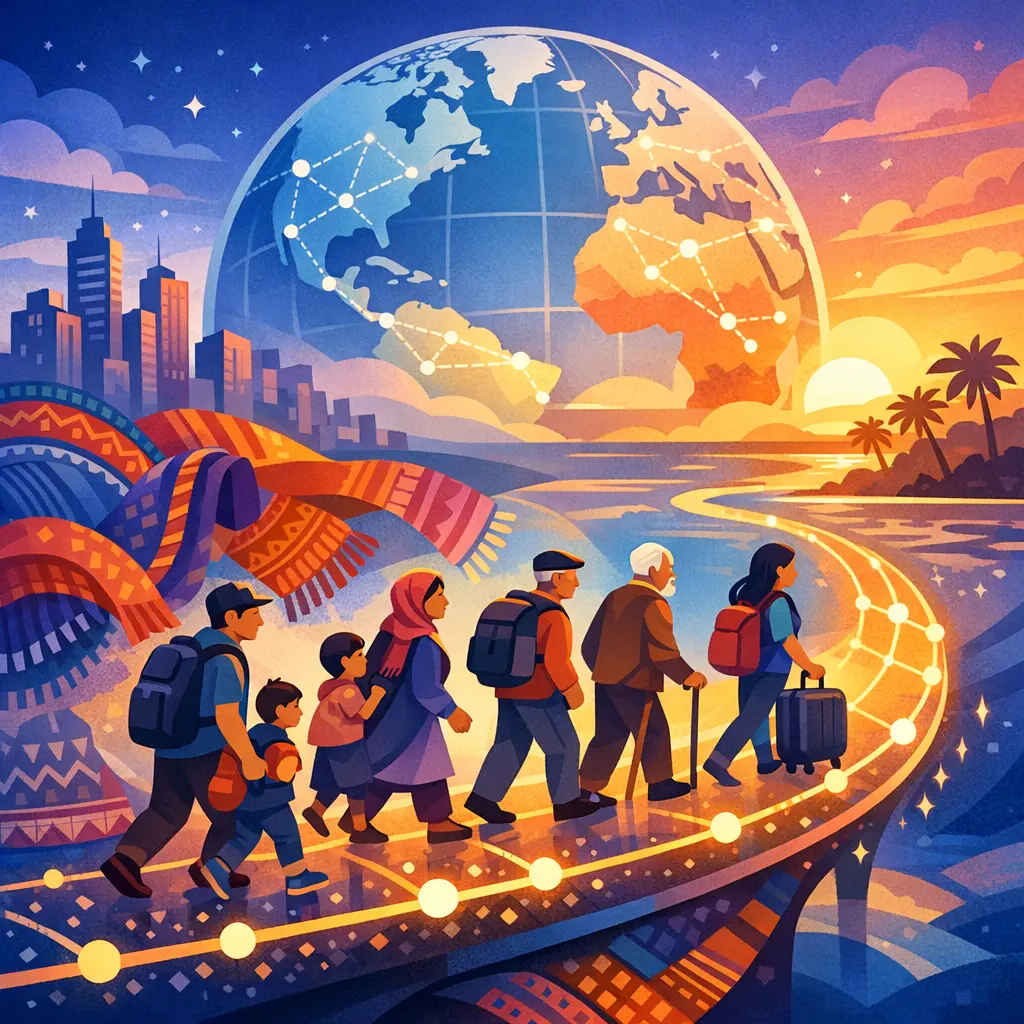
💡 Key Takeaways
- Understand how migration shapes individual and collective identity across home, host societies, and diasporas
- Explore how diaspora communities maintain cultural ties while adapting to new environments
- Learn how language, memory, and cultural practices influence belonging and identity across generations
- Examine the drivers of migration (economic, political, social) and their impact on identity formation and community dynamics
❓ Frequently Asked Questions
What is migration?
Migration is the movement of people from one place to another, often for work, safety, or better opportunities; it can be internal (within a country) or international.
What is a diaspora?
A diaspora is a community of people who share a homeland or origin but live abroad, maintaining ties through culture, language, and memory.
How can migration affect identity?
Migration can create hybrid or layered identities as people blend elements from their home and host cultures, languages, and traditions.
What does transnationalism mean in the context of diaspora communities?
Transnationalism refers to maintaining ongoing social, economic, and political connections across borders, shaping how people live and identify in multiple places.