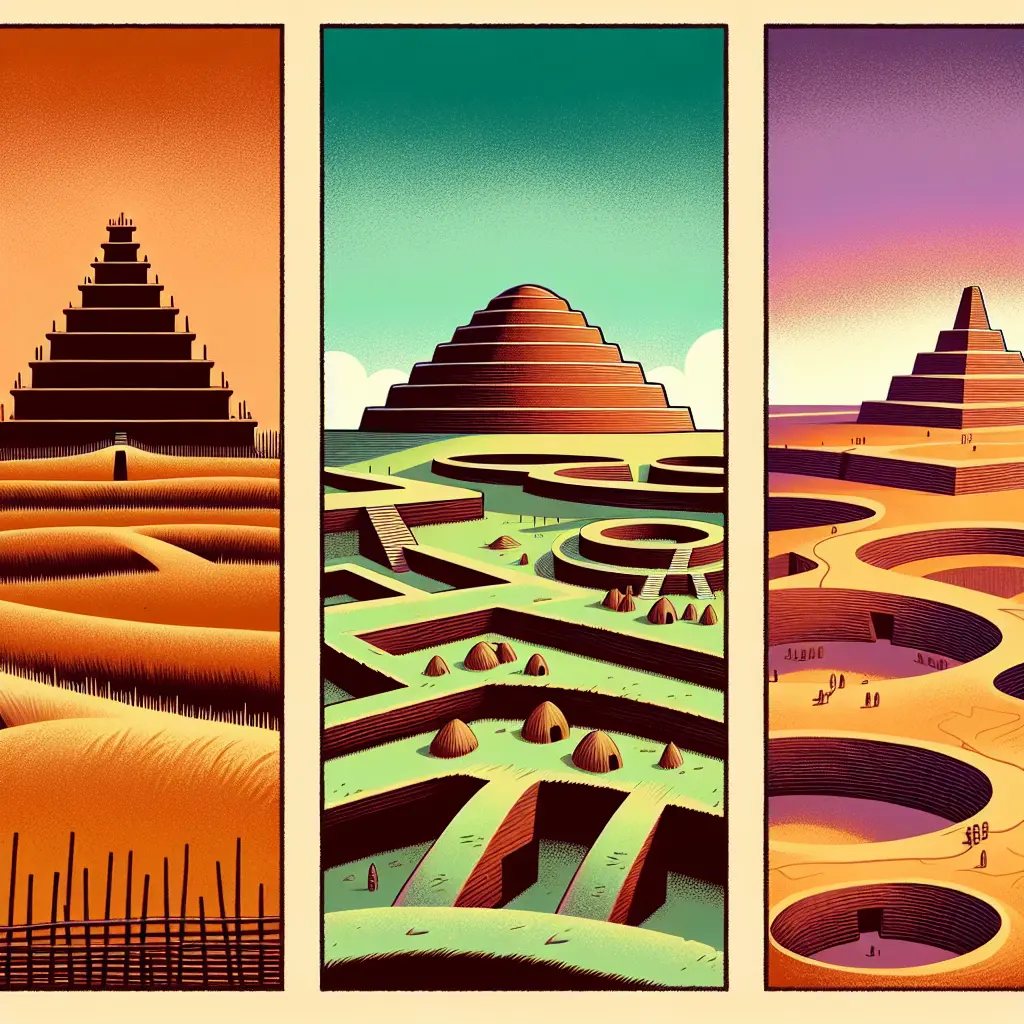
Mississippian mound sites such as Cahokia, Etowah, and Poverty Point are significant prehistoric Native American settlements known for their large, earthen mounds. Cahokia, near present-day St. Louis, was the largest, serving as a major urban center. Etowah in Georgia features impressive ceremonial mounds and artifacts. Poverty Point, in Louisiana, predates the others and is renowned for its complex earthworks, reflecting advanced social organization and trade networks among ancient peoples.
Mississippian Mound Sites: Cahokia, Etowah, and Poverty Point
Mississippian mound sites such as Cahokia, Etowah, and Poverty Point are significant prehistoric Native American settlements known for their large, earthen mounds. Cahokia, near present-day St. Louis, was the largest, serving as a major urban center. Etowah in Georgia features impressive ceremonial mounds and artifacts. Poverty Point, in Louisiana, predates the others and is renowned for its complex earthworks, reflecting advanced social organization and trade networks among ancient peoples.
💡 Key Takeaways
- Identify Cahokia, Etowah, and Poverty Point and where they're located.
- Explain the purpose of large earthen mounds in Mississippian societies.
- Highlight Cahokia as the largest Mississippian urban center and its implications for trade and politics.
- Describe how archaeologists study mound sites to uncover prehistoric life.
❓ Frequently Asked Questions
What is the Mississippian mound-building culture?
A prehistoric Native American culture in the Southeastern United States (roughly AD 800–1600) known for constructing large earthen mounds used for ceremonial, residential, and elite purposes; Cahokia, Etowah, and Poverty Point are key sites.
Where are Cahokia, Etowah, and Poverty Point located and what are they famous for?
Cahokia Mounds is near Collinsville, Illinois (across the Mississippi from St. Louis) and features the large Monks Mound; Etowah Mounds is in Cartersville, Georgia, with three major ceremonial mounds; Poverty Point is in northeastern Louisiana and is renowned for its ancient concentric earthwork ridges and multiple mounds.
What makes Cahokia one of the most important Mississippian sites?
It was the largest urban center of the Mississippian world, with a complex social and trade network and the dominant central mound (Monks Mound) shaping the site around AD 1050–1250.
Why is Poverty Point archaeologically significant?
It is one of the oldest large earthwork complexes in North America (about 1700–1100 BCE), showing sophisticated planning with concentric ridges and multiple mounds that indicate organized labor and ceremonial life.