Mobile Networks & 5G refer to the advanced wireless communication systems that connect mobile devices using telecom infrastructure. 5G, the fifth generation, offers significantly faster data speeds, lower latency, and supports more devices than previous generations. These networks rely on complex signal transmission via radio waves and require robust power sources to maintain connectivity and performance, enabling innovations like IoT, smart cities, and enhanced mobile experiences across various industries.
Mobile Networks & 5G
Mobile Networks & 5G refer to the advanced wireless communication systems that connect mobile devices using telecom infrastructure. 5G, the fifth generation, offers significantly faster data speeds, lower latency, and supports more devices than previous generations. These networks rely on complex signal transmission via radio waves and require robust power sources to maintain connectivity and performance, enabling innovations like IoT, smart cities, and enhanced mobile experiences across various industries.
💡 Key Takeaways
- Understand the basic components of mobile networks (RAN, core) and how they connect
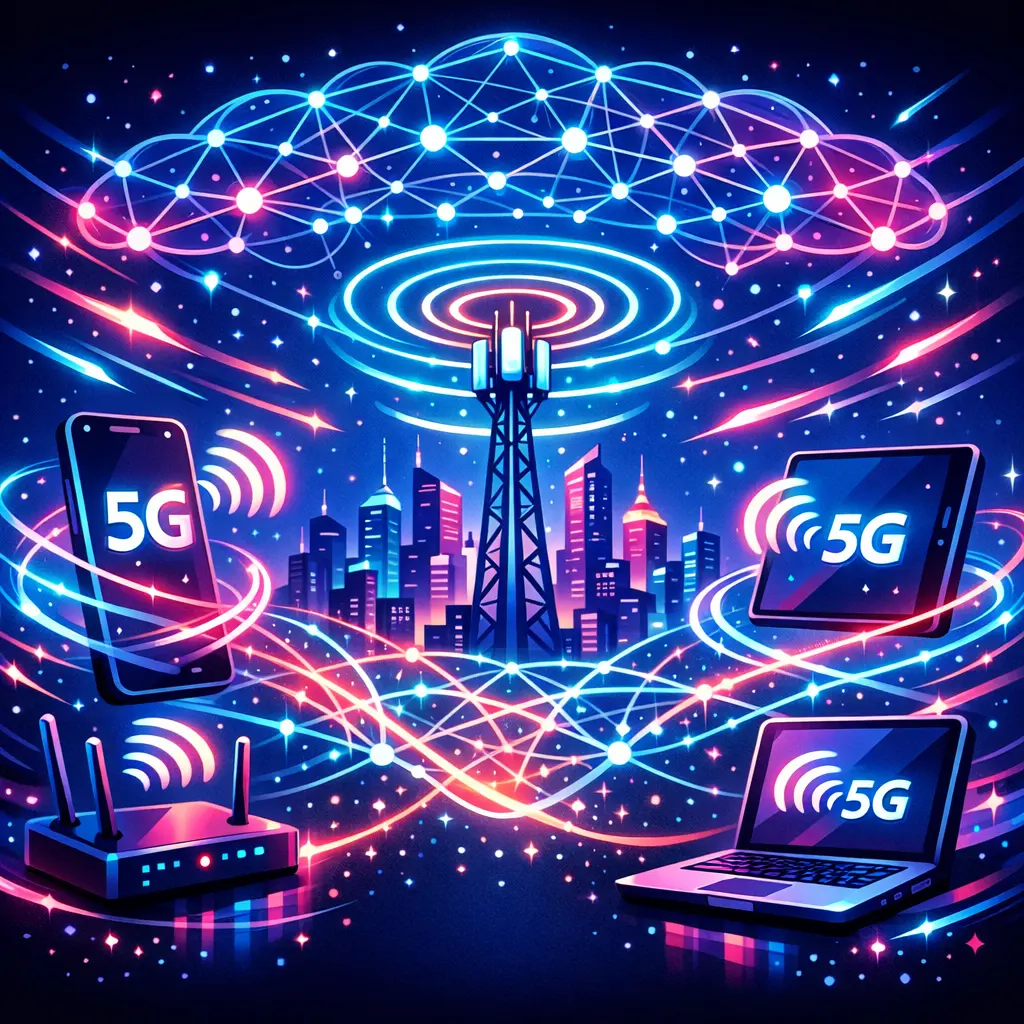
- Grasp the key benefits of 5G: faster speeds, lower latency, higher device density, and network slicing
- Learn about 5G spectrum bands (mmWave vs sub-6 GHz) and what each means for range and speed
- Explore common 5G use cases and how they affect everyday technology (IoT, AR/VR, autonomous systems)
❓ Frequently Asked Questions
What is 5G and how is it different from 4G?
5G is the fifth-generation mobile network offering faster speeds, lower latency, and greater capacity than 4G, enabled by new radio bands, advanced antennas, and features like network slicing.
What technologies power 5G?
Key technologies include mmWave and sub-6 GHz spectrum, massive MIMO (many antennas), beamforming, and network slicing with edge computing to reduce delay.
What is latency and why does it matter in mobile networks?
Latency is the time data takes to travel between endpoints. In 5G it can be very low, enabling real-time apps like gaming, AR/VR, and autonomous systems.
What is network slicing?
Network slicing creates multiple virtual networks on a single physical infrastructure, each with its own performance targets for different applications or users.
How does 5G improve performance in crowded areas?
5G uses more spectrum, small cells, beamforming, and massive MIMO to boost capacity and maintain high speeds for many devices simultaneously.