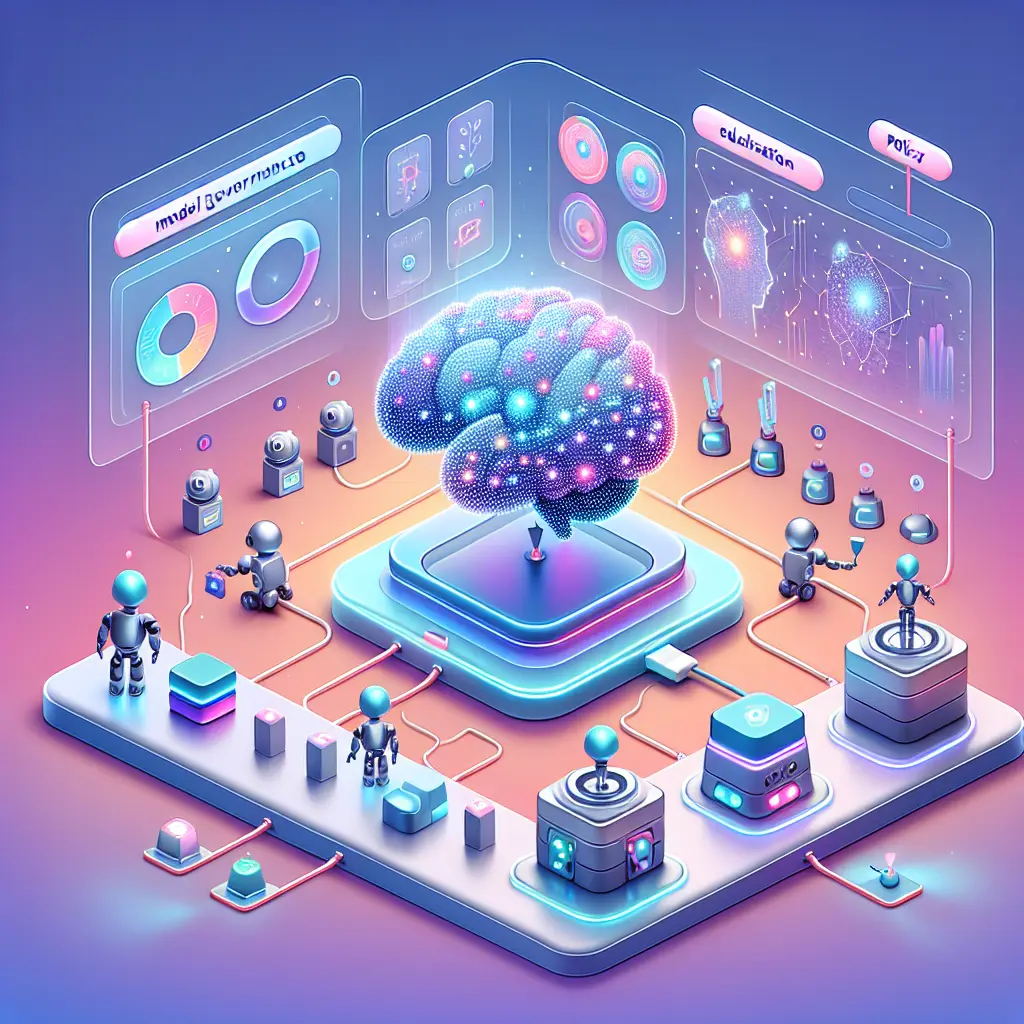
Model governance for fine-tuning and adapters refers to the frameworks, policies, and processes that ensure the responsible management, oversight, and control of machine learning models when they are adapted or fine-tuned for specific tasks. This includes tracking changes, managing access, ensuring compliance with ethical and legal standards, monitoring performance, and documenting how and why models are modified, to maintain transparency, accountability, and trust in AI systems.
Model governance for fine-tuning and adapters
Model governance for fine-tuning and adapters refers to the frameworks, policies, and processes that ensure the responsible management, oversight, and control of machine learning models when they are adapted or fine-tuned for specific tasks. This includes tracking changes, managing access, ensuring compliance with ethical and legal standards, monitoring performance, and documenting how and why models are modified, to maintain transparency, accountability, and trust in AI systems.
💡 Key Takeaways
- Understand governance essentials for fine-tuning and adapters, including policies, oversight, and accountability.
- Implement version control and audit trails for model updates during adaptation.
- Enforce robust access control, data provenance, and security for fine-tuned models.
- Assess ethical and societal risks (bias, privacy, transparency) and apply mitigation and regulatory-alignment strategies.
❓ Frequently Asked Questions
What is model governance for fine-tuning and adapters?
A set of frameworks, policies, and processes to oversee, approve, and document changes to models when using task-specific fine-tuning or adapters, including versioning, access control, testing, and monitoring to ensure safe, fair, and compliant outcomes.
What are fine-tuning and adapters, in simple terms?
Fine-tuning updates a pretrained model with extra task data to improve performance; adapters are small plug-in modules added to a model to enable task adaptation without full retraining.
Why is governance important for ethical and societal risk perspectives in AI?
It helps identify, assess, and mitigate risks such as bias, privacy concerns, safety, accountability gaps, and lack of transparency, guiding responsible deployment and oversight.
How are changes tracked and who can access models?
Through version control, change logs, audit trails, and formal access controls with approval workflows, ensuring that only authorized users modify models and that every change is recorded.
What practices support responsible fine-tuning and adapters?
Data governance (quality, consent, privacy), risk assessment, fairness and safety evaluation, reproducible experiments, thorough documentation, post-deployment monitoring, and regulatory/compliance alignment.