The Moon’s distance from Earth averages about 384,400 kilometers (238,855 miles). This distance can vary due to the Moon’s elliptical orbit, ranging from about 363,300 kilometers at its closest (perigee) to 405,500 kilometers at its farthest (apogee). This separation influences tides, eclipses, and the apparent size of the Moon in the sky, playing a crucial role in various natural phenomena on Earth.
Moon's Distance from Earth
The Moon’s distance from Earth averages about 384,400 kilometers (238,855 miles). This distance can vary due to the Moon’s elliptical orbit, ranging from about 363,300 kilometers at its closest (perigee) to 405,500 kilometers at its farthest (apogee). This separation influences tides, eclipses, and the apparent size of the Moon in the sky, playing a crucial role in various natural phenomena on Earth.
💡 Key Takeaways
- Understand that the Moon's distance from Earth changes as it travels in an elliptical orbit around our planet.
- Know the approximate distance range: about 363,300 km at perigee (closest) to about 406,700 km at apogee (farthest).
- Learn how distance is measured by scientists using methods such as radar ranging and laser ranging, plus parallax.
- Grasp how distance affects the Moon's apparent size and brightness, and influences the timing of events like eclipses and tides.
❓ Frequently Asked Questions
What is the average distance from the Moon to Earth?
About 384,400 kilometers (238,855 miles). The Moon's orbit is elliptical, so the distance varies around this average.
What are perigee and apogee?
Perigee is the Moon's closest point to Earth (roughly 363,300 km). Apogee is the farthest point (roughly 405,500 km).
Why does the Moon's distance change as it orbits Earth?
Its elliptical orbit means the distance varies as it moves around Earth.
How does distance affect how the Moon looks from Earth?
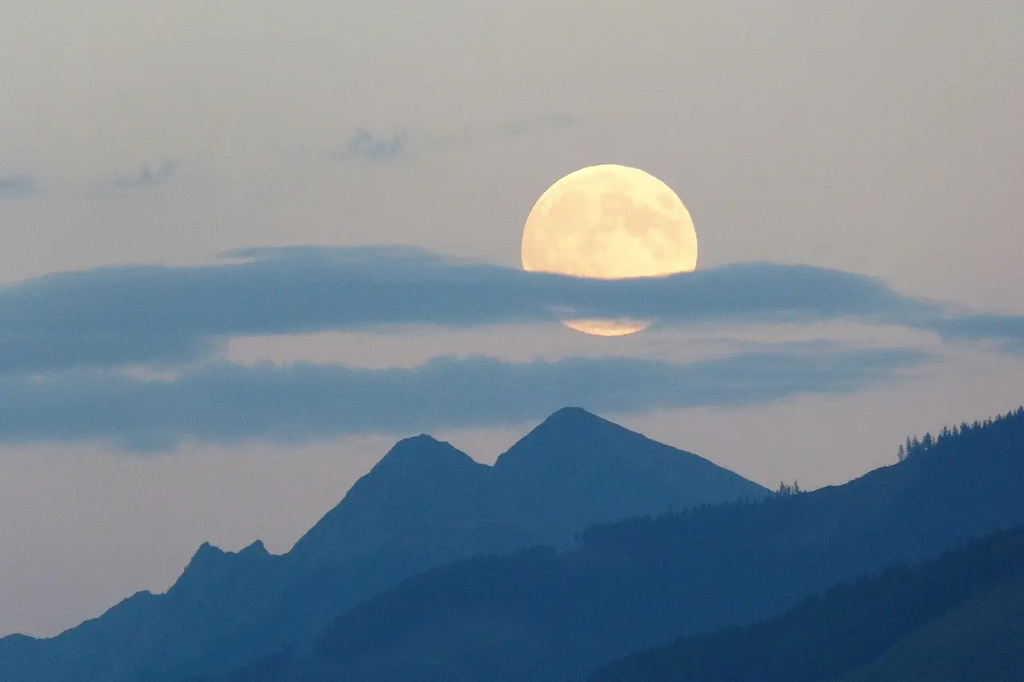
A closer Moon appears larger and brighter. At perigee it can look about 14% bigger in apparent size and noticeably brighter than at apogee.
How long does light take to travel from the Moon to Earth?
About 1.3 seconds (distance ~384,400 km; speed of light ≈ 299,792 km/s).