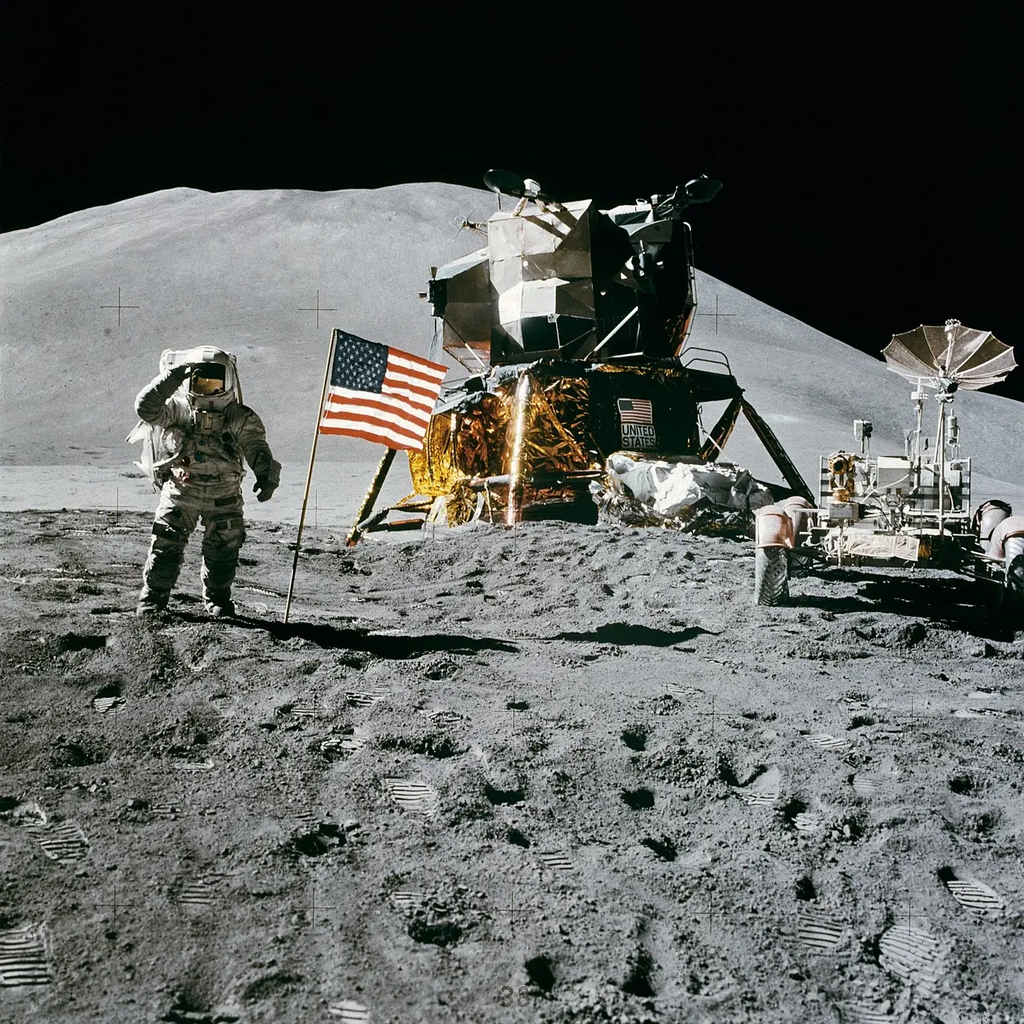
Moon's regolith refers to the layer of loose, fragmented material covering the Moon's solid surface. It consists of fine dust, rocky debris, and tiny glass beads formed by billions of years of meteorite impacts and solar wind exposure. This layer varies in thickness from a few centimeters to several meters, depending on the location. The regolith plays a crucial role in lunar exploration, affecting landing, movement, and potential resource extraction on the Moon.
Moon's Regolith
Moon's regolith refers to the layer of loose, fragmented material covering the Moon's solid surface. It consists of fine dust, rocky debris, and tiny glass beads formed by billions of years of meteorite impacts and solar wind exposure. This layer varies in thickness from a few centimeters to several meters, depending on the location. The regolith plays a crucial role in lunar exploration, affecting landing, movement, and potential resource extraction on the Moon.
💡 Key Takeaways
- Define lunar regolith and how it's formed by impacts and space weathering.
- Describe key properties of lunar regolith (grain size, porosity, cohesion) and how they differ from Earth soil.
- Explain how the Moon's environment (vacuum, extreme temperatures, radiation) affects regolith behavior and equipment.
- Discuss mission implications, including dust hazards and potential uses in in-situ resource utilization.
❓ Frequently Asked Questions
What is lunar regolith?
Lunar regolith is the Moon’s surface layer of loose soil, dust, and fragmented rocks formed by billions of years of meteoroid impacts and space weathering.
How is lunar regolith formed?
It forms from constant micrometeoroid impacts and extreme temperature changes in a vacuum, grinding rocks into dust and creating glassy particles.
Why is regolith important for Moon missions?
It affects equipment and habitat planning (dust can be abrasive and cling to gear) but also offers resources for in-situ use and shielding.
How do scientists study regolith?
Researchers analyze returned samples, use in-situ measurements from landers/rovers, and rely on orbital sensing to map composition and grain size.
How deep is the regolith on the Moon?
Depth varies by location, but regolith is generally a few meters thick, with some regions deeper depending on age and impact history.