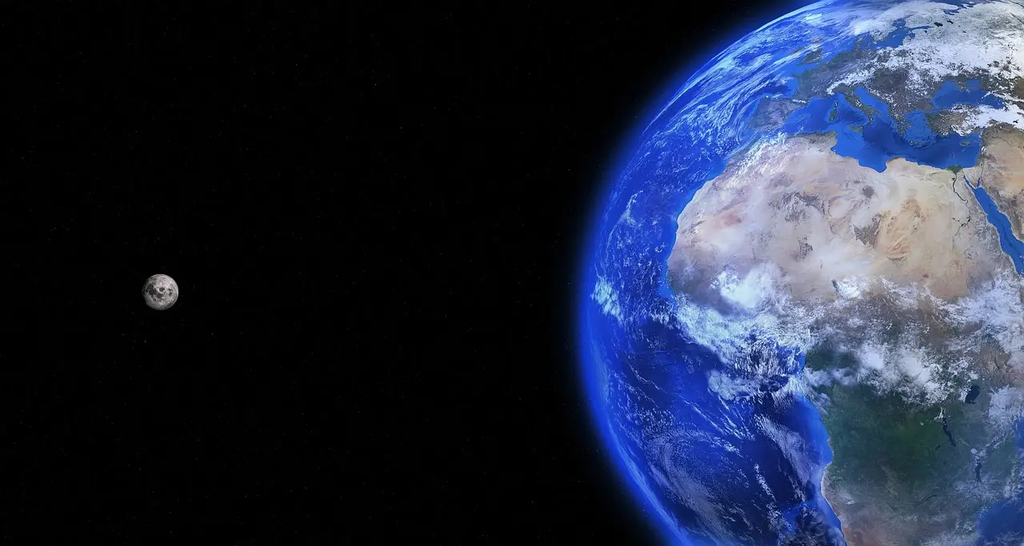
The Moon serves as a crucial stepping stone for interstellar travel due to its lower gravity, making launches more energy-efficient than from Earth. Its resources, such as water ice, can be used for fuel and life support, supporting long-duration missions. Establishing lunar bases enables testing of life-support systems and spacecraft, fostering technological advancements. The Moon’s strategic position aids in assembling and launching spacecraft, facilitating humanity’s future journeys beyond our solar system.
Moon's Role in Interstellar Travel
The Moon serves as a crucial stepping stone for interstellar travel due to its lower gravity, making launches more energy-efficient than from Earth. Its resources, such as water ice, can be used for fuel and life support, supporting long-duration missions. Establishing lunar bases enables testing of life-support systems and spacecraft, fostering technological advancements. The Moon’s strategic position aids in assembling and launching spacecraft, facilitating humanity’s future journeys beyond our solar system.
💡 Key Takeaways
- Understand how lunar resources (ice and regolith) could enable fuel, life support, and construction for deep-space missions.
- Explain how the Moon could serve as a staging post to test propulsion, habitats, and in-situ resource utilization before interstellar journeys.
- Learn how the Moon can act as a communications relay hub and a stable platform for astronomy and mission planning for interstellar travel.
- Identify the key challenges of leveraging the Moon for interstellar travel, including cost, logistics, radiation exposure, and power requirements.
- Discuss possible mission architectures that use the Moon as a gateway or fuel depot to extend options for future interstellar exploration.
❓ Frequently Asked Questions
What is gravity assist and how could the Moon contribute to it on an interstellar mission?
A gravity assist uses a celestial body's gravity to change a spacecraft's speed and direction without using propellant. The Moon could provide small trajectory tweaks or help shape the solar-system leg of a mission, but its effect is limited compared with larger planets.
How could the Moon serve as a base for fuel and supplies for long journeys?
The Moon hosts resources like water ice and oxygen in regolith that could be processed into rocket fuel and life-support consumables, enabling depots or refueling points before leaving the inner solar system.
Why is the Moon a good place to test habitats, life support, and robotics for long-duration space travel?
Its proximity and lower cost make it ideal for repeated testing of habitats, EVA systems, robotics, and autonomous operations, helping validate designs before venturing farther.
How can lunar materials help with radiation shielding for interstellar journeys?
Lunar regolith and water ice can be used as shielding around crew modules or fuel tanks, reducing exposure to cosmic rays and solar radiation on long interstellar voyages.