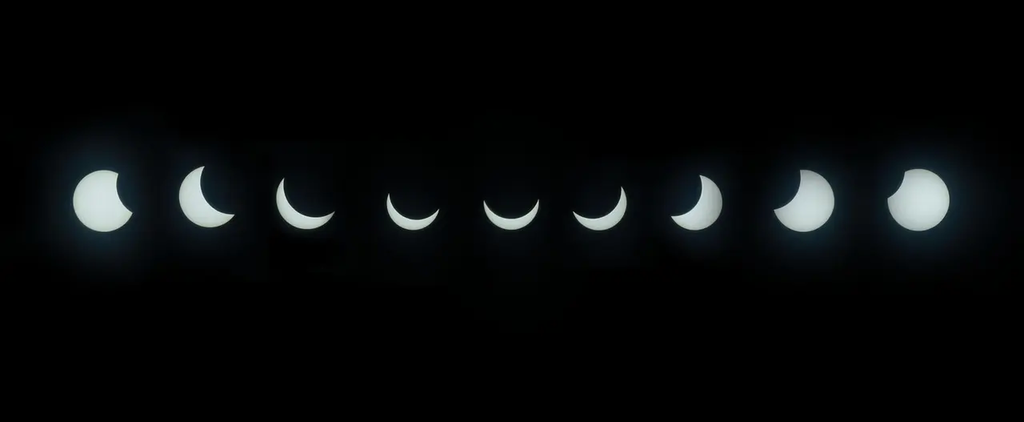
The Moon plays a crucial role in solar eclipses by positioning itself directly between the Earth and the Sun. During this alignment, the Moon blocks sunlight from reaching certain areas of the Earth, casting a shadow and causing the Sun to appear partially or fully obscured. This celestial event highlights the unique relationship between the Earth, Moon, and Sun, and can only occur during a new moon phase when their orbits align precisely.
Moon's Role in Solar Eclipses
The Moon plays a crucial role in solar eclipses by positioning itself directly between the Earth and the Sun. During this alignment, the Moon blocks sunlight from reaching certain areas of the Earth, casting a shadow and causing the Sun to appear partially or fully obscured. This celestial event highlights the unique relationship between the Earth, Moon, and Sun, and can only occur during a new moon phase when their orbits align precisely.
💡 Key Takeaways
- Explain how Sun–Moon–Earth alignment (syzygy) causes solar eclipses and how the Moon’s distance determines total, partial, or annular types.
- Describe the Moon’s phases and orbital geometry that make solar eclipses possible and why they don’t occur every month.
- Identify the differences between total, partial, and annular eclipses and what observers see for each type.
- Understand why a given location may see an eclipse only rarely and how eclipse paths move across the Earth.
❓ Frequently Asked Questions
What is the Moon's role in a solar eclipse?
The Moon moves between the Sun and Earth, casting a shadow on Earth. If the Moon's apparent size covers the Sun, observers along the path see an eclipse.
Why don't solar eclipses happen every month?
The Moon's orbit is tilted about 5 degrees to Earth's orbit, so most new Moons miss the Sun–Earth alignment. Eclipses occur only during eclipse seasons when the Sun is near the Moon's orbital nodes.
What is the difference between the umbra and the penumbra in a solar eclipse?
The umbra is the dark inner shadow where the Sun is completely blocked, leading to a total eclipse. The penumbra is the lighter outer shadow where only part of the Sun is blocked, causing a partial eclipse.
What are the main types of solar eclipses?
Total, partial, annular, and hybrid. Total occurs when the Moon fully covers the Sun; annular when the Moon is too far to fully cover it; partial when only part is blocked; hybrid is a rare path where a total eclipse becomes annular (or vice versa).