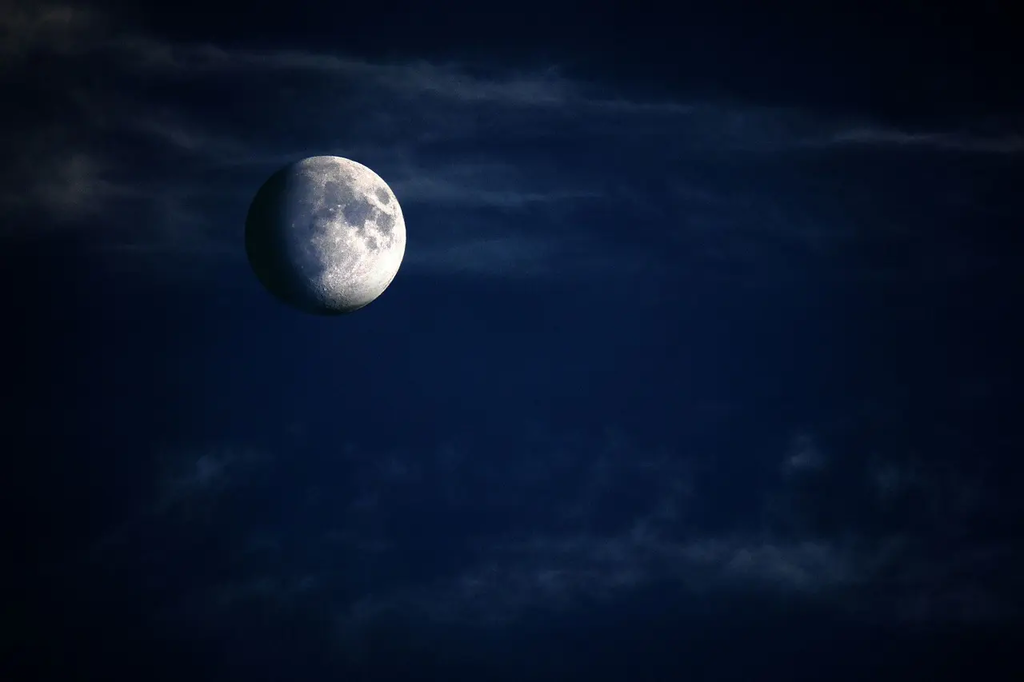
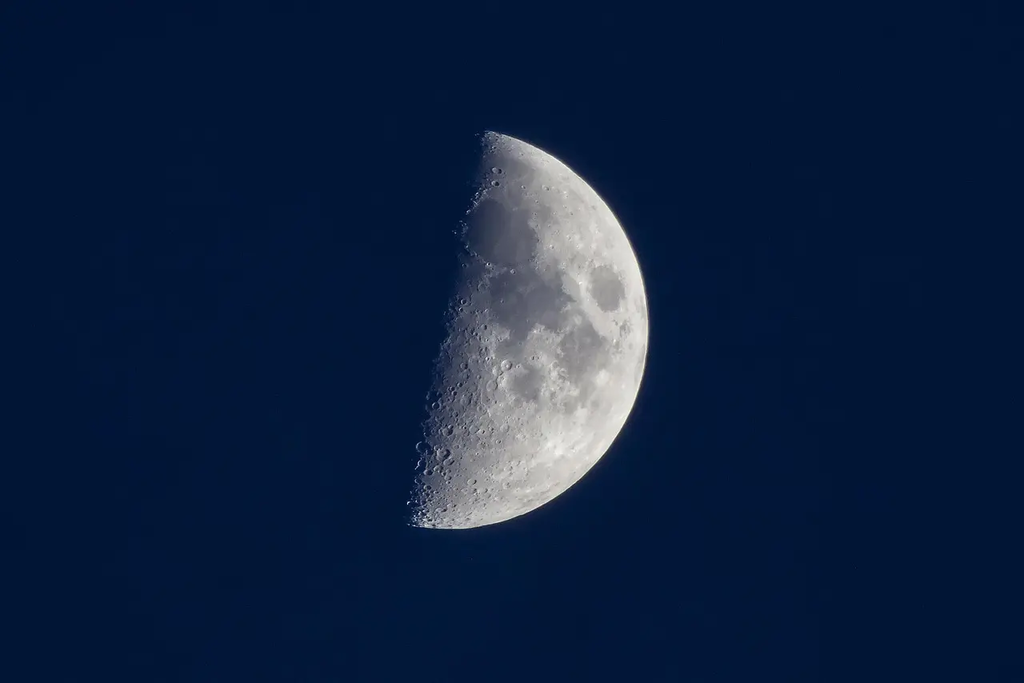
The Moon's rotation refers to the way the Moon spins on its own axis. It takes about 27.3 days to complete one full rotation, which is the same amount of time it takes to orbit Earth. This synchronous rotation means the same side of the Moon always faces Earth, creating the familiar "near side" and "far side." This unique movement is due to gravitational forces between the Earth and the Moon.
Moon's Rotation
The Moon's rotation refers to the way the Moon spins on its own axis. It takes about 27.3 days to complete one full rotation, which is the same amount of time it takes to orbit Earth. This synchronous rotation means the same side of the Moon always faces Earth, creating the familiar "near side" and "far side." This unique movement is due to gravitational forces between the Earth and the Moon.
💡 Key Takeaways
- Understand why the Moon always shows the same face to Earth due to synchronous rotation (tidal locking).
- Learn the difference between the Moon's rotation period and its orbital period (sidereal vs. synodic months).
- Explain how tidal forces slowed the Moon's spin over time, leading to tidal locking with Earth.
- Recognize that the Moon's phases are caused by the changing Sun–Earth–Moon geometry, not by the Moon's rotation speed.
❓ Frequently Asked Questions
Is the Moon tidally locked to Earth?
Yes. The Moon's rotation period matches its orbit around Earth (about 27.3 days relative to the stars), so the same hemisphere faces Earth most of the time, with slight libration allowing a view of a bit more than half the surface.
How long is a day on the Moon?
A lunar day (sunrise to sunrise) is about 29.5 Earth days; daylight and darkness each last roughly 14.75 days.
What is the difference between sidereal and synodic months?
A sidereal month (~27.3 days) is the Moon's orbit relative to distant stars. A synodic month (~29.53 days) is the cycle of lunar phases relative to the Sun.
What is libration and why can we see more than half of the Moon?
Libration is a small wobble in the Moon's orientation due to its elliptical orbit and slight axial tilt, allowing us to glimpse up to about 59% of the lunar surface over time.