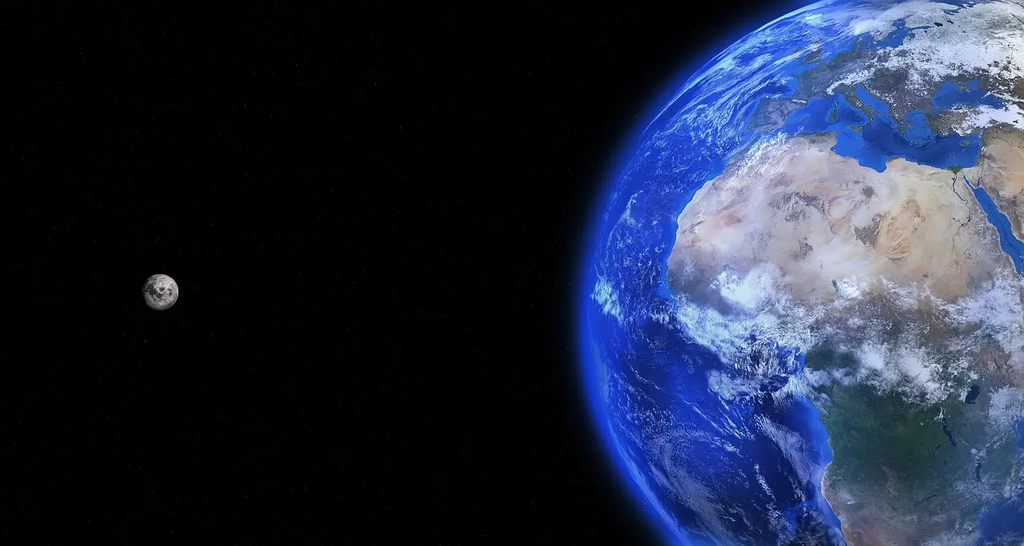
The Moon's seas, known as "maria," are vast, dark plains formed by ancient volcanic activity. Despite their name, they contain no water; early astronomers mistook them for oceans. These basaltic regions cover about 16% of the lunar surface and are mostly found on the side facing Earth. The maria contrast with the Moon’s lighter highlands, creating the familiar patterns visible from Earth.
Moon's Seas
The Moon's seas, known as "maria," are vast, dark plains formed by ancient volcanic activity. Despite their name, they contain no water; early astronomers mistook them for oceans. These basaltic regions cover about 16% of the lunar surface and are mostly found on the side facing Earth. The maria contrast with the Moon’s lighter highlands, creating the familiar patterns visible from Earth.
💡 Key Takeaways
- Understand what lunar seas (maria) are and why they appear darker on the Moon's surface
- Learn how maria formed from ancient volcanic lava flows and what this reveals about the Moon's early history
- Distinguish between maria and lunar highlands, including differences in age, composition, and distribution
- Identify famous lunar seas (e.g., Mare Tranquillitatis, Mare Serenitatis) and where they are located on the Moon
❓ Frequently Asked Questions
What are the Moon's seas (maria)?
They are large, dark plains of solidified basalt on the Moon's surface, formed by ancient volcanic lava flows.
Why are they called seas if there is no water?
Early observers named them 'seas' because of their dark, flat appearance, reminiscent of seas, not because they contain water.
How did the seas form?
Impact basins formed by asteroids were later filled with basalt lava that cooled into smooth plains.
How many seas are there and where are they located?
There are about a dozen major maria, primarily on the Moon's near side; numerous smaller basins lie elsewhere.
Are the seas still forming today?
No. The Moon's volcanism ceased billions of years ago, so the maria are ancient features.