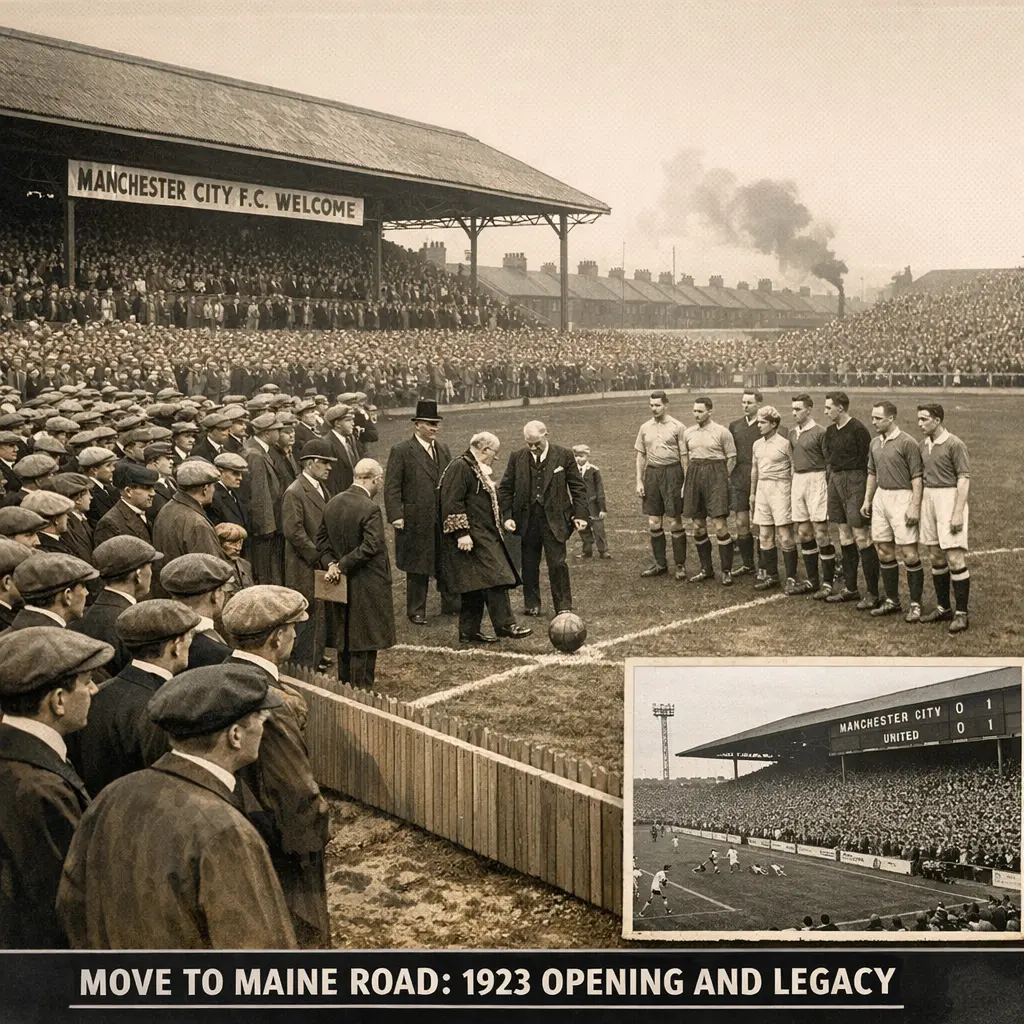
In 1923, Manchester City F.C. moved to Maine Road, a purpose-built stadium in Moss Side, Manchester, marking a significant milestone in the club’s history. The opening attracted huge crowds and symbolized the club’s ambitions, providing a modern home for over 80 years. Maine Road became an iconic venue, witnessing memorable matches, legendary players, and key moments, deeply embedding itself in Manchester City’s identity until the move to the City of Manchester Stadium in 2003.
Move to Maine Road: 1923 Opening and Legacy
In 1923, Manchester City F.C. moved to Maine Road, a purpose-built stadium in Moss Side, Manchester, marking a significant milestone in the club’s history. The opening attracted huge crowds and symbolized the club’s ambitions, providing a modern home for over 80 years. Maine Road became an iconic venue, witnessing memorable matches, legendary players, and key moments, deeply embedding itself in Manchester City’s identity until the move to the City of Manchester Stadium in 2003.
💡 Key Takeaways
- Explain why Manchester City moved to Maine Road in 1923 and what it meant for the club.
- Describe the opening day significance for fans and Manchester.
- Identify Maine Road’s key features and how the stadium shaped matchday atmosphere.
- Assess Maine Road’s long-term legacy for the club and its fans.
❓ Frequently Asked Questions
What is Maine Road and where was it located?
Maine Road was a football stadium in the Moss Side area of Manchester, named after the street it stood on. It was the home ground of Manchester City from 1923 to 2003.
When did Maine Road open and what marked its opening?
Maine Road opened in 1923 and featured an inaugural match that drew a large crowd, marking Manchester City’s move to a purpose-built ground.
What is the legacy of Maine Road in football history?
Maine Road is remembered for shaping Manchester City’s pre-modern era, hosting big crowds and important matches, and representing an iconic urban stadium of its time.
What happened to the Maine Road site after the club left?
The stadium was demolished and the site was redeveloped for housing and other uses, leaving behind a legacy tied to Manchester City’s history.
Why did Manchester City move away from Maine Road?
To adopt a larger, more modern stadium with better facilities, a transition completed when the club moved to the City of Manchester Stadium (Eastlands) in 2003.