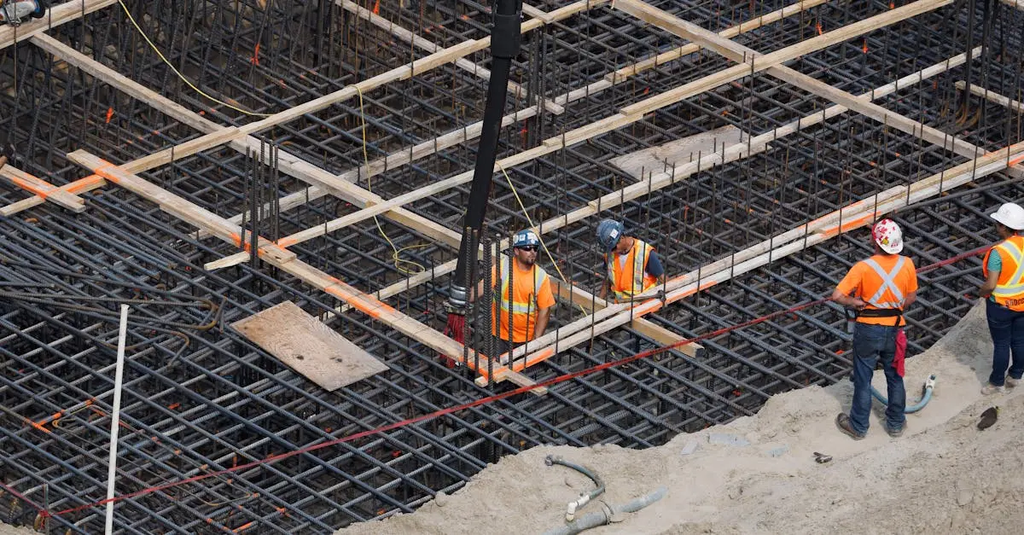
Multi-Objective Optimization for Envelope-Structure-MEP Integration in construction technology refers to the process of simultaneously optimizing multiple design goals—such as energy efficiency, structural integrity, and mechanical-electrical-plumbing (MEP) performance—within a building project. This approach leverages advanced computational tools to find balanced solutions that satisfy architectural, structural, and systems requirements, enhancing overall building performance, reducing costs, and improving sustainability by considering trade-offs between competing objectives during the design and construction phases.
Multi-Objective Optimization for Envelope-Structure-MEP Integration
Multi-Objective Optimization for Envelope-Structure-MEP Integration in construction technology refers to the process of simultaneously optimizing multiple design goals—such as energy efficiency, structural integrity, and mechanical-electrical-plumbing (MEP) performance—within a building project. This approach leverages advanced computational tools to find balanced solutions that satisfy architectural, structural, and systems requirements, enhancing overall building performance, reducing costs, and improving sustainability by considering trade-offs between competing objectives during the design and construction phases.

💡 Key Takeaways
- Understand multi-objective optimization and how it applies to envelope-structure-MEP integration.
- Identify common objectives and constraints in envelope design (energy, cost, comfort, daylight).
- Learn to balance trade-offs using Pareto fronts and decision-making in design.
- Explore practical workflow and collaboration tools to integrate envelope, structure, and MEP systems.
❓ Frequently Asked Questions
What is multi-objective optimization in envelope-structure-MEP integration?
A design approach that seeks trade-offs among several goals (e.g., energy performance, cost, comfort) across the building envelope, structure, and MEP systems, producing a set of Pareto-optimal solutions.
Why is MOO important in building design?
Because decisions in the envelope, structure, and MEP affect each other (e.g., insulation impacts energy use, window size influences daylight and load, duct routing affects space). MOO helps balance competing goals rather than optimizing a single metric.
What are common objectives and constraints in this context?
Objectives often include minimizing energy use, lifecycle cost, and emissions, while maximizing comfort and daylight. Constraints include codes, safety, fire requirements, structural safety, space planning, and constructability.
What methods and tools are typically used?
Methods like NSGA-II, weighted-sum, or epsilon-constraint to generate Pareto fronts; co-simulation between energy models (e.g., EnergyPlus) and structural/MEP models; BIM-based parametric tools (Revit/Dynamo, Grasshopper) for integrated design and clash avoidance.