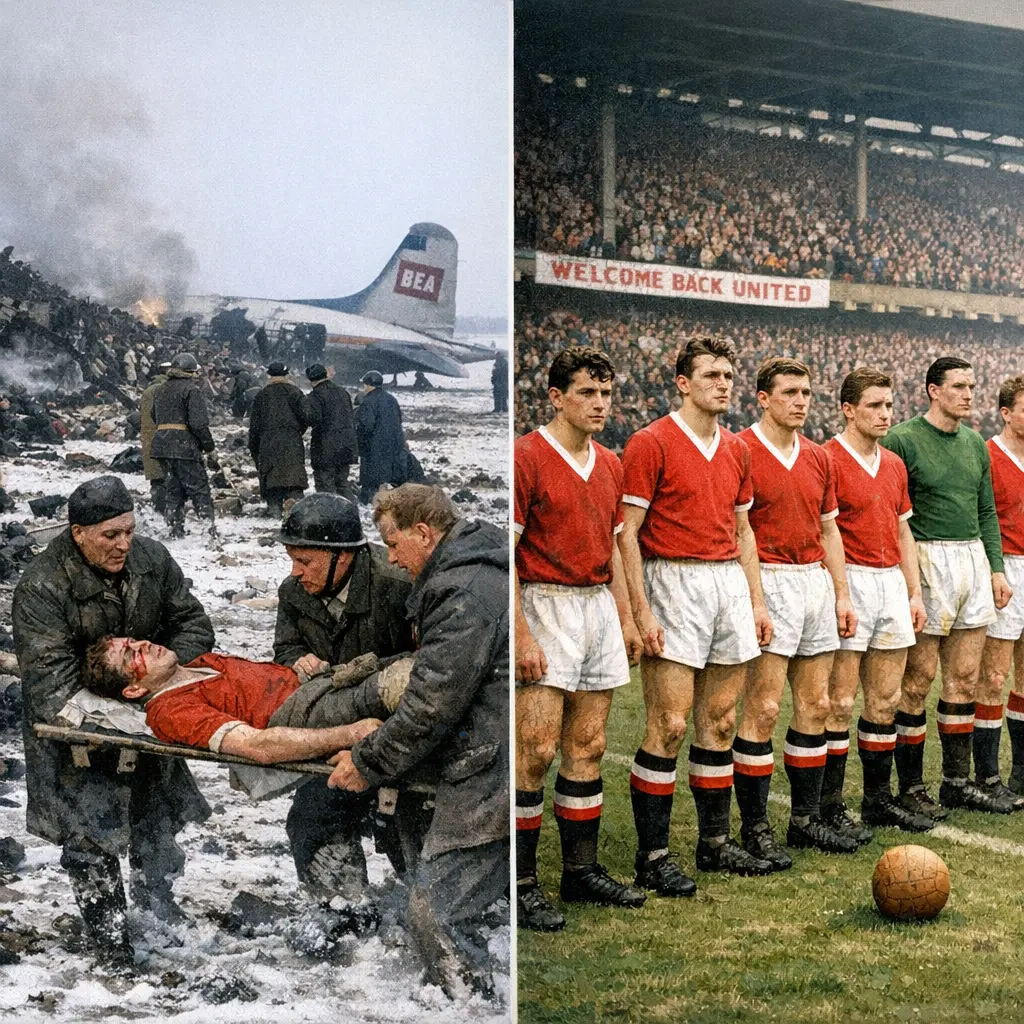
The Munich Air Disaster of 1958 was a tragic plane crash that killed 23 people, including eight Manchester United players, staff, and journalists. The catastrophe devastated the club, but under manager Matt Busby’s leadership, Manchester United underwent a remarkable rebuild. They nurtured young talent and rebuilt their squad, ultimately achieving success a decade later by winning the 1968 European Cup, symbolizing resilience and triumph over adversity in football history.
Munich Air Disaster (1958) and the Rebuild
The Munich Air Disaster of 1958 was a tragic plane crash that killed 23 people, including eight Manchester United players, staff, and journalists. The catastrophe devastated the club, but under manager Matt Busby’s leadership, Manchester United underwent a remarkable rebuild. They nurtured young talent and rebuilt their squad, ultimately achieving success a decade later by winning the 1968 European Cup, symbolizing resilience and triumph over adversity in football history.
💡 Key Takeaways
- Understand what happened during the Munich Air Disaster of 1958 and its immediate consequences.
- Learn how Manchester United rebuilt the team after the tragedy, including leadership changes and the rise of new talent.
- Explore the disaster's impact on football safety, training, and club management.
- Recognize the lasting legacy of the Busby Babes and how the event is commemorated in football history.
❓ Frequently Asked Questions
What happened in the Munich Air Disaster (1958)?
A BEA flight carrying Manchester United crashed on takeoff at Munich-Riem Airport on February 6, 1958, killing 23 people at the scene and 8 more later (31 dead in total); 13 survived.
Which team was involved and who was on board?
Manchester United players and staff, nicknamed the Busby Babes, were on BEA Flight 609 after a European match.
What is meant by the 'rebuild' in the article title?
After the disaster, manager Sir Matt Busby rebuilt the team with new players; the club eventually won the 1968 European Cup.
What were the immediate consequences of the disaster for the club?
The club faced heavy losses of players and staff, endured a period of rebuilding, and focused on recovering and continuing competition at the highest level.
What is the broader legacy of the Munich disaster?
It spurred improvements in football welfare, youth development, and aviation safety practices, influencing both sport and aviation long after.