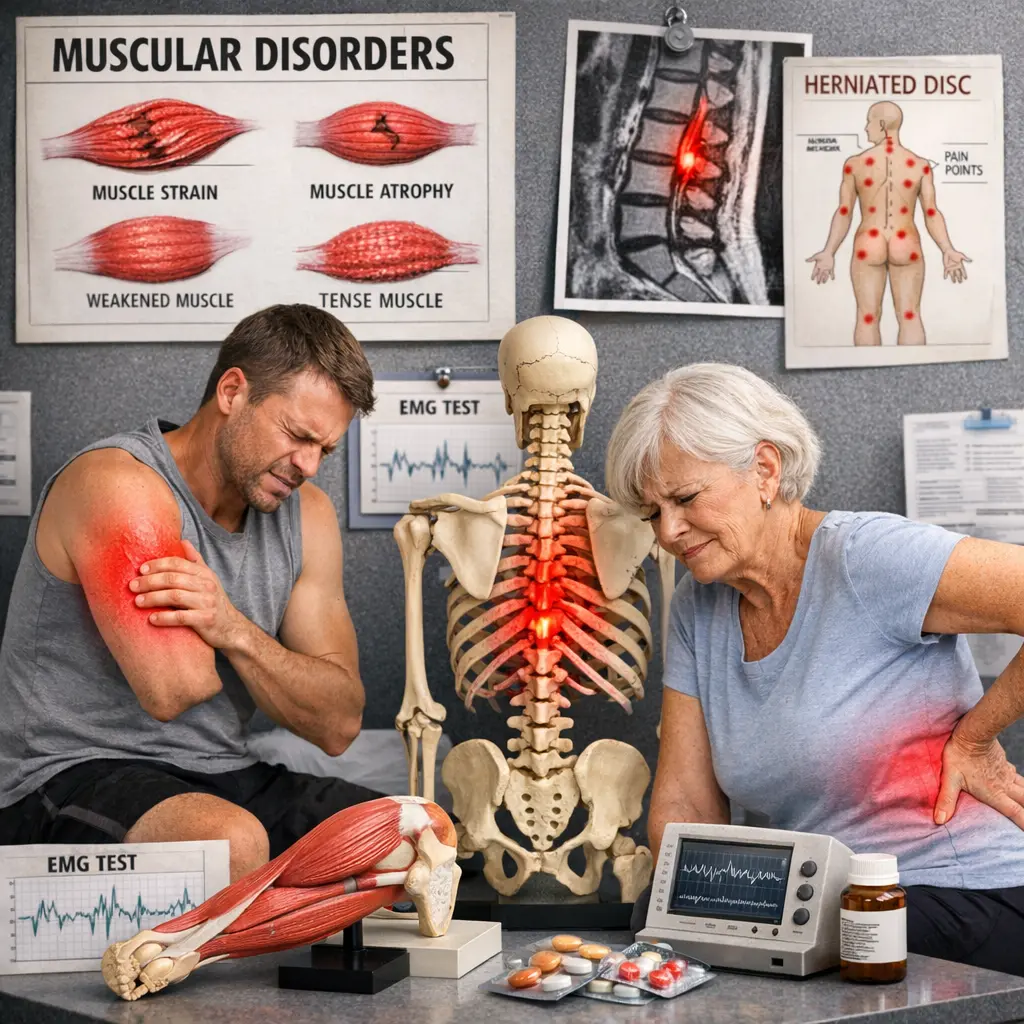
Muscular disorders refer to a range of conditions that affect the muscles’ structure, function, or strength in the human body. These disorders can cause symptoms such as weakness, pain, stiffness, or muscle wasting. Common examples include muscular dystrophy, myasthenia gravis, and muscle cramps. Muscular disorders may result from genetic factors, autoimmune responses, injuries, or other diseases, impacting movement and overall physical capabilities. Early diagnosis and treatment can help manage symptoms and improve quality of life.
Muscular Disorders
Muscular disorders refer to a range of conditions that affect the muscles’ structure, function, or strength in the human body. These disorders can cause symptoms such as weakness, pain, stiffness, or muscle wasting. Common examples include muscular dystrophy, myasthenia gravis, and muscle cramps. Muscular disorders may result from genetic factors, autoimmune responses, injuries, or other diseases, impacting movement and overall physical capabilities. Early diagnosis and treatment can help manage symptoms and improve quality of life.
💡 Key Takeaways
- Understand what muscular disorders are and how they affect muscle strength, mobility, and daily activities.
- Identify common types (e.g., muscular dystrophies, inflammatory myopathies) and their typical signs and symptoms.
- Learn the diagnostic approaches used to identify muscular disorders, including history, physical exam, genetic testing, EMG, muscle biopsy, and imaging.
- Explore treatment and management options such as medications, physical therapy, occupational therapy, assistive devices, and lifestyle adaptations.
❓ Frequently Asked Questions
What are muscular disorders?
Conditions that weaken or impair the muscles' ability to contract, due to problems in the muscle fibers, nerves, or metabolism.
What are common types of muscular disorders?
Muscular dystrophies (inherited muscle-weakening), inflammatory myopathies (polymyositis, dermatomyositis), metabolic myopathies (e.g., Pompe disease), congenital myopathies, and neuromuscular conditions affecting nerves that control the muscles.
What are typical symptoms?
Progressive muscle weakness, cramps or stiffness, fatigue, and difficulty with activities like climbing stairs or rising from a chair.
How are muscular disorders diagnosed and managed?
Diagnosis uses history, exam, blood tests (e.g., CK), EMG, nerve studies, MRI, muscle biopsy, and genetic tests. Treatment varies by type and may include physical therapy, medications for inflammation or symptoms, enzyme replacement for some metabolic disorders, and assistive devices.