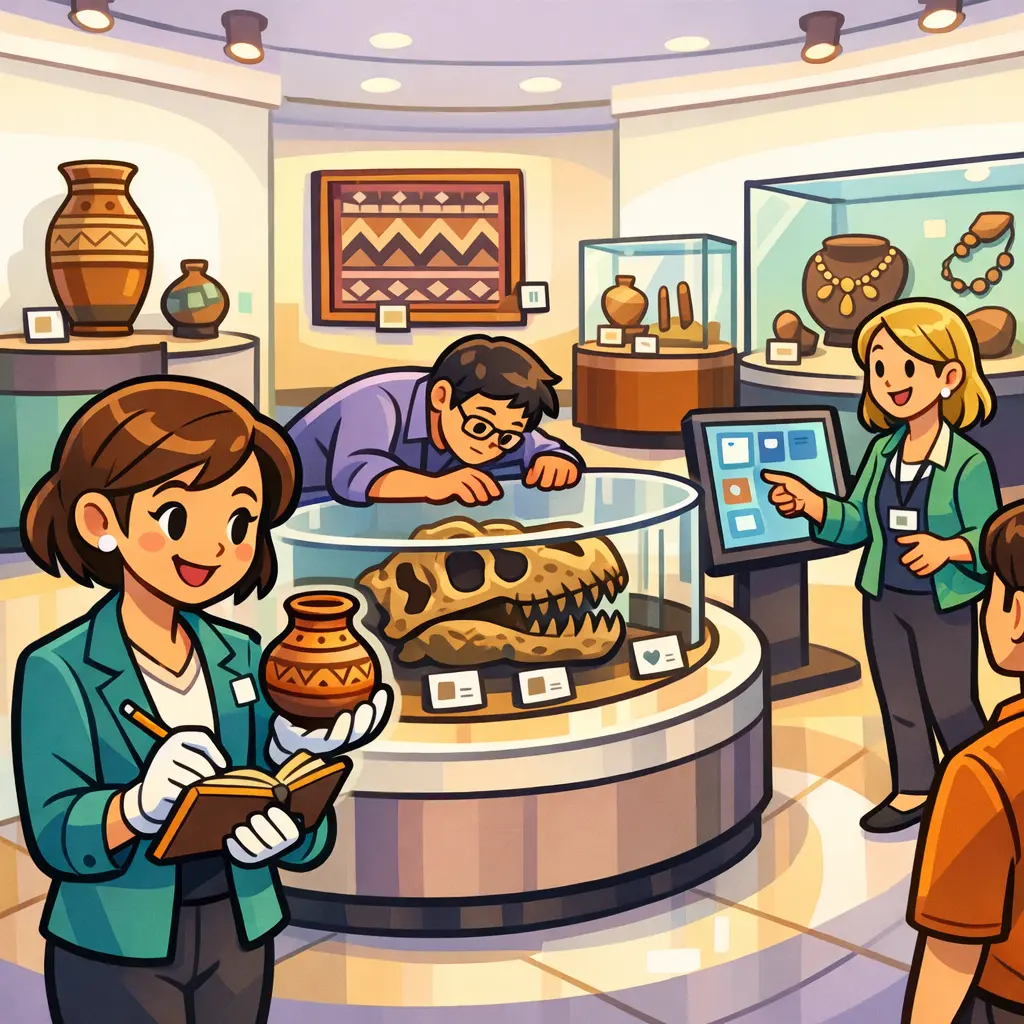
Museology & Curatorial Practice (Art History & Movements) refers to the study and management of museums, focusing on how art collections are preserved, interpreted, and displayed. It encompasses the historical development of art, understanding various artistic movements, and the methods curators use to create engaging exhibitions. This field combines theoretical knowledge of art history with practical skills in exhibition planning, collection care, and public education within cultural institutions.
Museology & Curatorial Practice
Museology & Curatorial Practice (Art History & Movements) refers to the study and management of museums, focusing on how art collections are preserved, interpreted, and displayed. It encompasses the historical development of art, understanding various artistic movements, and the methods curators use to create engaging exhibitions. This field combines theoretical knowledge of art history with practical skills in exhibition planning, collection care, and public education within cultural institutions.
💡 Key Takeaways
- Understand the role of museology in shaping public access to cultural heritage
- Learn core curator duties: collection management, interpretation, and exhibitions
- Grasp the basics of exhibition planning from concept to installation
- Recognize ethical, inclusive, and community-centered practices in curatorial work
- Explore how audience research and storytelling inform displays and programming
❓ Frequently Asked Questions
What is museology?
Museology is the study and practice of museums, including how they collect, conserve, research, interpret, and educate the public about objects and cultures.
Who is a curator and what do they do?
A curator selects and researches objects, develops exhibitions, writes interpretations, and collaborates with conservators, researchers, and designers to present knowledge to visitors.
What is curatorial practice?
Curatorial practice encompasses the methods and decisions used to assemble and present objects in exhibitions—research, interpretation, storytelling, and audience engagement.
What is provenance?
Provenance is the documented history of an object’s ownership and care, essential for authenticity, ethics, and legal compliance.