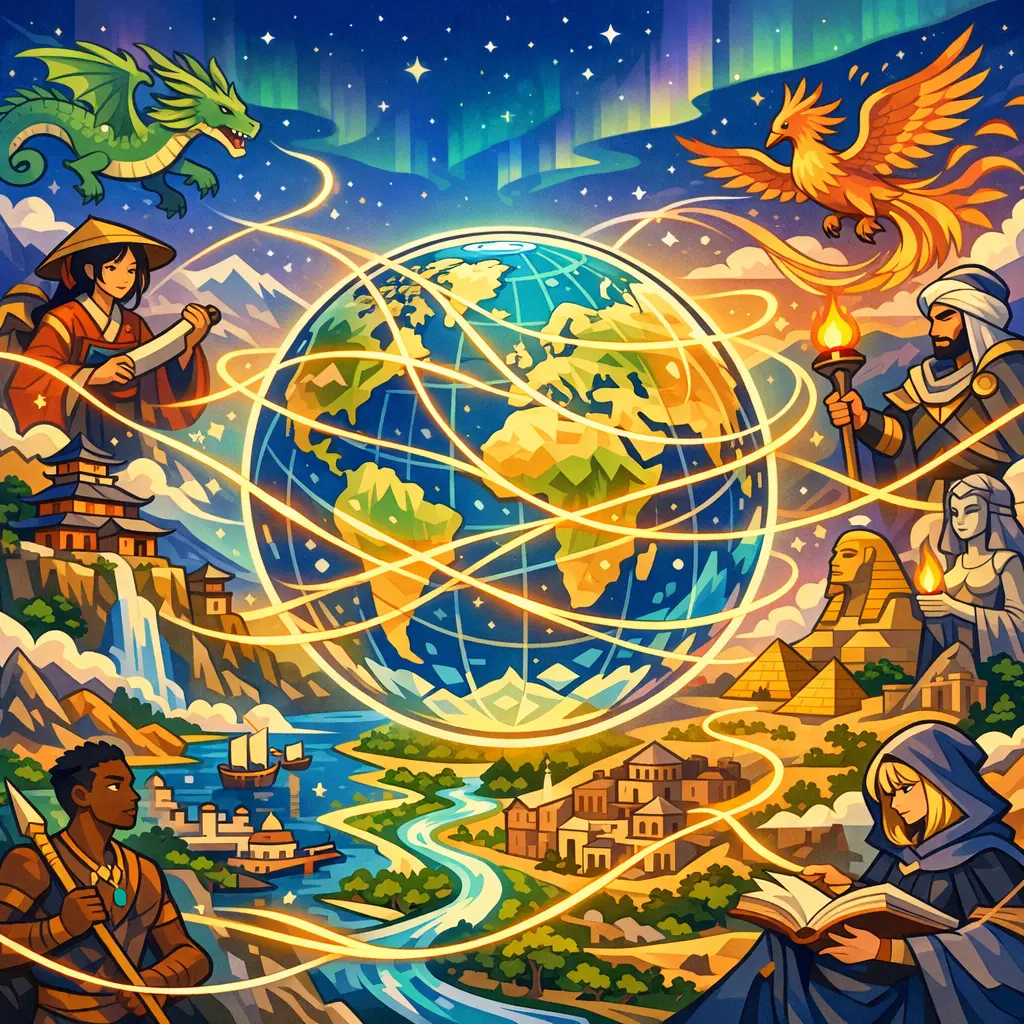
Mythopoesis, worldbuilding, and global narratives refer to the creative processes by which cultures construct imaginative worlds, stories, and mythologies. These practices shape collective identities, values, and beliefs, influencing culture, religion, and society. Through myth-making and narrative construction, societies articulate worldviews, explain origins, and establish social norms, fostering shared meaning and cohesion. Global narratives further connect diverse cultures, facilitating cross-cultural understanding and the evolution of collective human experience.
Mythopoesis, Worldbuilding & Global Narratives
Mythopoesis, worldbuilding, and global narratives refer to the creative processes by which cultures construct imaginative worlds, stories, and mythologies. These practices shape collective identities, values, and beliefs, influencing culture, religion, and society. Through myth-making and narrative construction, societies articulate worldviews, explain origins, and establish social norms, fostering shared meaning and cohesion. Global narratives further connect diverse cultures, facilitating cross-cultural understanding and the evolution of collective human experience.
💡 Key Takeaways
- Define mythopoesis and how it drives the creation of fictional worlds.
- Apply worldbuilding techniques to create coherent, expandable global narratives.
- Craft believable mythic systems, symbols, and legends that enrich settings.
- Analyze how myths and worldbuilding reflect and shape cultural power dynamics without stereotypes.
❓ Frequently Asked Questions
What is mythopoesis?
Mythopoesis is the creation or shaping of myths within a story or world, often to explain origins, values, or cosmology.
What is worldbuilding?
Worldbuilding is the process of designing a fictional world, including its geography, history, cultures, magic or science, and social systems.
How do global narratives influence myth and worldbuilding?
Global narratives draw on diverse cultures and myths to enrich a world, making myths and cultures feel credible and interconnected.
What are key elements to craft believable cultures in worldbuilding?
Language, history, religion, social structure, technology, rituals, and geography shape how a culture functions within a world.
What is the difference between mythopoesis and mythology?
Mythopoesis is the act of creating myths; mythology is the body of myths within a culture or world.