Neuroanatomy Essentials refers to the fundamental concepts and structures that form the basis of understanding the anatomy of the nervous system. This includes the study of the brain, spinal cord, and peripheral nerves, as well as their organization, functions, and interconnections. Mastery of neuroanatomy essentials is crucial for students and professionals in medicine and neuroscience, as it provides the groundwork for diagnosing and treating neurological disorders.
Neuroanatomy Essentials
Neuroanatomy Essentials refers to the fundamental concepts and structures that form the basis of understanding the anatomy of the nervous system. This includes the study of the brain, spinal cord, and peripheral nerves, as well as their organization, functions, and interconnections. Mastery of neuroanatomy essentials is crucial for students and professionals in medicine and neuroscience, as it provides the groundwork for diagnosing and treating neurological disorders.
💡 Key Takeaways
- Identify major brain regions (cerebrum, cerebellum, brainstem) and summarize their primary roles.
- Describe spinal cord organization and the main motor and sensory pathways.
- Explain the structure of peripheral nerves (axons, myelin) and nerve fiber types (sensory vs. motor).
- Understand common neuroanatomical terminology, planes, and how brain, spinal cord, and peripheral nerves interconnect.
❓ Frequently Asked Questions
What is neuroanatomy?
Neuroanatomy is the study of the structure and organization of the nervous system, including the brain, spinal cord, and peripheral nerves, and how these parts connect and work together.
What are the main divisions of the nervous system?
The nervous system is divided into the Central Nervous System (CNS: brain and spinal cord) and the Peripheral Nervous System (PNS: all nerves outside the CNS, including cranial and spinal nerves). The CNS processes information, while the PNS transmits signals to and from the CNS.
What are the major brain structures and their general functions?
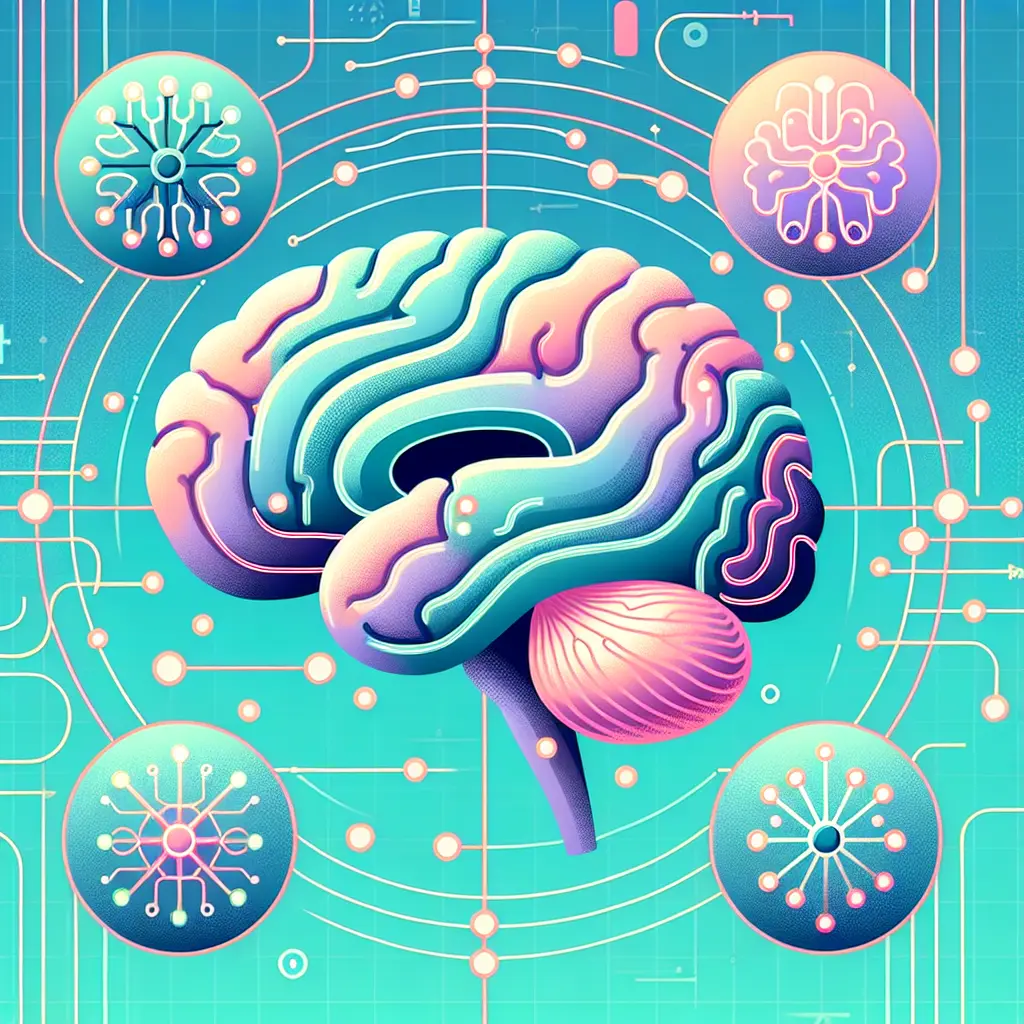
The major brain structures are the cerebrum (cerebral cortex for thought, sensation, and voluntary movement; includes the frontal, parietal, temporal, and occipital lobes), the cerebellum (coordination and balance), and the brainstem (basic life support and relay between brain and body).
How are neurons and nerve pathways organized?
Neurons are the signaling cells, supported by glial cells. Gray matter houses neuron cell bodies; white matter contains myelinated fibers. In the CNS, axonal tracts transmit information, while in the PNS, nerves carry signals. Pathways are organized as ascending (sensory) and descending (motor) routes.