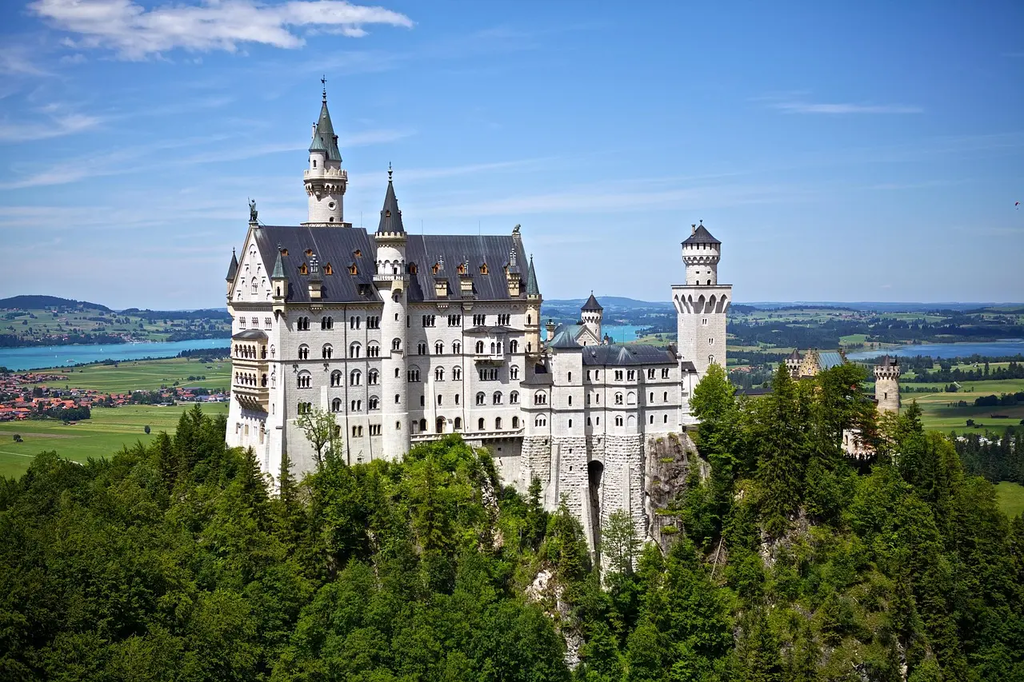
Neuschwanstein Castle is a picturesque 19th-century Romanesque Revival palace located in Bavaria, Germany. Perched atop a rugged hill, it was commissioned by King Ludwig II and inspired by fairy tales and operas. Its enchanting turrets and scenic mountain backdrop make it one of the most photographed castles in the world, often cited as the inspiration for Disney’s Sleeping Beauty Castle. Neuschwanstein attracts millions of visitors annually, symbolizing romantic architecture and fantasy.
Neuschwanstein Castle
Neuschwanstein Castle is a picturesque 19th-century Romanesque Revival palace located in Bavaria, Germany. Perched atop a rugged hill, it was commissioned by King Ludwig II and inspired by fairy tales and operas. Its enchanting turrets and scenic mountain backdrop make it one of the most photographed castles in the world, often cited as the inspiration for Disney’s Sleeping Beauty Castle. Neuschwanstein attracts millions of visitors annually, symbolizing romantic architecture and fantasy.
💡 Key Takeaways
- Locate Neuschwanstein Castle in Bavaria, Germany, near Füssen and the village of Hohenschwangau.
- Learn why Ludwig II commissioned the castle in the 1860s–1880s and that the project was never completed.
- Identify its Romanesque Revival style and its fairy-tale appearance, with interiors inspired by Wagnerian operas.
- Recognize its cultural impact as a symbol of Romanticism and one of Europe’s most-visited castles.
❓ Frequently Asked Questions
What is Neuschwanstein Castle?
A 19th‑century Romanesque Revival palace in Bavaria, Germany, commissioned by King Ludwig II; famous for its fairy‑tale exterior.
Who commissioned and began construction of Neuschwanstein Castle, and when?
Commissioned by King Ludwig II of Bavaria. Construction began in 1869 and continued after his death in 1886; the castle was never fully completed.
Where is Neuschwanstein Castle located?
In the Bavarian Alps near Füssen, close to Hohenschwangau in southwestern Bavaria, Germany.
What inspired its design and interior?
Romantic medieval imagery and Wagnerian themes, with a blend of Romanesque, Gothic, and Byzantine motifs, influenced by stage designer Christian Jank and Bavarian architects.