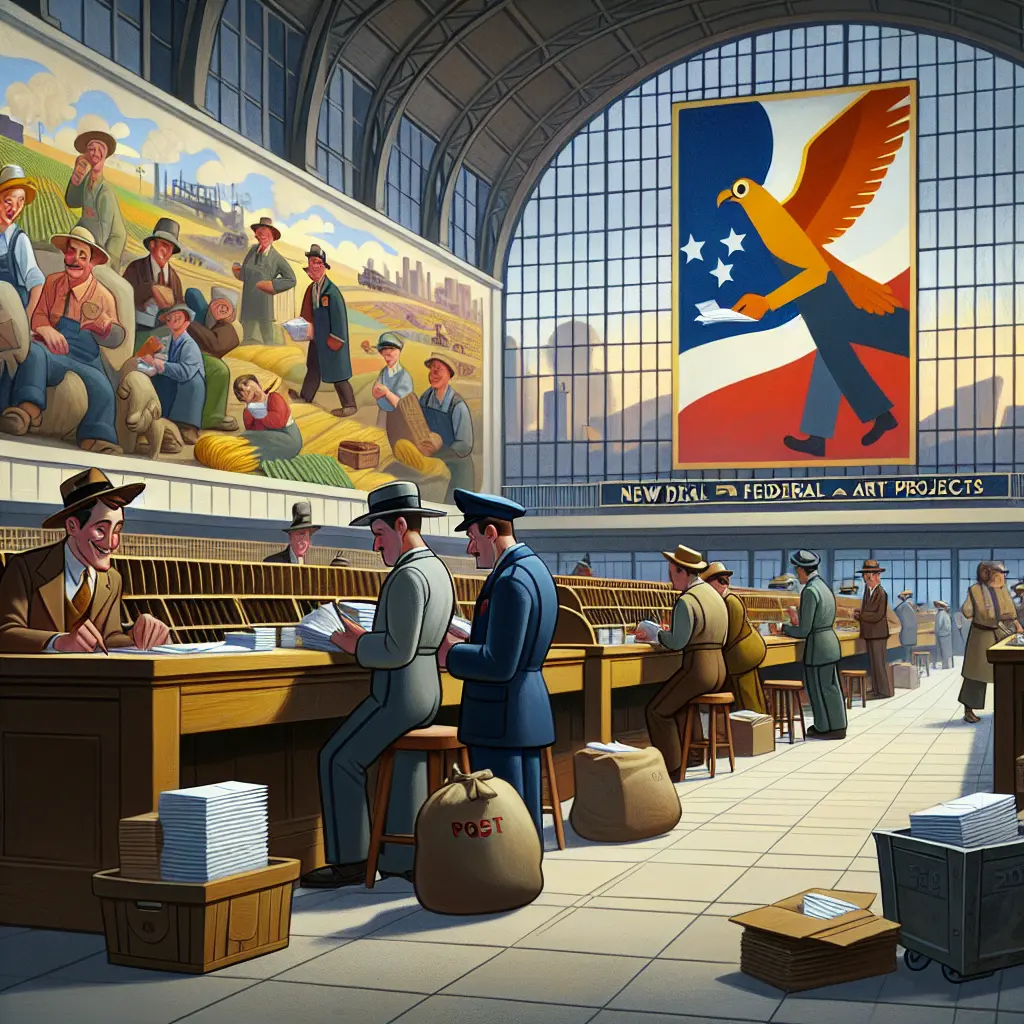
The New Deal Post Office Murals and Federal Art Programs were initiatives launched during the 1930s in the United States to provide employment for artists during the Great Depression. These programs, such as the Treasury Section of Painting and Sculpture, commissioned artists to create murals and artworks in public buildings, especially post offices. The resulting murals depicted American life, history, and landscapes, making art accessible to the public and supporting cultural enrichment across the nation.
New Deal Post Office Murals and Federal Art Programs
The New Deal Post Office Murals and Federal Art Programs were initiatives launched during the 1930s in the United States to provide employment for artists during the Great Depression. These programs, such as the Treasury Section of Painting and Sculpture, commissioned artists to create murals and artworks in public buildings, especially post offices. The resulting murals depicted American life, history, and landscapes, making art accessible to the public and supporting cultural enrichment across the nation.
💡 Key Takeaways
- Understand how the New Deal art programs provided employment for artists during the Great Depression while bringing art to the public.
- Learn about the Treasury Section of Painting and Sculpture (Section of Fine Arts) and its role in commissioning post office murals and other federal building art.
- See how the murals depicted American life, regional landscapes, industries, and historical moments across communities.
- Explore the programs' lasting impact on federal art funding and public access to art in everyday spaces.
- Discover iconic post office murals and hidden gems, and how preservation shapes their meaning today.
❓ Frequently Asked Questions
What were the New Deal Post Office Murals and Federal Art Programs?
A set of 1930s federal initiatives to employ artists during the Great Depression, resulting in murals and other artworks in post offices and federal buildings, notably through the Treasury Section of Painting and Sculpture and the WPA Federal Art Project.
Who funded and who created these murals?
They were funded by the U.S. government. Artists across the country were commissioned to create murals that often depict local history, industry, and everyday life.
Why were these murals placed in post offices?
To provide work for artists during hard economic times and to bring public art into everyday spaces, making art accessible to communities.
How do these programs influence our view of American history today?
They preserve regional stories and national themes from the 1930s, reflecting community life during the Great Depression and the goal of art for the people.