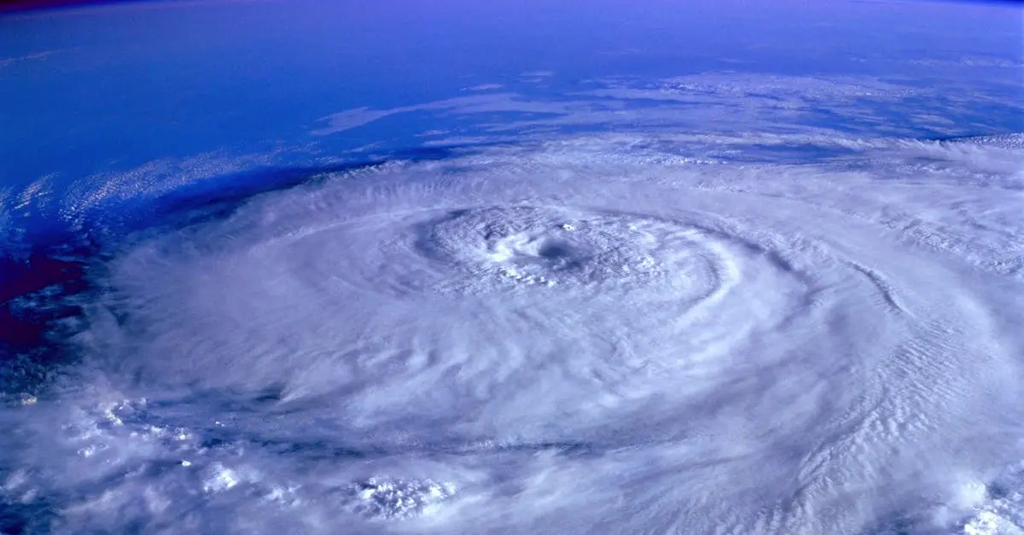
Nonequilibrium thermodynamics and statistical physics study systems that are not in thermodynamic equilibrium, meaning their properties change over time or space. Unlike equilibrium systems, these involve energy or matter flows, gradients, and irreversible processes. The field seeks to understand how macroscopic phenomena arise from microscopic dynamics, using statistical methods to describe fluctuations, transport, and entropy production in systems ranging from biological cells to complex materials and driven physical systems.
Nonequilibrium Thermodynamics and Statistical Physics
Nonequilibrium thermodynamics and statistical physics study systems that are not in thermodynamic equilibrium, meaning their properties change over time or space. Unlike equilibrium systems, these involve energy or matter flows, gradients, and irreversible processes. The field seeks to understand how macroscopic phenomena arise from microscopic dynamics, using statistical methods to describe fluctuations, transport, and entropy production in systems ranging from biological cells to complex materials and driven physical systems.
💡 Key Takeaways
- Distinguish nonequilibrium from equilibrium systems by noting time- or space-varying properties due to energy or matter flows.
- Explain how gradients drive fluxes and irreversible processes, leading to entropy production.
- Recognize common modeling approaches for nonequilibrium systems (transport equations, master equations, stochastic methods) with simple examples like heat flow or chemical networks.
- Understand core concepts in nonequilibrium statistical physics, such as non-equilibrium steady states, the time evolution of probability distributions, and fluctuations away from equilibrium.
❓ Frequently Asked Questions
What is nonequilibrium thermodynamics?
The study of systems that are not in thermodynamic equilibrium, where properties change in time or space due to energy or matter flows and irreversible processes.
How is nonequilibrium different from equilibrium thermodynamics?
Equilibrium thermodynamics deals with systems at rest with no net flows and time-independent properties; nonequilibrium deals with ongoing energy/matter transfers and evolving states.
What are common examples of nonequilibrium phenomena?
Heat conduction in a rod, chemical reactions with gradients, diffusion in fluids, and living systems that maintain steady states away from equilibrium.
What is the role of gradients and irreversible processes in nonequilibrium systems?
Gradients (temperature, chemical potential, or pressure) drive flows of energy or matter, causing changes over time and space and producing irreversible behavior.
How does nonequilibrium statistical physics describe system evolution?
It uses distribution functions and stochastic models (e.g., Boltzmann equation, Langevin dynamics) to describe how flows and fluctuations steer systems away from equilibrium.