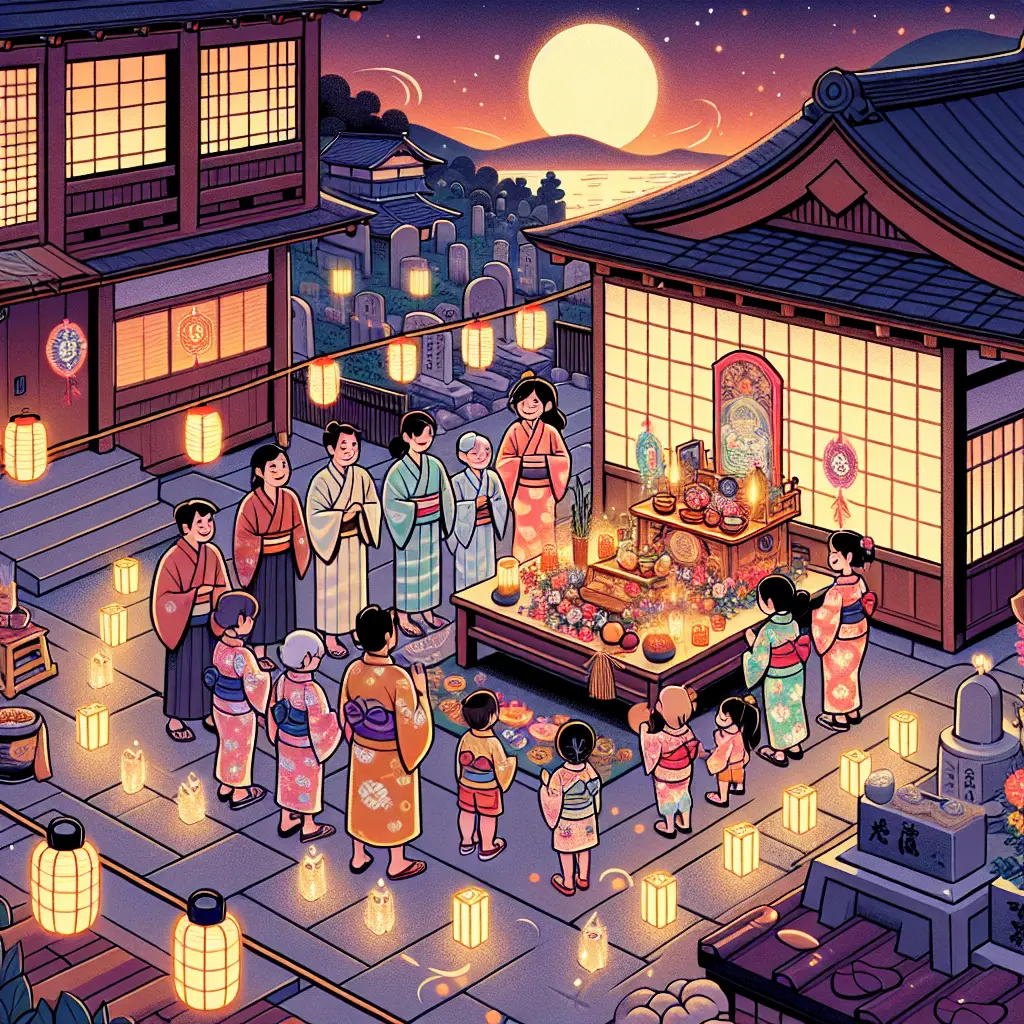
Obon is a traditional Japanese Buddhist festival honoring the spirits of ancestors. Celebrated in mid-July or August, families clean graves, offer food, and light lanterns to guide ancestral spirits home. Ritual dances called Bon Odori are performed, symbolizing joy and remembrance. Obon reflects deep respect for ancestors, emphasizing family bonds and the cyclical nature of life and death within Japanese culture and religious practice.
Obon & Japanese Ancestral Rites
Obon is a traditional Japanese Buddhist festival honoring the spirits of ancestors. Celebrated in mid-July or August, families clean graves, offer food, and light lanterns to guide ancestral spirits home. Ritual dances called Bon Odori are performed, symbolizing joy and remembrance. Obon reflects deep respect for ancestors, emphasizing family bonds and the cyclical nature of life and death within Japanese culture and religious practice.
💡 Key Takeaways
- Understand Obon's purpose: honoring ancestors and welcoming their spirits home.
- Learn when Obon is celebrated (mid-July or August) and note regional timing differences.
- Identify common rituals: grave cleaning, offerings of food, and lighting lanterns.
- Recognize Bon Odori as a communal dance symbolizing joy, remembrance, and family togetherness.
- Appreciate how Obon reflects Japanese views on family, memory, and the cycle of life and death.
❓ Frequently Asked Questions
What is Obon?
Obon is a traditional Japanese Buddhist festival honoring the spirits of ancestors. Families clean graves, offer food, and light lanterns to guide the spirits home, and communities often perform Bon Odori dances.
When is Obon celebrated?
Obon is typically celebrated in mid-July or August, with dates varying by region and calendar.
What is Bon Odori?
Bon Odori are festive dances performed during Obon to welcome and celebrate ancestral spirits; they are usually held in the evenings and are common at community festivals.
What are common Obon practices?
Common practices include grave cleaning, offering food and drinks to ancestors, and lighting lanterns to guide spirits home; families also participate in Bon Odori and may gather for reunions.