Oceanic Art & Ritual Objects refer to the artistic expressions and ceremonial artifacts created by the indigenous peoples of the Pacific Islands, including Polynesia, Melanesia, and Micronesia. These works often feature wood carvings, masks, canoes, and textiles, deeply intertwined with spiritual beliefs, ancestor worship, and social hierarchy. Oceanic art is characterized by symbolic motifs, bold forms, and a strong connection to nature, serving both aesthetic and ritualistic purposes within their respective cultures.
Oceanic Art & Ritual Objects
Oceanic Art & Ritual Objects refer to the artistic expressions and ceremonial artifacts created by the indigenous peoples of the Pacific Islands, including Polynesia, Melanesia, and Micronesia. These works often feature wood carvings, masks, canoes, and textiles, deeply intertwined with spiritual beliefs, ancestor worship, and social hierarchy. Oceanic art is characterized by symbolic motifs, bold forms, and a strong connection to nature, serving both aesthetic and ritualistic purposes within their respective cultures.
💡 Key Takeaways
- Identify the main Oceanic regions (Melanesia, Polynesia, Micronesia) and the ritual objects typically produced there.
- Explain how Oceanic ritual objects function in ceremonies, rites of passage, and ancestor veneration to convey social roles and cosmology.
- Describe common materials and techniques (wood carving, tapa cloth, shell inlays, fiber weaving) and how material choices shape meaning.
- Interpret key motifs and forms (faces, spirals, birds, ancestral figures) as carriers of genealogy, myths, and community identity.
- Discuss ethical considerations in studying and exhibiting Oceanic art, including cultural respect, ownership, and repatriation debates.
❓ Frequently Asked Questions
What is Oceanic art?
Art from Pacific Island cultures (Melanesia, Micronesia, Polynesia) created for ceremonial, social, and spiritual purposes, often linked to lineage, mana (power), and ancestral connections.
What roles do ritual objects play in Oceanic cultures?
They accompany ceremonies and rites of passage, healing or divination, and social tasks; many are believed to embody mana or connect people with ancestors and spirits.
What materials and forms are common in Oceanic ritual objects?
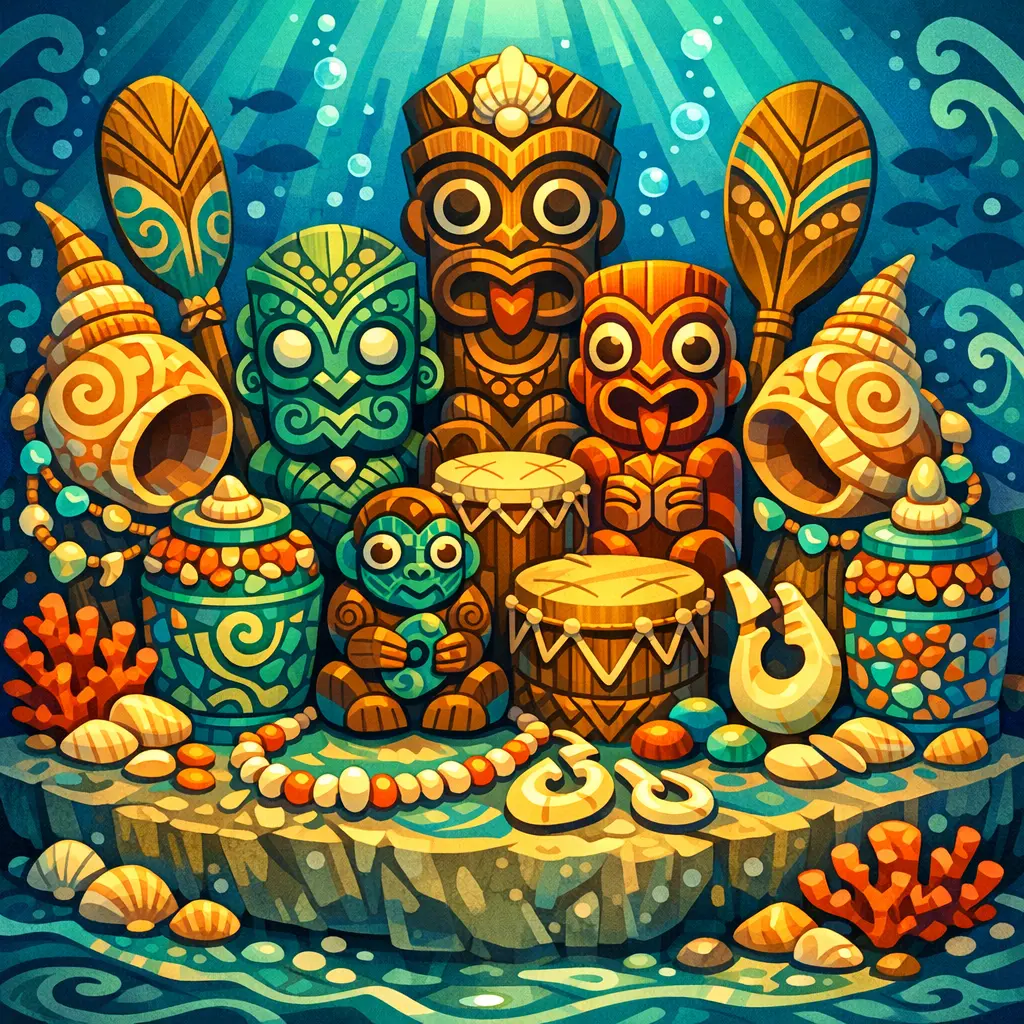
Common materials include carved wood, stone, bone, shell, turtle shell, barkcloth, and feathers; forms include masks, ancestor figures, clubs, bowls, and ritual rattles.
How can you identify regional styles in Oceanic ritual objects?
Polynesian works often feature large, stylized humanoid figures and elaborate carving; Melanesian pieces show expressive masks and spirit figures with diverse materials; Micronesian art tends to be smaller in scale with precise details and shell inlays.