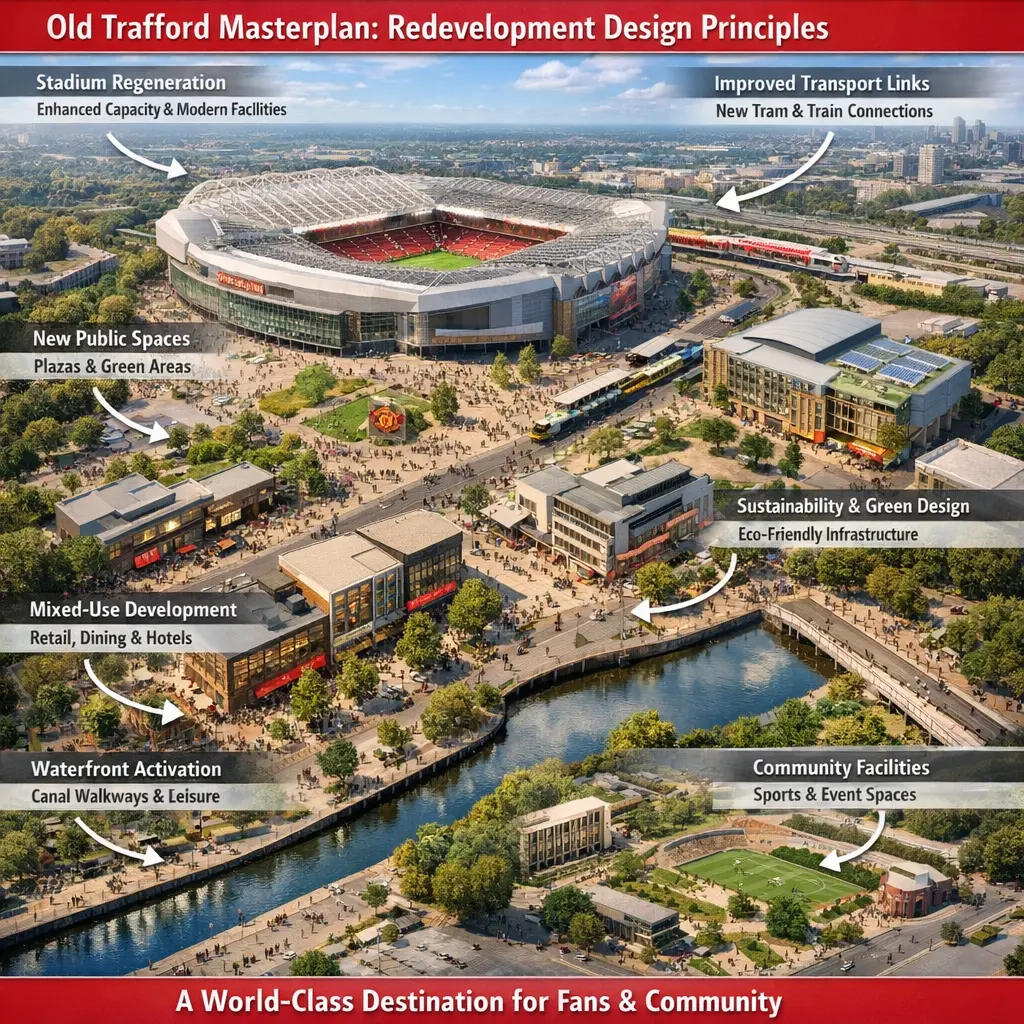
The "Old Trafford Masterplan: Redevelopment Design Principles" refers to Manchester United F.C.'s strategic approach for modernizing and expanding their iconic stadium. It focuses on enhancing spectator experience, increasing capacity, improving accessibility, and integrating sustainable practices. The plan emphasizes preserving the stadium’s historic character while introducing state-of-the-art facilities, better transport links, and community engagement. Overall, it aims to secure Old Trafford’s status as a world-class, future-ready sports venue.
Old Trafford Masterplan: Redevelopment Design Principles
The "Old Trafford Masterplan: Redevelopment Design Principles" refers to Manchester United F.C.'s strategic approach for modernizing and expanding their iconic stadium. It focuses on enhancing spectator experience, increasing capacity, improving accessibility, and integrating sustainable practices. The plan emphasizes preserving the stadium’s historic character while introducing state-of-the-art facilities, better transport links, and community engagement. Overall, it aims to secure Old Trafford’s status as a world-class, future-ready sports venue.
💡 Key Takeaways
- Understand core design principles for redeveloping a football stadium (sustainability, accessibility, safety, and flexibility).
- Learn how the Old Trafford redevelopment aims to balance increased capacity with enhanced fan experience and community impact.
- Identify strategies for integrating new architecture with the existing stadium and surrounding urban context.
- Explore transport planning, crowd management, and environmental performance goals (energy efficiency and carbon reduction) in large venues.
❓ Frequently Asked Questions
What is the Old Trafford Masterplan?
A redevelopment framework for Manchester United's Old Trafford stadium that outlines goals, design principles, and timing to modernize facilities while preserving the club's identity.
What are redevelopment design principles?
Core guidelines used to shape the project, including safety, accessibility, sustainability, functionality, aesthetics, cost control, and community impact.
How is fan experience prioritized in the design?
By improving sightlines and seating comfort, facilitating efficient entry and exits, expanding concessions, providing clear wayfinding, and ensuring accessible facilities.
How does the plan address sustainability and the environment?
Through energy-efficient systems, renewable energy use, water management, sustainable materials, waste reduction, and better transit integration.
How will the redevelopment be delivered without excessive disruption?
Through phased construction, temporary facilities where needed, careful scheduling of events, and ongoing stakeholder communication.