Opera Production & Company Management in the performing arts and music sector involves overseeing all aspects of staging an opera, from planning and budgeting to coordinating rehearsals and performances. It includes managing artists, technical crews, and administrative staff, ensuring smooth communication and logistics. This role also covers contract negotiations, marketing, and audience engagement, aiming to deliver high-quality productions while maintaining the financial and artistic integrity of the opera company.
Opera Production & Company Management
Opera Production & Company Management in the performing arts and music sector involves overseeing all aspects of staging an opera, from planning and budgeting to coordinating rehearsals and performances. It includes managing artists, technical crews, and administrative staff, ensuring smooth communication and logistics. This role also covers contract negotiations, marketing, and audience engagement, aiming to deliver high-quality productions while maintaining the financial and artistic integrity of the opera company.
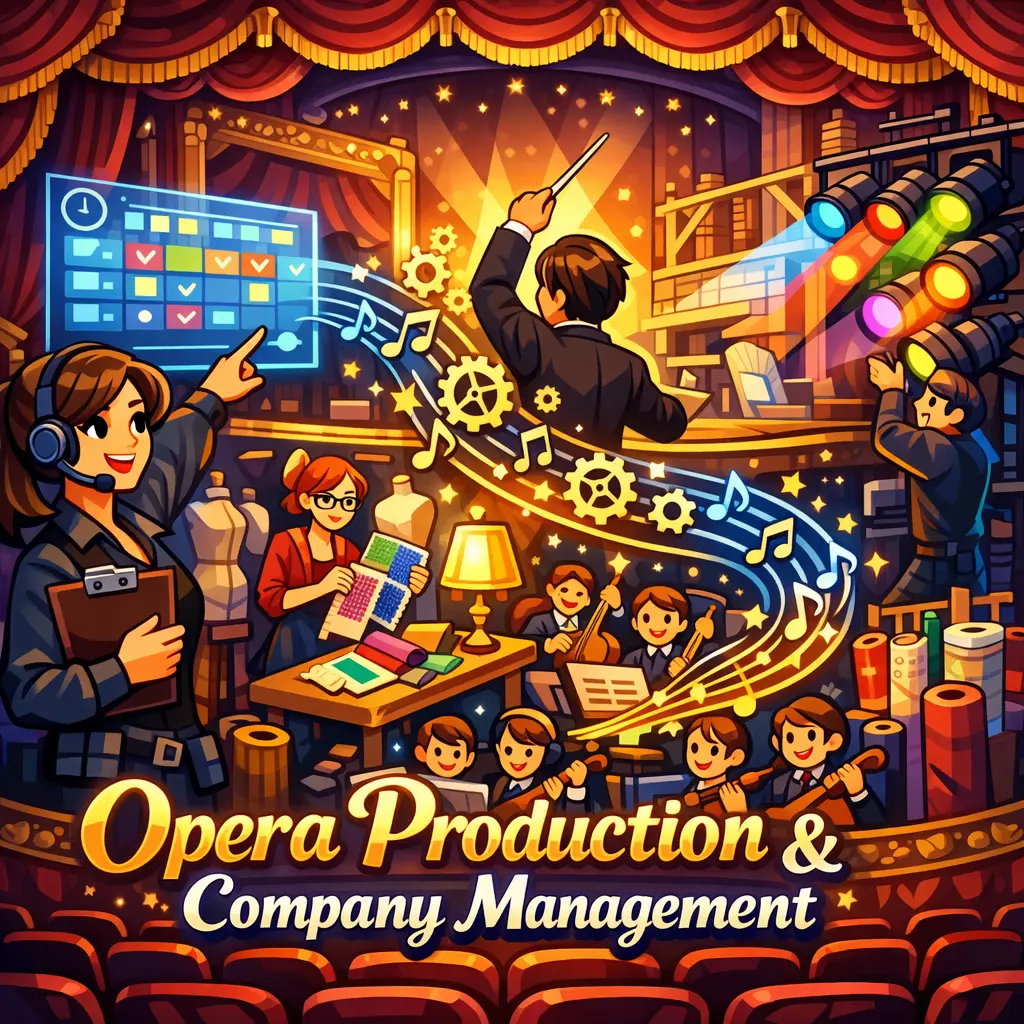
💡 Key Takeaways
- Understand the main roles in an opera production and how they collaborate from concept to performance.
- Learn how to plan, budget, and manage resources for an opera company, including scheduling and allocations.
- Grasp the end-to-end rehearsal and production cycle—from casting and design integration to tech rehearsals and opening night.
- Identify key governance, fundraising, and audience development strategies that sustain an opera company.
❓ Frequently Asked Questions
What is the difference between opera production and opera company management?
Opera production handles staging a specific work—casting, design, rehearsals, and performance—while company management oversees overall organization: budgeting, fundraising, season planning, staffing, and administration.
Who are the key roles in an opera production and what does each do?
Stage director guides artistic interpretation and blocking; conductor leads the orchestra; production manager coordinates logistics and schedule; designers (set, costumes, lighting) create the visual concept; stage crew handles tech and mounting; marketing and development raise funds.
How is an opera production budget typically structured?
A budget includes rights/licensing, artist salaries, orchestra/chorus, design and rehearsals, venue and tech, costumes and props, and marketing; revenue comes from tickets, subscriptions, grants, and sponsorships.
What is the licensing process for performing an opera?
Obtain performance rights from the rights holder or publisher, negotiate terms and royalties, comply with usage restrictions, and ensure proper credit and contract compliance.