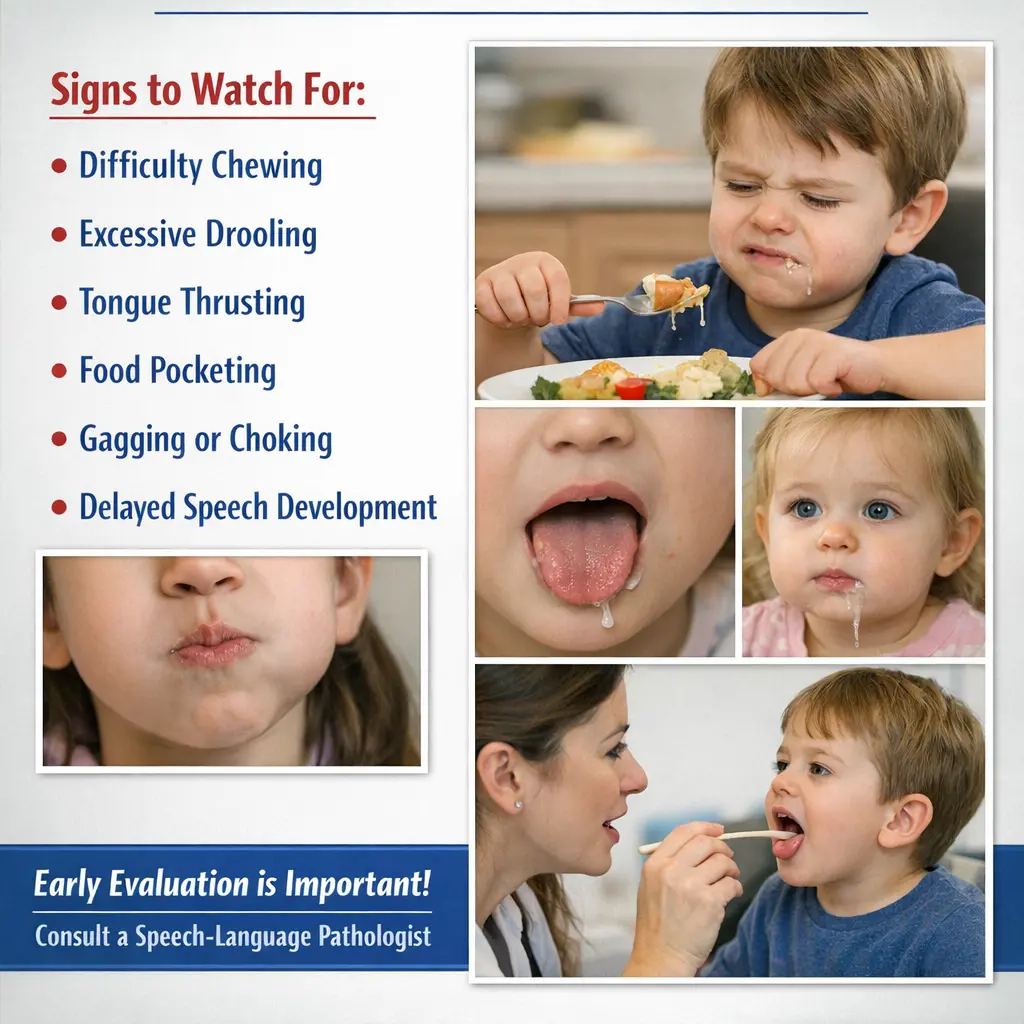
Oral-motor delays refer to difficulties in a child’s ability to use the lips, tongue, jaw, and facial muscles for eating, drinking, and speech. Indicators for referral include persistent trouble chewing or swallowing, frequent gagging, drooling, refusal of textured foods, or delayed transition from bottle to cup. In the context of child nutrition and night weaning, these delays may hinder effective feeding, proper growth, and timely progression to age-appropriate eating habits.
Oral-motor delays and referral indicators
Oral-motor delays refer to difficulties in a child’s ability to use the lips, tongue, jaw, and facial muscles for eating, drinking, and speech. Indicators for referral include persistent trouble chewing or swallowing, frequent gagging, drooling, refusal of textured foods, or delayed transition from bottle to cup. In the context of child nutrition and night weaning, these delays may hinder effective feeding, proper growth, and timely progression to age-appropriate eating habits.
💡 Key Takeaways
- Identify signs of oral-motor delay in feeding and speech, such as poor lip seal, limited tongue movement, and coughing during meals.
- Know when to refer for assessment: red flags like persistent choking, gagging, slow feeding progress, or swallowing concerns.
- Learn which professionals are involved in evaluation (SLP, pediatrician, GI/ENT) and what information to include in a referral.
- Understand simple at-home screening cues to monitor feeding and swallowing that can prompt timely evaluation.
❓ Frequently Asked Questions
What are oral-motor delays?
Delays in the movement and coordination of the lips, tongue, jaw, and palate that affect chewing, swallowing, feeding, and speech.
What are common signs of oral-motor delays in infants and young children?
Persistent feeding difficulties, long feeding times, choking or coughing during meals, drooling, limited texture acceptance, and delayed speech sounds.
When should you consider referring for an evaluation?
If feeding or swallowing issues persist, there is frequent choking or coughing, poor weight gain, or concerns about speech development, seek a referral to a pediatrician or speech-language pathologist.
What might an oral-motor assessment involve?
A clinician may observe lip/tongue/jaw movement, strength and range of motion, reflexes, and feeding/swallowing patterns to determine needs for therapy or further testing.