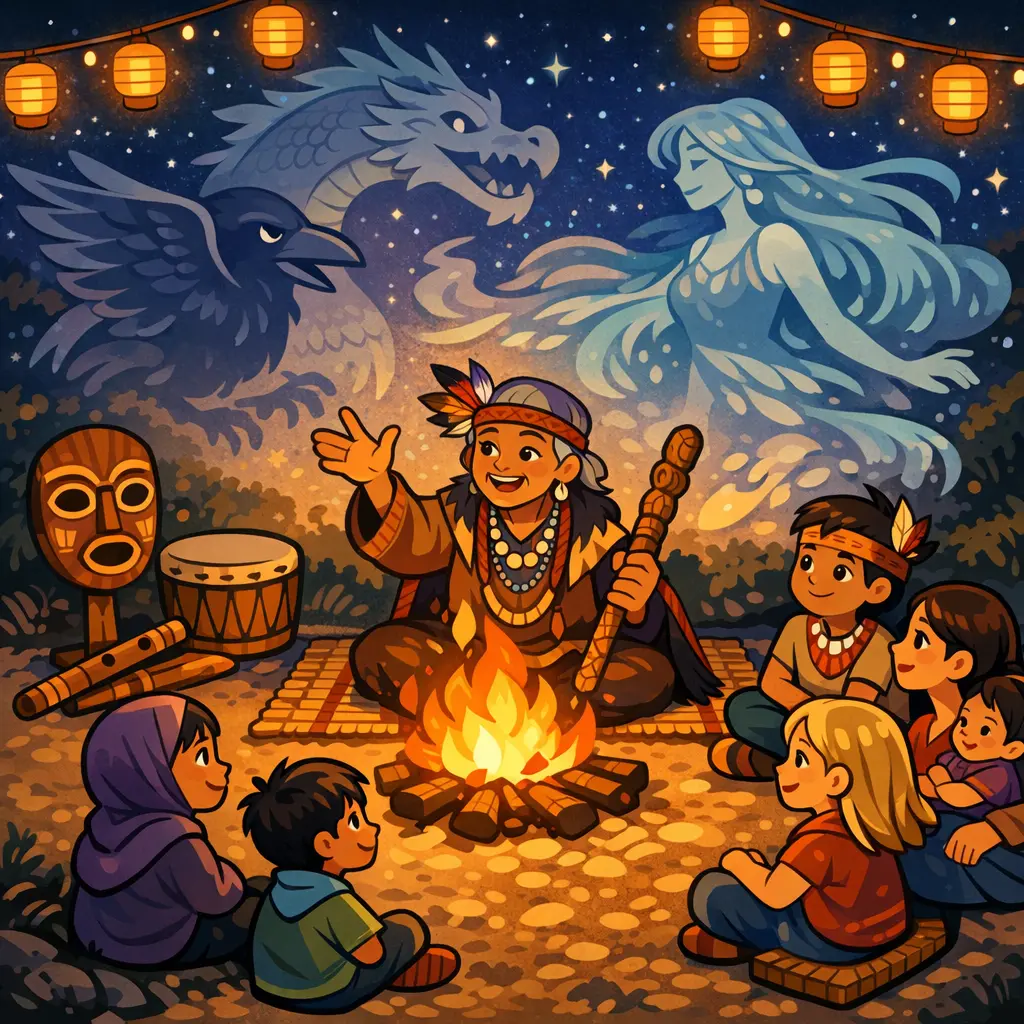
Oral traditions and storytelling are vital means by which cultures, religions, and societies preserve and transmit knowledge, values, and beliefs across generations. Through spoken word, myths, legends, and historical accounts are shared, fostering communal identity and continuity. Storytelling serves not only as entertainment but also as a tool for education, moral instruction, and spiritual guidance, reflecting the worldview and collective memory of the community.
Oral Traditions & Storytelling
Oral traditions and storytelling are vital means by which cultures, religions, and societies preserve and transmit knowledge, values, and beliefs across generations. Through spoken word, myths, legends, and historical accounts are shared, fostering communal identity and continuity. Storytelling serves not only as entertainment but also as a tool for education, moral instruction, and spiritual guidance, reflecting the worldview and collective memory of the community.
💡 Key Takeaways
- Define oral traditions and how stories are passed down verbally.
- Recognize common forms in oral storytelling, such as myths, folktales, legends, and proverbs.
- Describe techniques used in oral storytelling, including repetition, performance, and audience participation.
- Explain how oral storytelling preserves culture, community history, and shared identity across generations.
❓ Frequently Asked Questions
What are oral traditions?
Stories, histories, songs, and knowledge passed verbally from generation to generation, often without written text.
What is the role of storytelling in culture?
It transmits values, history, and identity, teaches lessons, and strengthens community bonds through performance, memory, and shared meaning.
Which forms are common in oral storytelling?
Myths, legends, folktales, fables, epic poems, proverbs, songs, and oral histories.
Why are oral traditions important?
They preserve language and culture, record histories, and adapt to changing contexts while connecting people to their heritage.