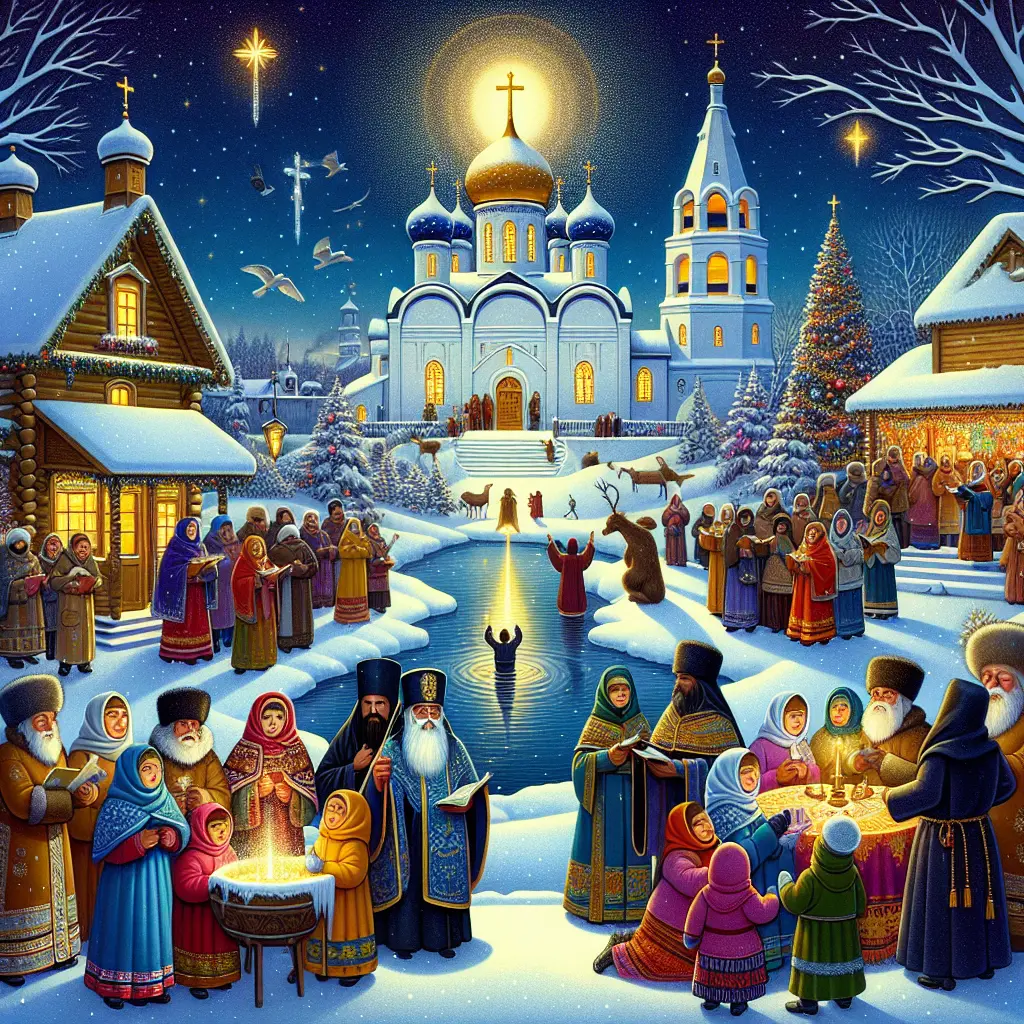
Orthodox Christmas and Epiphany customs are rich with religious and cultural traditions. Christmas, celebrated on January 7th, features special liturgies, fasting, and festive meals. Homes are often decorated with icons and candles, and carolers visit neighbors singing traditional songs. Epiphany, observed on January 19th, commemorates the baptism of Jesus, marked by the blessing of water ceremonies. Many believers participate in processions and immerse themselves in icy rivers, symbolizing spiritual renewal and purification.
Orthodox Christmas & Epiphany Customs
Orthodox Christmas and Epiphany customs are rich with religious and cultural traditions. Christmas, celebrated on January 7th, features special liturgies, fasting, and festive meals. Homes are often decorated with icons and candles, and carolers visit neighbors singing traditional songs. Epiphany, observed on January 19th, commemorates the baptism of Jesus, marked by the blessing of water ceremonies. Many believers participate in processions and immerse themselves in icy rivers, symbolizing spiritual renewal and purification.
💡 Key Takeaways
- Identify the date and significance of Orthodox Christmas on January 7 within the liturgical calendar.
- Describe Christmas observances, including special liturgies, fasting, festive meals, and home decorations with icons and candles.
- Recognize community traditions such as carolers visiting neighbors and singing traditional songs.
- Explain Epiphany customs and how they relate to Orthodox festivals alongside Christmas.
❓ Frequently Asked Questions
When is Orthodox Christmas celebrated?
In many Orthodox churches, Christmas is observed on January 7, reflecting the Julian calendar.
What are common Christmas observances in Orthodox tradition?
Special liturgies, a fasting period before the holiday, and festive meals after services.
What home traditions are typical during Orthodox Christmas?
Homes are often decorated with icons and candles, and carolers visit neighborhoods singing traditional songs.
What is Epiphany and how is it observed in Orthodoxy?
Epiphany commemorates the baptism of Jesus. Orthodox customs include the Great Blessing of Waters and related ceremonies, sometimes with processions or cold-water rituals.