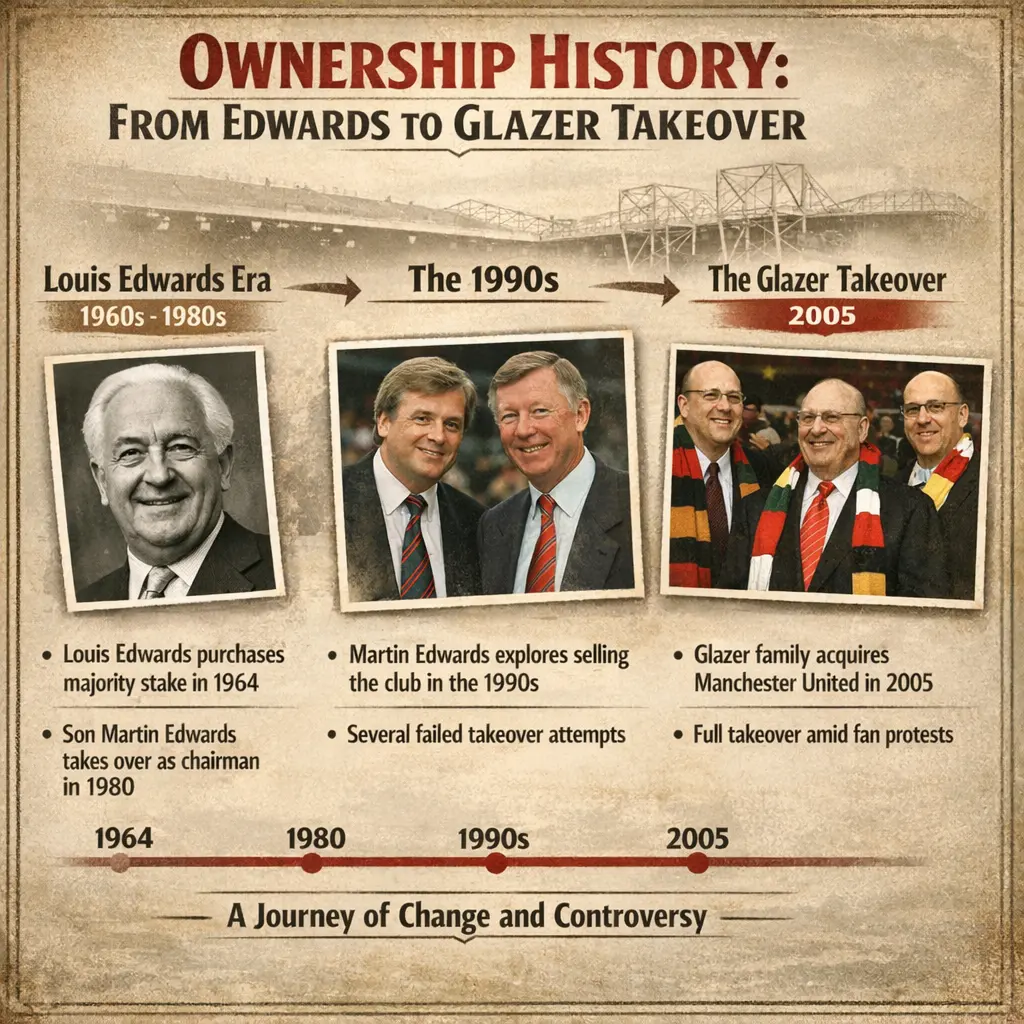
Ownership history of Manchester United F.C. traces its roots from the influential Edwards family, who played a significant role in the club’s commercial expansion during the late 20th century. Martin Edwards, in particular, oversaw United’s transformation into a global brand. In 2005, the Glazer family, American businessmen, acquired the club through a leveraged buyout, marking a new era characterized by both financial controversy and continued on-field success.
Ownership History: From Edwards to Glazer Takeover
Ownership history of Manchester United F.C. traces its roots from the influential Edwards family, who played a significant role in the club’s commercial expansion during the late 20th century. Martin Edwards, in particular, oversaw United’s transformation into a global brand. In 2005, the Glazer family, American businessmen, acquired the club through a leveraged buyout, marking a new era characterized by both financial controversy and continued on-field success.
💡 Key Takeaways
- Track the ownership timeline from Edwards to the Glazer takeover, including key transitions and dates.
- Understand how the Glazer takeover was financed through a leveraged buyout and the resulting debt implications.
- Compare governance and control changes before and after the Glazer takeover and what that meant for decision-making.
- Evaluate the effects on club finances, investment, and fan relations, including stadium and commercial strategies.
❓ Frequently Asked Questions
What is meant by 'ownership history' in this article?
It traces who owned the club over time, highlighting major transitions such as the Edwards era and the Glazer takeover.
Who were Edwards and why are they mentioned?
Edwards represents the earlier ownership period in the timeline; the article uses this name to show the pre-takeover era before the Glazer takeover.
What is a leveraged buyout (LBO) and how did it relate to the Glazer takeover?
An LBO funds a purchase mainly with borrowed money, using the target's assets as collateral. The Glazer takeover used significant debt to acquire the club, influencing its finances.
What are common effects of a takeover on a club?
Takeovers can change debt levels, spending on players, investments in facilities, governance, and fan relations.
Why do fans often react to takeovers like the Glazer takeover?
Fans may worry about debt burden, loss of traditional control, higher costs, and a shift away from the club's identity.