Palliative care and hospice careers focus on providing compassionate support to patients with serious, life-limiting illnesses. Professionals in these fields, such as nurses, physicians, social workers, and aides, work to manage pain, alleviate symptoms, and enhance quality of life. They offer emotional, spiritual, and practical support to both patients and their families, helping them navigate end-of-life decisions with dignity and respect within healthcare and medicine settings.
Palliative Care & Hospice Careers
Palliative care and hospice careers focus on providing compassionate support to patients with serious, life-limiting illnesses. Professionals in these fields, such as nurses, physicians, social workers, and aides, work to manage pain, alleviate symptoms, and enhance quality of life. They offer emotional, spiritual, and practical support to both patients and their families, helping them navigate end-of-life decisions with dignity and respect within healthcare and medicine settings.
💡 Key Takeaways
- Differentiate palliative care from hospice care, including goals and patient eligibility.
- Outline common career paths, required education, and certifications in palliative care and hospice.
- Explain the core focus on symptom relief, quality of life, and supportive communication with patients and families.
- Identify typical work settings, team structure, and day-to-day tasks in palliative care and hospice.
❓ Frequently Asked Questions
What is palliative care and how does it differ from hospice care?
Palliative care focuses on relieving symptoms and improving quality of life for people with serious illnesses at any stage, often alongside curative treatment. Hospice care is specialized end-of-life care for those with a terminal prognosis, emphasizing comfort when curative treatment is no longer pursued.
What kinds of professionals work in palliative care?
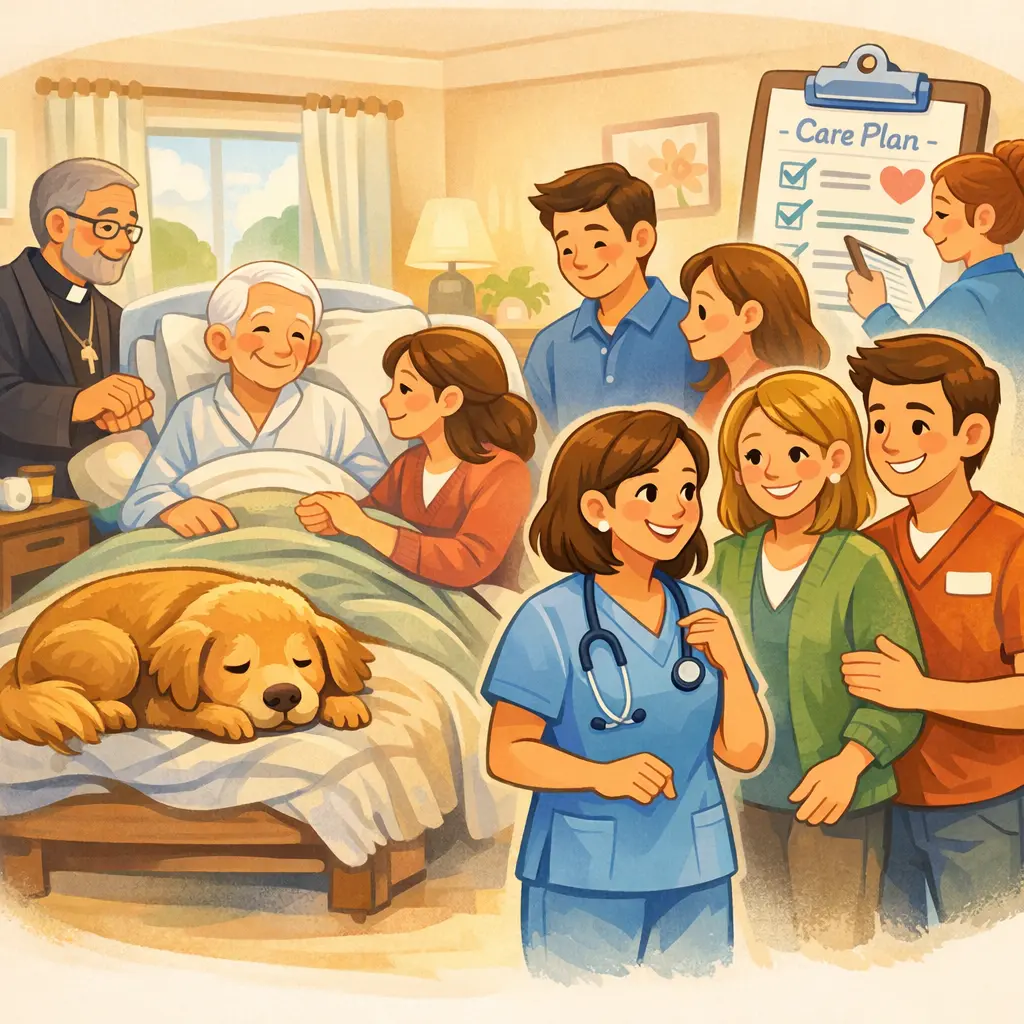
A multidisciplinary team includes physicians, nurses, social workers, chaplains/spiritual care providers, pharmacists, and care coordinators who collaborate to address physical, emotional, and spiritual needs.
What education is typically needed to pursue a career in palliative care?
Education varies by role: physicians complete medical school and a palliative care fellowship; nurses obtain RN licensure and may pursue palliative care certification; social workers earn an MSW with palliative care experience; other roles require related degrees and clinical training.
Where do palliative care professionals work?
Hospitals, hospices, patient homes, and long-term care facilities, often as part of an interdisciplinary team.
What skills are important for a career in palliative care?
Strong communication, empathy, teamwork, problem-solving, and expertise in pain and symptom management.