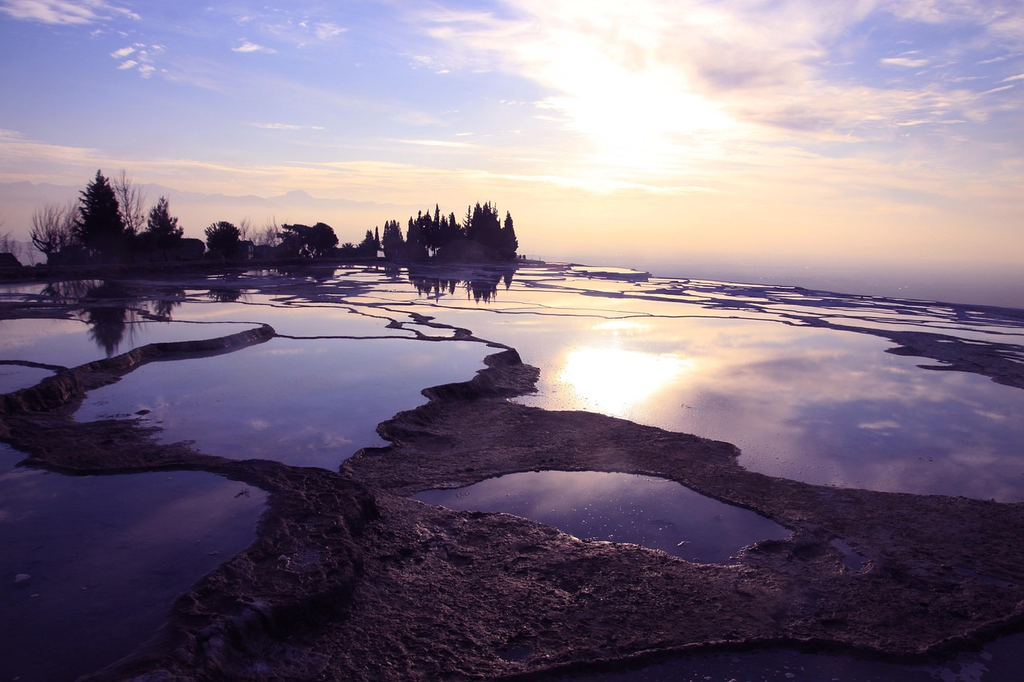
Pamukkale, located in southwestern Turkey, is a natural wonder renowned for its stunning white travertine terraces formed by mineral-rich hot springs. The name means "Cotton Castle" in Turkish, reflecting its unique, cotton-like appearance. Visitors flock to this UNESCO World Heritage Site to admire the cascading pools, soak in warm, therapeutic waters, and explore the ancient ruins of the nearby Greco-Roman city of Hierapolis, making it a remarkable blend of natural beauty and historical significance.
Pamukkale
Pamukkale, located in southwestern Turkey, is a natural wonder renowned for its stunning white travertine terraces formed by mineral-rich hot springs. The name means "Cotton Castle" in Turkish, reflecting its unique, cotton-like appearance. Visitors flock to this UNESCO World Heritage Site to admire the cascading pools, soak in warm, therapeutic waters, and explore the ancient ruins of the nearby Greco-Roman city of Hierapolis, making it a remarkable blend of natural beauty and historical significance.
💡 Key Takeaways
- Understand what Pamukkale is and why it’s known as the Cotton Castle.
- Learn how travertine terraces form from mineral-rich thermal waters and geological processes.
- Explore the nearby ancient city of Hierapolis and its archaeological significance.
- Recognize conservation practices and responsible visiting tips to protect the site.
❓ Frequently Asked Questions
What is Pamukkale best known for?
White travertine terraces formed by mineral-rich hot springs; they resemble cotton and are often called the Cotton Castle, with the ancient city of Hierapolis nearby.
Where is Pamukkale located?
Southwestern Turkey, in Denizli Province (near the town of Denizli).
What ancient site lies near Pamukkale?
Hierapolis, a Greco-Roman city with well-preserved ruins such as a theatre and necropolis.
How were the travertine terraces formed?
From calcium carbonate precipitated by the hot spring water as it flows and cools, creating layered white terraces.
Is Pamukkale a UNESCO World Heritage Site?
Yes — Pamukkale and Hierapolis were inscribed as a UNESCO World Heritage Site in 1988.