Pantheons and Divine Realms refer to the collective groups of deities and their associated spiritual domains found in various mythologies and religions. A pantheon is typically a hierarchy or family of gods and goddesses, each overseeing specific aspects of existence. Divine realms are the mystical or supernatural places where these deities reside, often depicted as magnificent, otherworldly planes that reflect the gods’ powers, roles, and influence over the mortal world.
Pantheons & Divine Realms
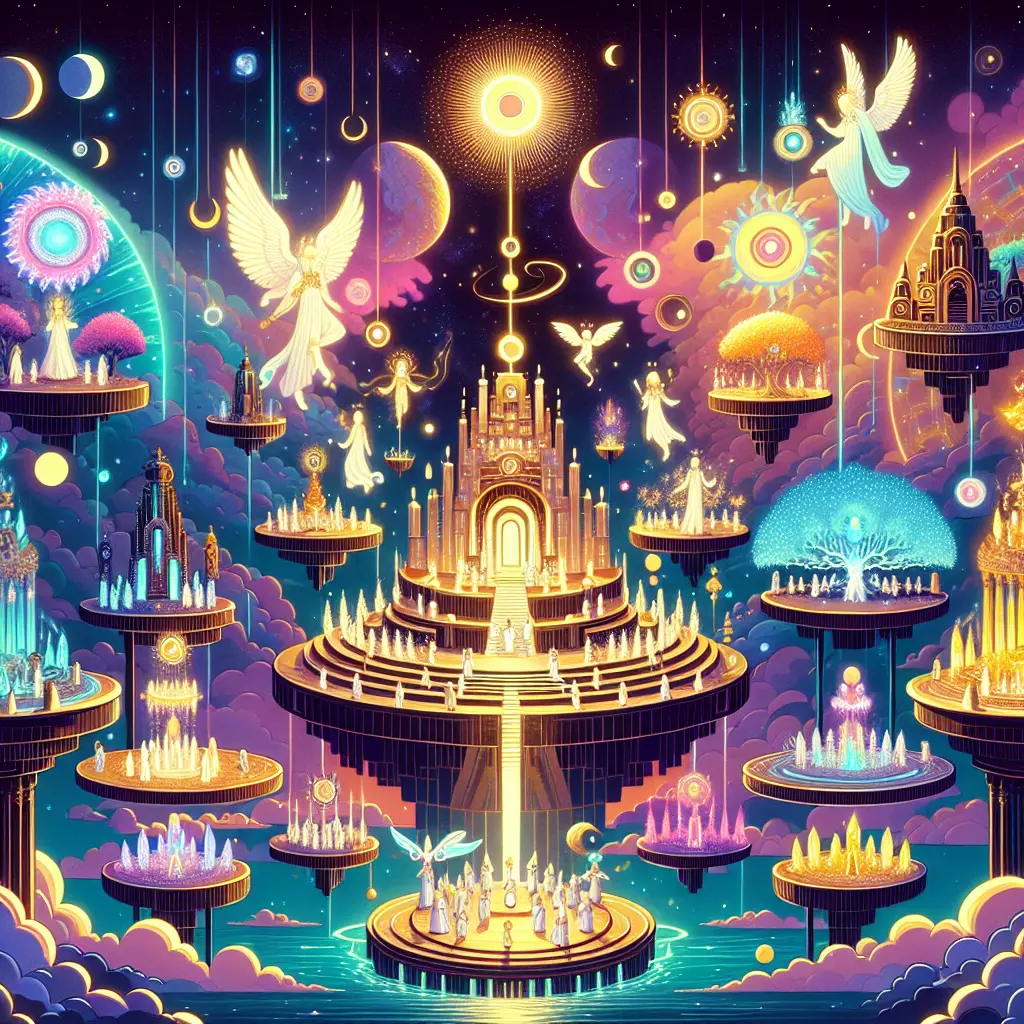
Pantheons and Divine Realms refer to the collective groups of deities and their associated spiritual domains found in various mythologies and religions. A pantheon is typically a hierarchy or family of gods and goddesses, each overseeing specific aspects of existence. Divine realms are the mystical or supernatural places where these deities reside, often depicted as magnificent, otherworldly planes that reflect the gods’ powers, roles, and influence over the mortal world.
💡 Key Takeaways
- Differentiate between a pantheon (a group or family of gods) and the divine realms they inhabit or rule.
- Explain common pantheon structures—hierarchies, patron deities, and domain roles among gods.
- See how a deity's domain (e.g., war, harvest, knowledge) shapes myths, cultures, and storytelling.
- Explore how pantheons and divine realms are adapted across franchises and universes, including crossovers and reinterpretations.
❓ Frequently Asked Questions
What is a pantheon?
A pantheon is a collection of gods and goddesses worshiped or featured together in a culture or fictional universe, often connected by relationships and shared roles.
What is a divine realm?
A divine realm is a sacred or otherworldly space where deities reside or rule, distinct from the mortal world and often with its own geography.
How are deities organized within a pantheon?
Deities can be arranged hierarchically (a chief god and lesser gods) or as a family of gods with specialized domains that define their roles.
What is a divine domain (sphere of influence)?
A domain is the aspect of life, nature, or power a deity governs (e.g., war, wisdom, healing), shaping their powers and rituals.
Why do pantheons and divine realms appear in franchises and universes?
They establish cosmology, explain magical systems, and set rules for power and conflict by clarifying who controls what and where they dwell.