Pedagogy for Music & Dance (Performing Arts & Music) refers to the methods and principles used to teach music and dance effectively. It involves understanding how students learn artistic skills, designing curriculum, developing creative techniques, and fostering appreciation for the arts. This pedagogy emphasizes both technical proficiency and expressive performance, integrating theory with practice to nurture talent, creativity, and cultural understanding in learners of all ages and backgrounds.
Pedagogy for Music & Dance
Pedagogy for Music & Dance (Performing Arts & Music) refers to the methods and principles used to teach music and dance effectively. It involves understanding how students learn artistic skills, designing curriculum, developing creative techniques, and fostering appreciation for the arts. This pedagogy emphasizes both technical proficiency and expressive performance, integrating theory with practice to nurture talent, creativity, and cultural understanding in learners of all ages and backgrounds.
💡 Key Takeaways
- Understand key teaching strategies for music and dance education, including differentiation and student-centered tasks.
- Apply inclusive, culturally responsive approaches to plan and deliver music and dance lessons.
- Use formative assessment and feedback to monitor progress in musicianship, technique, and performance skills.
- Design coherent, sequenced units that integrate listening, theory/notation, technique, and performance opportunities.
❓ Frequently Asked Questions
What is pedagogy in music and dance?
Pedagogy here means the methods, objectives, and sequence used to teach music or dance—how skills are taught, practiced, assessed, and reinforced in the classroom.
What are effective teaching strategies for music and dance?
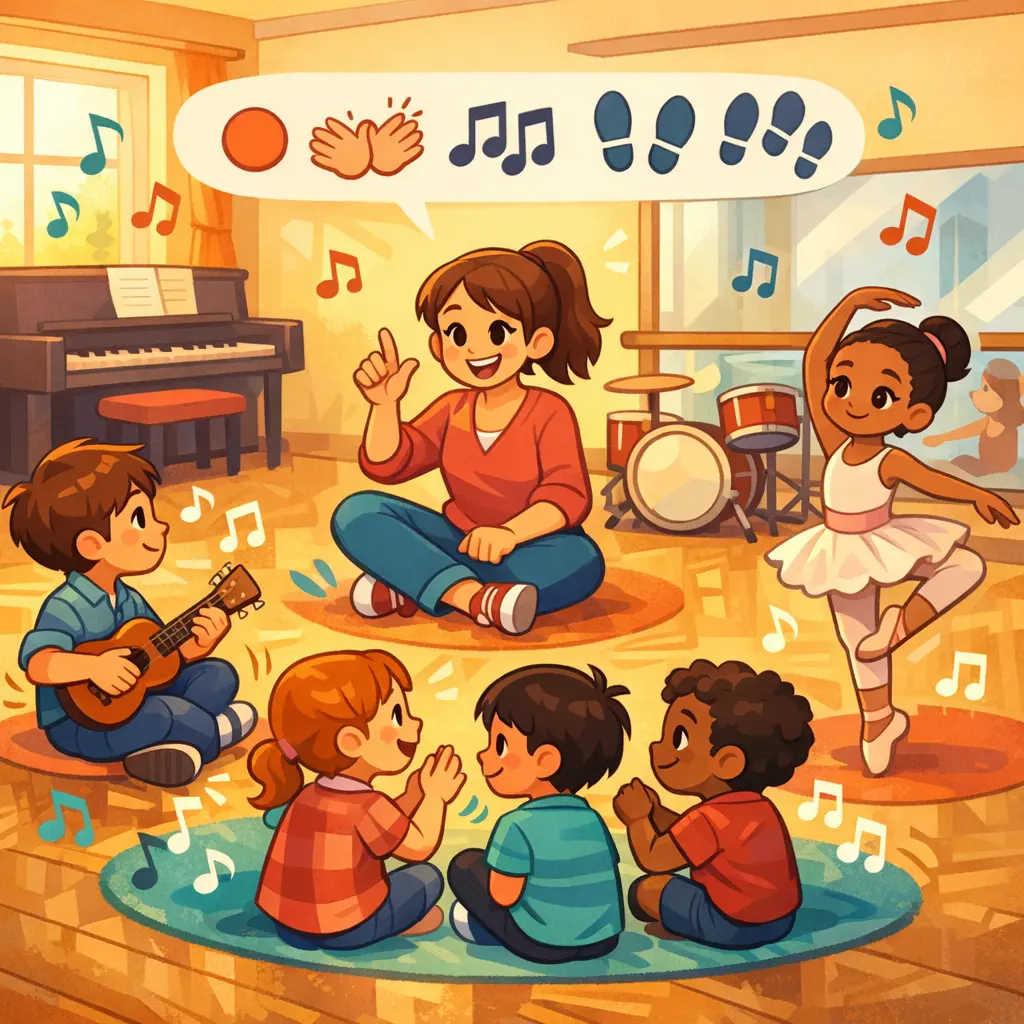
Combine modeling, guided practice, repetition with variation, ensemble work, feedback loops, and active participation; use demonstrations, peer feedback, and short, focused practice bouts.
How should student progress be assessed in music and dance?
Use formative and summative methods: skill demonstrations with rubrics, performance rubrics, self/peer assessment, portfolios, and reflective notes to track growth over time.
How can instruction be differentiated for diverse learners in music and dance?
Adjust tempo and complexity, offer tiered objectives, provide multiple representations (audio, notation, video), and use flexible groupings, supports, and choices to meet varied needs.