Pendulum clocks, essential timekeeping devices, utilize the regular swing of a pendulum to measure time accurately. Their operation is rooted in physics, specifically the principles of periodic motion and gravity. The pendulum’s consistent oscillation ensures precise intervals, making these clocks reliable daily essentials before the advent of digital technology. Understanding pendulum clocks offers insight into fundamental physics concepts and highlights the importance of scientific principles in everyday objects.
Pendulum Clocks and Physics
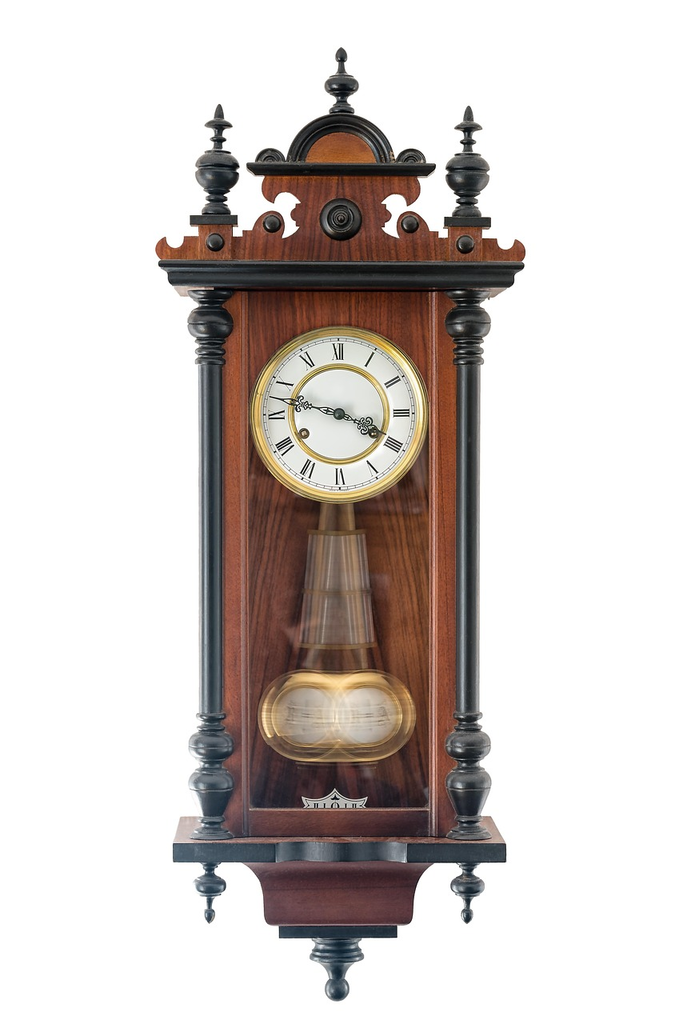
Pendulum clocks, essential timekeeping devices, utilize the regular swing of a pendulum to measure time accurately. Their operation is rooted in physics, specifically the principles of periodic motion and gravity. The pendulum’s consistent oscillation ensures precise intervals, making these clocks reliable daily essentials before the advent of digital technology. Understanding pendulum clocks offers insight into fundamental physics concepts and highlights the importance of scientific principles in everyday objects.
💡 Key Takeaways
- Understand how pendulum length and gravity determine the clock's time period.
- Learn how clock escapements convert pendulum swings into regular ticks.
- Explore how damping, friction, and air resistance affect amplitude and accuracy.
- Recognize effects of temperature and material expansion on pendulum length and clock accuracy.
❓ Frequently Asked Questions
What is a pendulum clock and how does it keep time?
A pendulum clock uses a swinging pendulum whose regular period sets the rate; the escapement transfers each swing into a fixed advance of the gear train, regulating energy to keep the clock moving.
What determines the period of a simple pendulum?
For small swings, the period is T ≈ 2π√(L/g), where L is the length and g is gravity. Longer pendulums or weaker gravity slow the clock; large swings violate the small-angle formula.
What is isochronism and why is it important for clocks?
Isochronism is the property that the period stays nearly the same for small amplitudes. This makes timekeeping predictable, and clock designers minimize amplitude effects with the pendulum and escapement.
What factors can cause a pendulum clock to run slow or fast?
Damping from air, friction, or wear; changes in temperature lengthening or shortening the pendulum; misadjusted escapement or added load on the gears; very large swing amplitudes can also affect the period.
How do temperature changes affect pendulum clocks and how are they mitigated?
Temperature changes can lengthen or shorten the pendulum rod, altering the period. Designers use temperature-compensated pendulums (like gridiron or mercury pendulums) or special materials to reduce this effect.