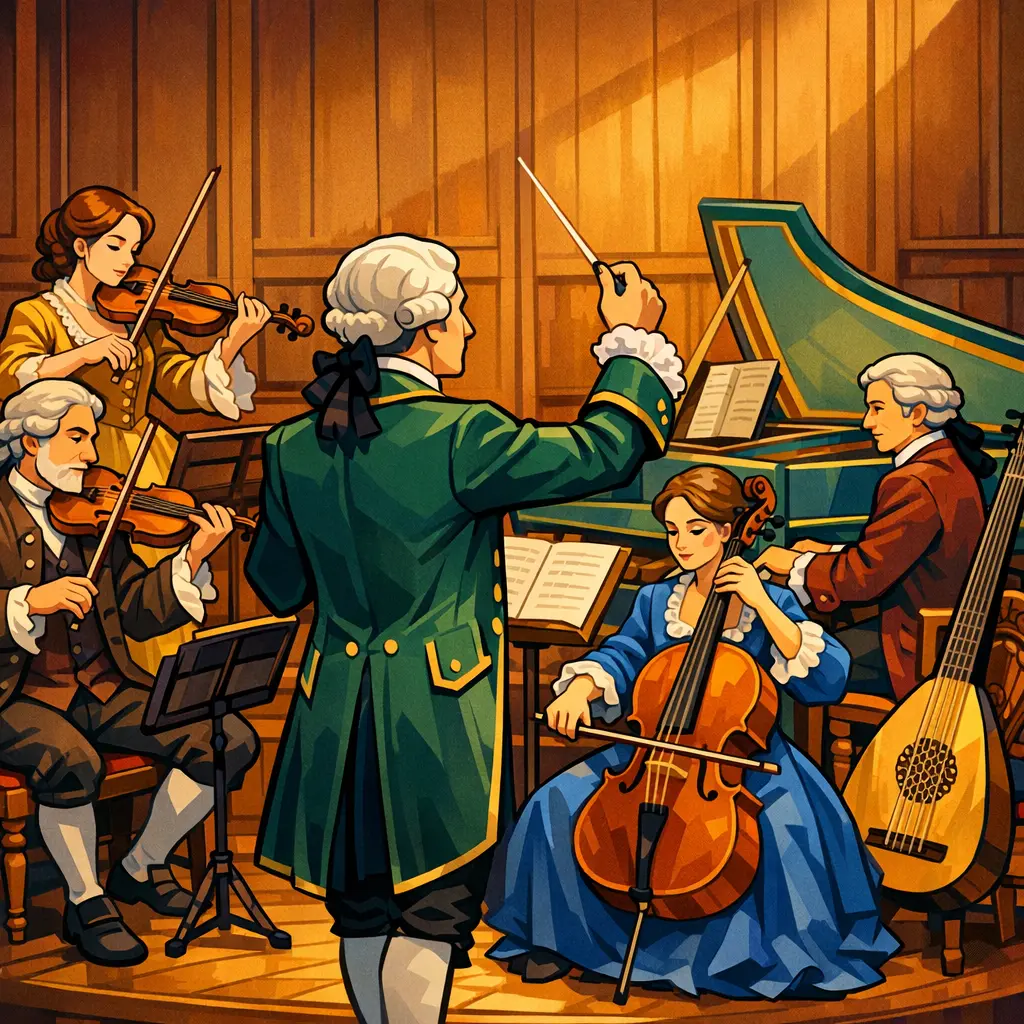
Performance Practice & Historically Informed Interpretation in performing arts and music refers to the study and application of techniques, styles, and conventions that were used during the period when a piece was originally composed. Musicians and performers aim to recreate authentic experiences by using historical instruments, tuning systems, and performance methods, as well as understanding the cultural and social contexts of the time. This approach seeks to bring audiences closer to the original intentions of the composer or creator.
Performance Practice & Historically Informed Interpretation
Performance Practice & Historically Informed Interpretation in performing arts and music refers to the study and application of techniques, styles, and conventions that were used during the period when a piece was originally composed. Musicians and performers aim to recreate authentic experiences by using historical instruments, tuning systems, and performance methods, as well as understanding the cultural and social contexts of the time. This approach seeks to bring audiences closer to the original intentions of the composer or creator.
💡 Key Takeaways
- Define performance practice and historically informed interpretation (HIP) and explain why they influence how music is performed.
- Identify the kinds of evidence used in HIP (treatises, original scores, period instruments, tunings, and performance notes) to guide interpretation.
- Summarize common HIP choices for tempo, dynamics, articulation, ornamentation, and instrument use across Baroque, Classical, and Romantic repertoire.
- Apply HIP principles to a piece by describing adjustments a modern performer would make—instrument choice, tuning, phrasing, ornaments, and tempo—to align with historical conventions.
❓ Frequently Asked Questions
What is historically informed interpretation (HIP) in performance practice?
HIP aims to recreate how music was played in its original era using period instruments or replicas, era-appropriate tunings and techniques, and research-based performance choices.
What kinds of instruments and setups are common in HIP performances?
Period instruments (e.g., baroque violin with gut strings, fortepiano/harpsichord) or replicas are used, along with authentic bows, articulation, and tunings; modern instruments may be used if played in an era-appropriate way.
How are tempo, articulation, and ornamentation handled in HIP?
Tempo and rubato are guided by historical sources; articulation and phrasing reflect period practices; ornaments are informed by treatises and may be improvised within stylistic norms.
Why can HIP performances sound different from standard modern concerts?
Because HIP prioritizes era-appropriate instruments, pitch/tuning, and performance conventions, producing distinct texture, color, and phrasing compared with contemporary practices.