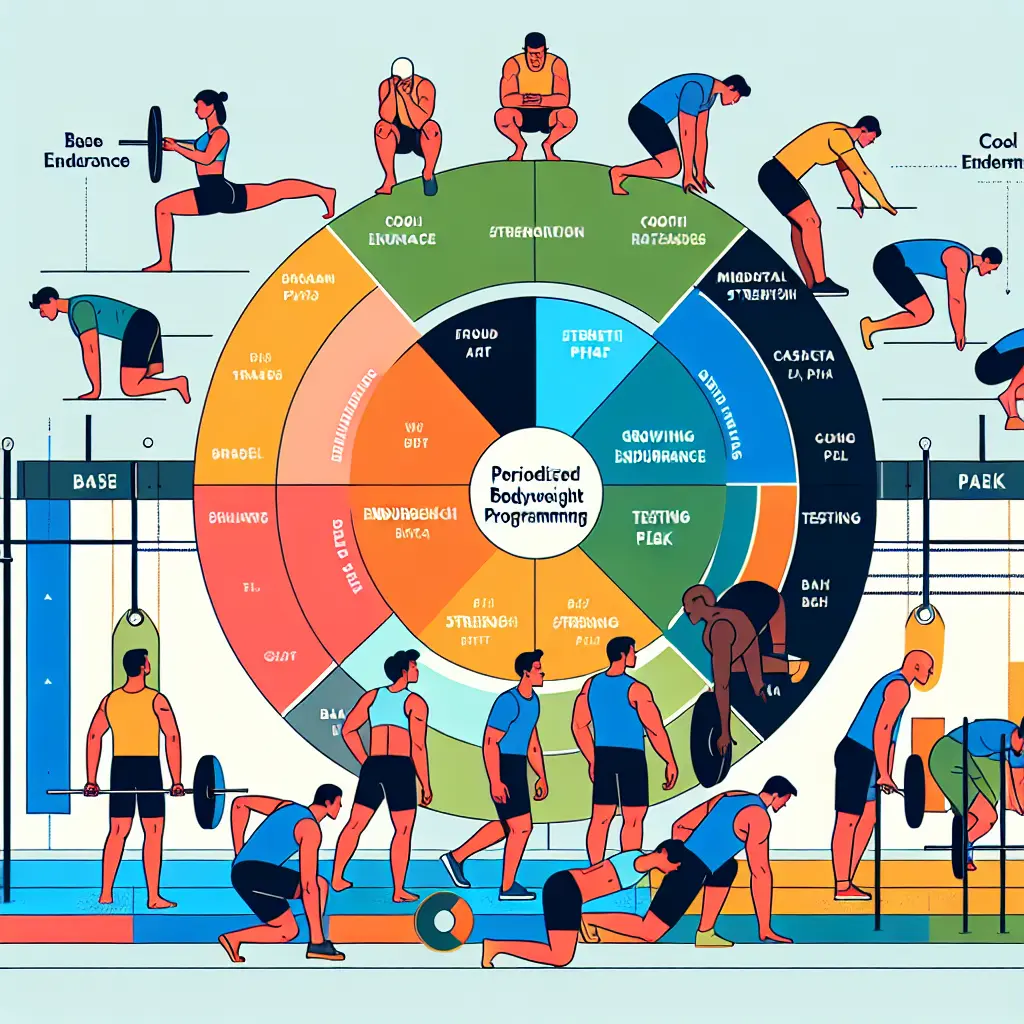
Periodized Bodyweight Programming and Testing refers to a structured approach to bodyweight training that organizes exercises and intensity into planned phases or cycles. This method progressively increases difficulty, allowing for adaptation and peak performance. Regular testing is incorporated to assess progress and adjust the program as needed. The combination of periodization and assessment helps optimize strength, endurance, and skill development without the use of external weights.
Periodized Bodyweight Programming and Testing
Periodized Bodyweight Programming and Testing refers to a structured approach to bodyweight training that organizes exercises and intensity into planned phases or cycles. This method progressively increases difficulty, allowing for adaptation and peak performance. Regular testing is incorporated to assess progress and adjust the program as needed. The combination of periodization and assessment helps optimize strength, endurance, and skill development without the use of external weights.
💡 Key Takeaways
- Understand how periodization structures bodyweight training into cycles (macro-, meso-, and microcycles) to manage progression and recovery.
- Learn how to progressively overload bodyweight movements to drive adaptation and peak performance.
- Identify suitable progressions and regressions for key moves (push-ups, squats, pull-ups, planks) to match your level and goals.
- Recognize the role of regular testing in tracking progress, informing adjustments, and timing peak performance.
❓ Frequently Asked Questions
What is periodized bodyweight programming?
A planned framework that divides training into phases or cycles with progressive difficulty and planned recovery using only bodyweight exercises.
Why use periodization in bodyweight training?
To organize progression, manage fatigue, and help you peak for a goal or event.
How are cycles typically organized in this approach?
Macrocycle (longer term), mesocycles (mid-term blocks), and microcycles (shorter blocks, often weekly) with varying volume and intensity.
What is the role of testing in a periodized program?
Regular tests measure progress and guide adjustments to stay on track toward goals and peak performance.
What metrics are commonly tested in bodyweight programs?
Max reps in a given period (e.g., push-ups, squats), time-based tests (reps in 2 minutes), and skill/hold tests (plank, handstand) to assess progress.