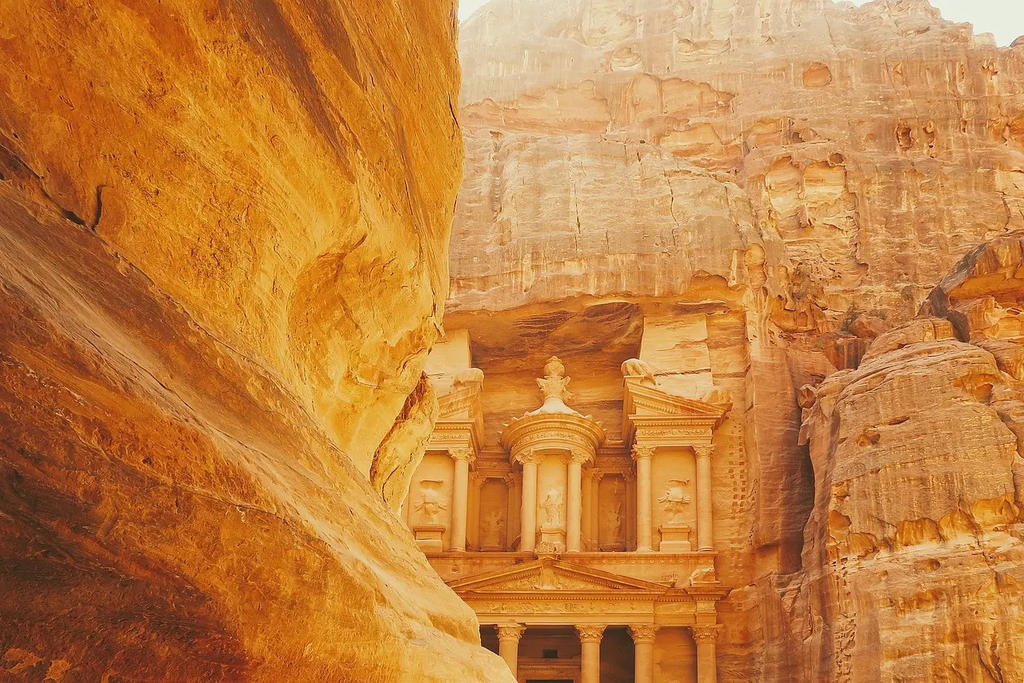
Petra is an ancient archaeological city in southern Jordan, renowned for its rock-cut architecture and water conduit system. Often called the "Rose City" due to the color of its stone, Petra was once a thriving trading hub and the capital of the Nabataean Kingdom. Its most iconic structure is Al-Khazneh, or "The Treasury," carved into a sandstone cliff. Petra is a UNESCO World Heritage Site and one of the New Seven Wonders of the World.
Petra
Petra is an ancient archaeological city in southern Jordan, renowned for its rock-cut architecture and water conduit system. Often called the "Rose City" due to the color of its stone, Petra was once a thriving trading hub and the capital of the Nabataean Kingdom. Its most iconic structure is Al-Khazneh, or "The Treasury," carved into a sandstone cliff. Petra is a UNESCO World Heritage Site and one of the New Seven Wonders of the World.
💡 Key Takeaways
- Locate Petra in Jordan and summarize its historical significance as a Nabataean capital.
- Name and describe key monuments (Treasury, Siq, Street of Facades, Monastery) and what makes them unique.
- Explain how Petra's rock-cut architecture was created and its distinctive Nabataean style.
- Understand Petra's UNESCO World Heritage status and its role in ancient trade networks.
❓ Frequently Asked Questions
What is Petra?
Petra is an ancient city in southern Jordan known for rock-cut architecture, monumental tombs, and a sophisticated water system built by the Nabataeans; it's a UNESCO World Heritage Site.
What is the most famous structure in Petra?
The Treasury (Al-Khazneh) is Petra's iconic carved façade, sculpted into a rose-colored sandstone cliff.
How were Petra's buildings created?
Nabataean craftsmen carved temples, tombs, and façades directly into the sandstone cliffs, creating the city’s distinctive rock-cut architecture.
When was Petra built and by whom?
Petra began as a Nabataean trading city around the 4th century BCE and became the capital of the Nabataean Kingdom.
What makes Petra's water system notable?
Petra used dams, channels, and cisterns to collect and store water, enabling habitation in a desert climate.