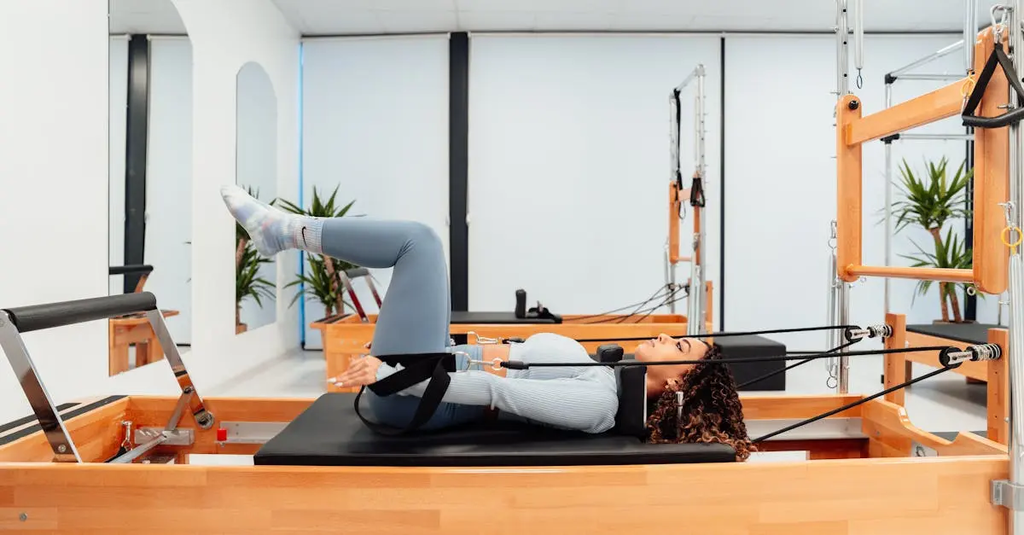
Pilates Reformer Techniques refer to a series of exercises performed on a specialized apparatus called the Reformer. These techniques utilize springs, pulleys, and a sliding carriage to provide resistance and support, enhancing strength, flexibility, and balance. The exercises target core stability, alignment, and controlled movement, making them beneficial for rehabilitation, athletic conditioning, and overall fitness. Practitioners experience improved posture, muscle tone, and body awareness through precise, mindful movements.
Pilates Reformer Techniques
Pilates Reformer Techniques refer to a series of exercises performed on a specialized apparatus called the Reformer. These techniques utilize springs, pulleys, and a sliding carriage to provide resistance and support, enhancing strength, flexibility, and balance. The exercises target core stability, alignment, and controlled movement, making them beneficial for rehabilitation, athletic conditioning, and overall fitness. Practitioners experience improved posture, muscle tone, and body awareness through precise, mindful movements.
💡 Key Takeaways
- Understand how the Reformer’s springs, pulleys, and sliding carriage provide resistance and support during exercises.
- Learn how Reformers enhance strength, flexibility, and balance through targeted, apparatus-assisted movements.
- Explore how Reformer work engages the core to improve stability and posture.
- Identify safe alignment cues and basic technique tips for performing common Reformer exercises.
❓ Frequently Asked Questions
What is a Pilates Reformer and what is it used for?
A Pilates Reformer is a specialized exercise machine with a sliding carriage, springs, and pulleys. It uses resistance to improve strength, flexibility, balance, and core stability.
How do springs and pulleys create resistance on the Reformer?
Springs attach to the carriage and frame; as you push or pull, the springs resist movement and provide adjustable resistance. Pulleys change the direction of movement to target different muscles.
How does Reformer work help with core stability?
Many Reformer exercises require keeping the spine aligned and the body controlled during movement, which engages deep abdominal and back muscles to stabilize the torso.
What safety tips should beginners follow?
Start with light resistance and short ranges of motion. Learn proper alignment with a qualified instructor, ensure springs are secure, move slowly, and progress gradually.