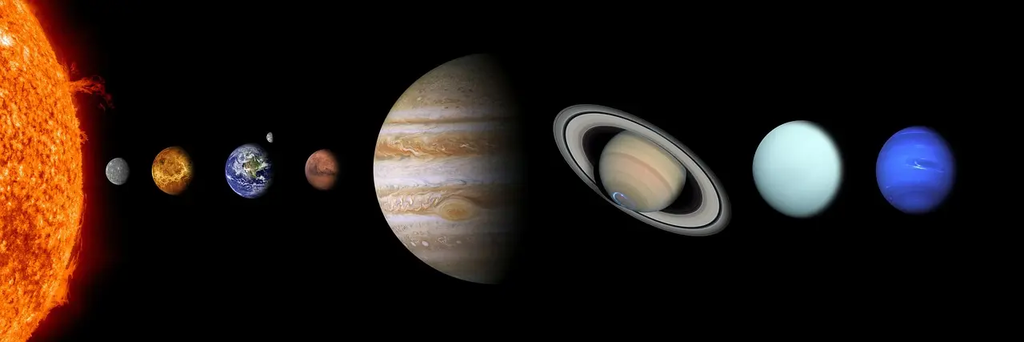
Planetary atmospheres in the Solar System refer to the layers of gases that surround planets and some moons. These atmospheres vary widely in composition, temperature, and density. For example, Earth’s atmosphere is rich in nitrogen and oxygen, while Venus has a thick, carbon dioxide-rich atmosphere. Gas giants like Jupiter and Saturn have deep atmospheres mostly made of hydrogen and helium. These atmospheres influence weather, climate, and surface conditions on each planet.
Planetary Atmospheres
Planetary atmospheres in the Solar System refer to the layers of gases that surround planets and some moons. These atmospheres vary widely in composition, temperature, and density. For example, Earth’s atmosphere is rich in nitrogen and oxygen, while Venus has a thick, carbon dioxide-rich atmosphere. Gas giants like Jupiter and Saturn have deep atmospheres mostly made of hydrogen and helium. These atmospheres influence weather, climate, and surface conditions on each planet.
💡 Key Takeaways
- Identify the major components of planetary atmospheres (e.g., H/He, N2, CO2) and how they affect temperature and pressure.
- Describe how atmospheric properties such as pressure, temperature, and composition change with altitude on different planets.
- Explain the greenhouse effect and how it shapes surface temperatures across diverse worlds.
- Compare atmospheric dynamics—winds, storms, and cloud formation—across planets and other worlds.
- Understand the primary methods scientists use to study atmospheres (space missions, spectroscopy, and atmospheric models).
❓ Frequently Asked Questions
What is a planetary atmosphere?
A layer of gases bound by a planet's gravity that surrounds the planet, varying in thickness and composition and influencing climate and surface conditions.
What primarily shapes an atmosphere's composition?
Gravity (which gases are retained), temperature, and sources/sinks like volcanic outgassing and atmospheric escape processes.
What is the greenhouse effect and why does it matter?
Greenhouse gases absorb infrared radiation and trap heat, warming the surface; the effect depends on gas types and atmospheric thickness.
What are the common atmospheric layers and their key features?
Troposphere (weather; temperature generally falls with height), Stratosphere (temperature rises with height due to ozone on Earth), Mesosphere (temperature falls again), Thermosphere (temperature rises; ionized particles), Exosphere (outermost, very thin). Note: not all planets have all layers.