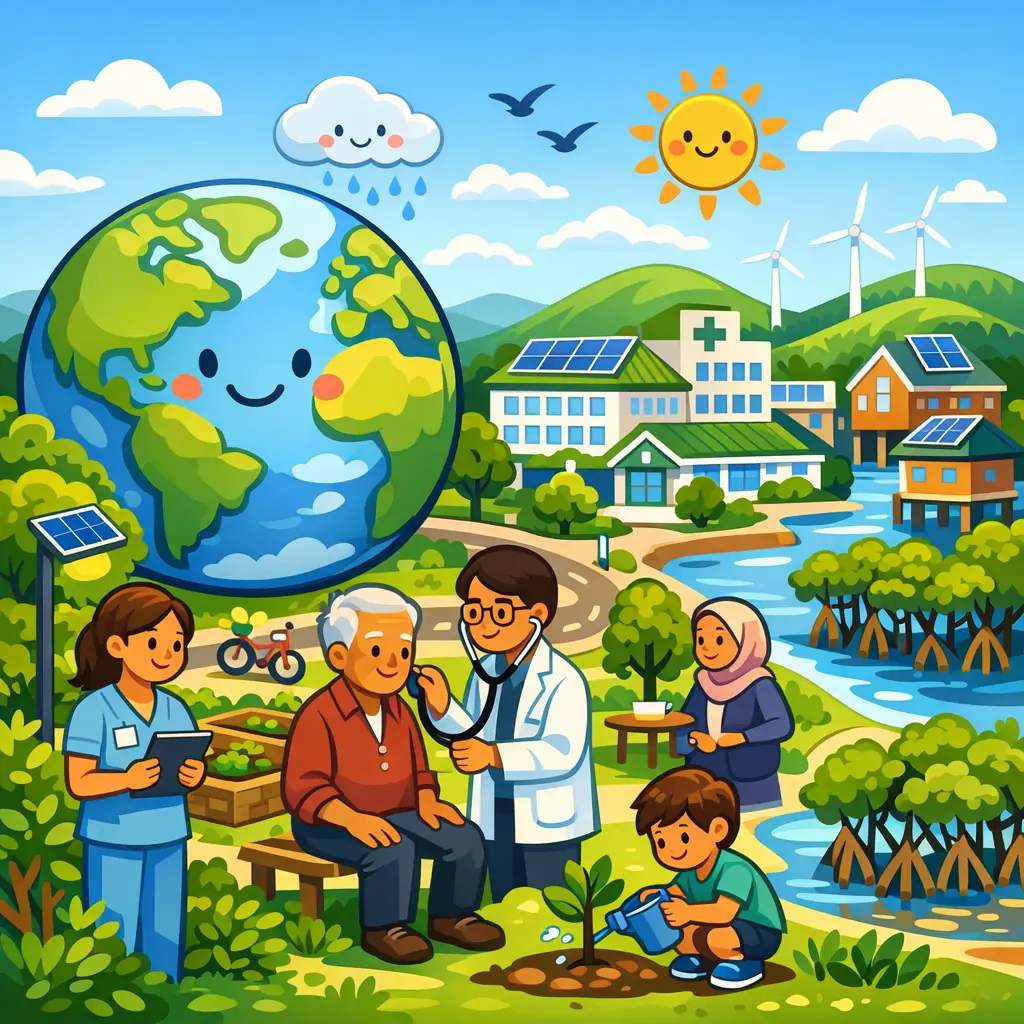
Planetary Health & Climate-Resilient Healthcare refers to an approach in healthcare and medicine that recognizes the interconnectedness between human health and the health of the planet. Careers in this field focus on developing, implementing, and managing healthcare systems that are sustainable, environmentally friendly, and adaptable to climate change. Professionals work to reduce healthcare’s ecological footprint, address climate-related health risks, and promote practices that protect both people and the environment for future generations.
Planetary Health & Climate-Resilient Healthcare
Planetary Health & Climate-Resilient Healthcare refers to an approach in healthcare and medicine that recognizes the interconnectedness between human health and the health of the planet. Careers in this field focus on developing, implementing, and managing healthcare systems that are sustainable, environmentally friendly, and adaptable to climate change. Professionals work to reduce healthcare’s ecological footprint, address climate-related health risks, and promote practices that protect both people and the environment for future generations.
💡 Key Takeaways
- Explain how planetary health links environmental sustainability to patient health and healthcare systems.
- Identify climate-related health risks and their impact on health services.
- Describe climate-resilient facility design and hospital operations (energy, water, and supply chains).
- Recognize health co-benefits of sustainable, low-emission healthcare and climate adaptation strategies.
❓ Frequently Asked Questions
What is planetary health?
An interdisciplinary field that links human health to the health of natural systems, recognizing that thriving ecosystems, clean air and water, and a stable climate support better health outcomes.
What is climate-resilient healthcare?
A health system designed to anticipate climate risks, maintain essential services during extreme weather, and adapt infrastructure, operations, and workforce to withstand and recover from climate-related shocks.
How can climate change affect health?
It can increase heat-related illness, expand the range of vector-borne diseases, worsen air quality, threaten food and water security, and damage health infrastructure through extreme events.
What are examples of climate-resilient strategies in healthcare?
Reliable power and water, flood and heat protection for facilities, climate risk assessments, resilient supply chains, sustainable energy use, and staff training for emergencies.