Planetary rings are vast, thin bands of dust, ice, and rock particles that encircle some planets in the Solar System. Most famously seen around Saturn, these rings also exist around Jupiter, Uranus, and Neptune, though less prominently. The particles within the rings range from tiny grains to large chunks and are held in place by the planet’s gravity. Planetary rings provide valuable insights into planetary formation and the dynamics of celestial bodies.
Planetary Rings
Planetary rings are vast, thin bands of dust, ice, and rock particles that encircle some planets in the Solar System. Most famously seen around Saturn, these rings also exist around Jupiter, Uranus, and Neptune, though less prominently. The particles within the rings range from tiny grains to large chunks and are held in place by the planet’s gravity. Planetary rings provide valuable insights into planetary formation and the dynamics of celestial bodies.
💡 Key Takeaways
- Identify the major ring systems in the solar system and what their rings are made of.
- Explain how rings form and evolve under gravity, including the Roche limit, resonances, and the role of shepherd moons.
- Describe how scientists study rings (imaging, spectroscopy, occultations) and highlight missions that revealed ring details (Voyager, Cassini–Huygens).
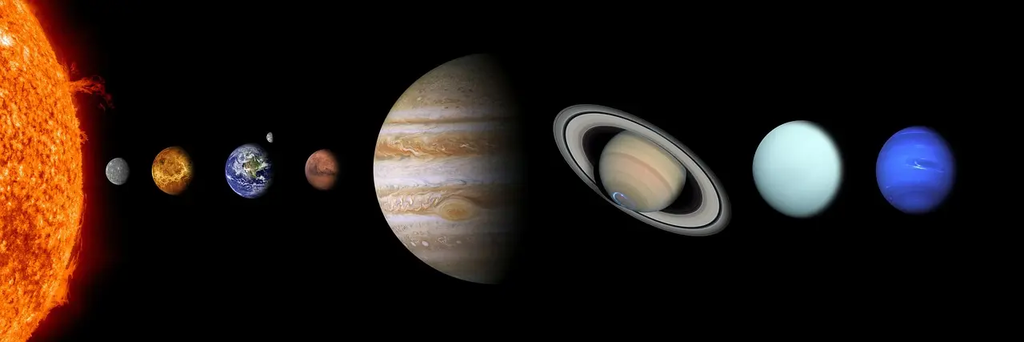
- Compare ring structures across planets (Saturn, Jupiter, Uranus, Neptune) and understand why they differ in particle size, composition, and appearance.
❓ Frequently Asked Questions
What are planetary rings made of?
Planetary rings are made of countless particles that orbit a planet, ranging from tiny dust grains to boulder-sized chunks, with ice-rich compositions common around gas giants.
How do planetary rings form?
Rings form when material is torn apart or prevented from forming into moons by a planet's gravity near its Roche limit, such as from shattered moons or disrupted comets.
Why do some planets have prominent rings while others have none or faint rings?
Prominence depends on material availability and stability. Giants like Saturn have bright rings due to abundant, icy particles, while Jupiter and the ice giants have faint or less detectable rings.
How do scientists study planetary rings?
Scientists study rings with telescopes, analyze reflected light to determine composition, and use spacecraft observations to measure particle sizes, dynamics, and interactions with moons.