Plugin systems and extensibility in agent architecture refer to designing software agents with modular components that can be independently developed, added, or replaced. This approach allows agents to gain new capabilities or adapt to changing requirements without altering their core structure. By supporting plugins, the architecture encourages flexibility, scalability, and rapid integration of third-party features, enabling agents to evolve and respond effectively to diverse tasks or environments.
Plugin Systems & Extensibility
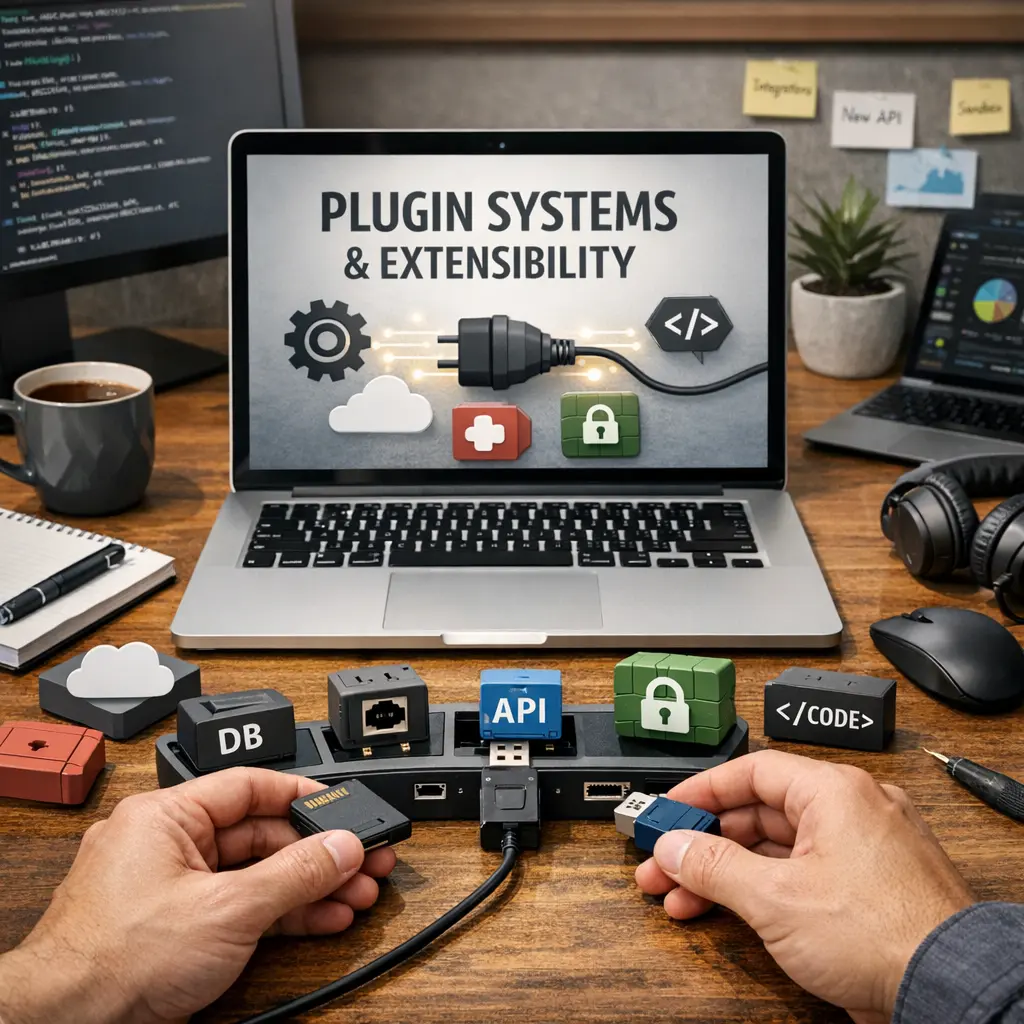
Plugin systems and extensibility in agent architecture refer to designing software agents with modular components that can be independently developed, added, or replaced. This approach allows agents to gain new capabilities or adapt to changing requirements without altering their core structure. By supporting plugins, the architecture encourages flexibility, scalability, and rapid integration of third-party features, enabling agents to evolve and respond effectively to diverse tasks or environments.
💡 Key Takeaways
- Explain what a plugin system is and why extensibility matters for software design.
- Identify common extension points (hooks, events, and APIs) and how plugins interact with the core.
- Describe how plugins are discovered, loaded, and isolated from the host application.
- Discuss practical considerations like versioning, security, performance, and compatibility in plugin ecosystems.
❓ Frequently Asked Questions
What is a plugin in software, and how does a plugin system extend an application?
A plugin is a modular component that adds or modifies functionality without changing core code. A plugin system defines how plugins are discovered, loaded, and managed, enabling new features to be added at runtime.
What are common approaches to loading and isolating plugins?
Plugins can be loaded dynamically at runtime via modules or shared libraries, often with a plugin manager. Isolation is achieved through sandboxing, separate processes, or strict API boundaries to prevent plugins from affecting the host.
What are the main benefits of using a plugin architecture?
Extensibility, customization, and modularity; easier feature updates; support for third-party contributions without touching core code.
What are typical challenges when designing plugin systems?
API stability, dependency conflicts, security risks, potential performance overhead, and managing plugin lifecycle and error handling.
What should a well-designed plugin API include?
Clear, stable interfaces; versioned APIs; minimal dependencies; robust discovery and loading mechanisms; and guidance for isolation, error handling, and documentation.