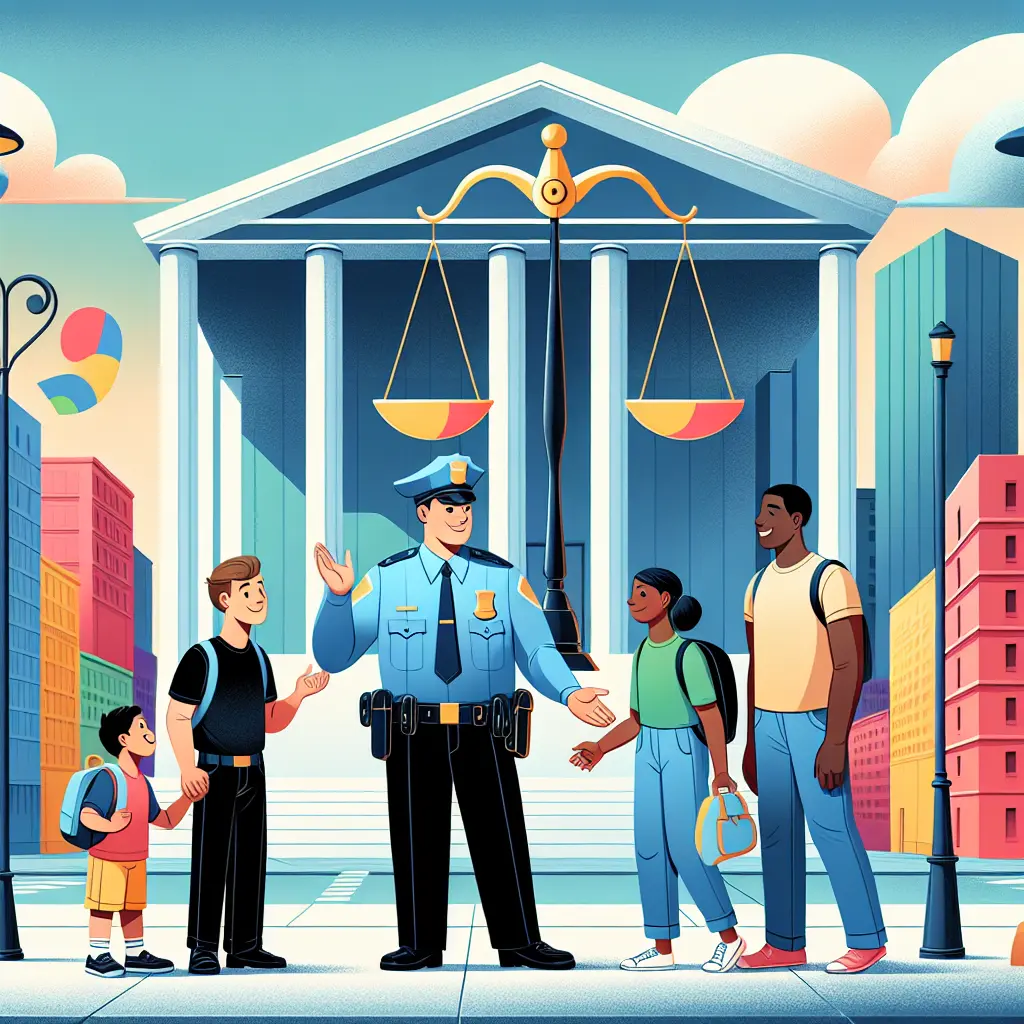
Policing and justice refer to the systems and processes established to maintain law, order, and fairness within society. Policing involves law enforcement agencies working to prevent crime, protect citizens, and uphold public safety. Justice encompasses the legal framework, including courts and judicial procedures, that ensures laws are applied fairly and rights are protected. Together, they aim to create a safe, orderly, and equitable environment for all members of the community.
Policing & Justice+45
Policing and justice refer to the systems and processes established to maintain law, order, and fairness within society. Policing involves law enforcement agencies working to prevent crime, protect citizens, and uphold public safety. Justice encompasses the legal framework, including courts and judicial procedures, that ensures laws are applied fairly and rights are protected. Together, they aim to create a safe, orderly, and equitable environment for all members of the community.
💡 Key Takeaways
- Understand how policing aims to prevent crime, protect citizens, and maintain public safety.
- Differentiate policing (law enforcement) from the justice system (courts, judges, and verdicts).
- Learn how the legal framework protects rights and ensures due process in policing and judicial proceedings.
- Explore the flow from investigation to court outcomes and the roles of prosecutors, judges, and defendants.
❓ Frequently Asked Questions
What is policing?
Policing is the system of law enforcement agencies and officers responsible for preventing crime, enforcing laws, protecting the public, and maintaining social order.
What is justice in this context?
Justice refers to the legal processes and institutions—such as courts, judges, and corrections—that interpret laws, resolve disputes, and ensure fair treatment.
What is the role of courts?
Courts interpret and apply laws, hear cases, determine guilt or liability, and issue rulings, sentences, or remedies.
What does due process mean?
Due process means fair treatment under the law, including notice, a hearing, and an impartial decision by a neutral authority.
What is the difference between criminal and civil law?
Criminal law punishes offenses against the state or public order, while civil law resolves disputes between individuals or organizations and may involve compensation or remedies.